


Alphadroid is a robotics and artificial intelligence company that engineers and deploys advanced autonomous systems to transform service-driven industries, including hospitality, healthcare, retail, and public infrastructure. The company designs purpose-built service delivery robots, autonomous cleaning and clearing systems, and conversational AI platforms. Together, these solutions drive measurable gains in operational efficiency while elevating customer experience across complex, high-traffic environments.
Established in 2022, Alphadroid integrates robotics with applied intelligence to automate repetitive, time-intensive tasks. As a result, organizations redeploy human talent toward higher-value, judgment-intensive work. Simultaneously, they improve throughput, precision, hygiene compliance, and service consistency. The company’s platforms streamline hotel check-in and check-out workflows, enable in-room service automation, optimize cleaning cycles, and power multilingual virtual concierge interactions. Consequently, they create a seamless, collaborative interface between human staff and intelligent machines.
Alphadroid operates with a global outlook and a sector-agnostic strategy. It builds adaptable, AI-driven systems that future-proof operations and strengthen service resilience. By combining modular hardware with continuously evolving software intelligence, the company enhances reliability, scalability, and long-term customer satisfaction.
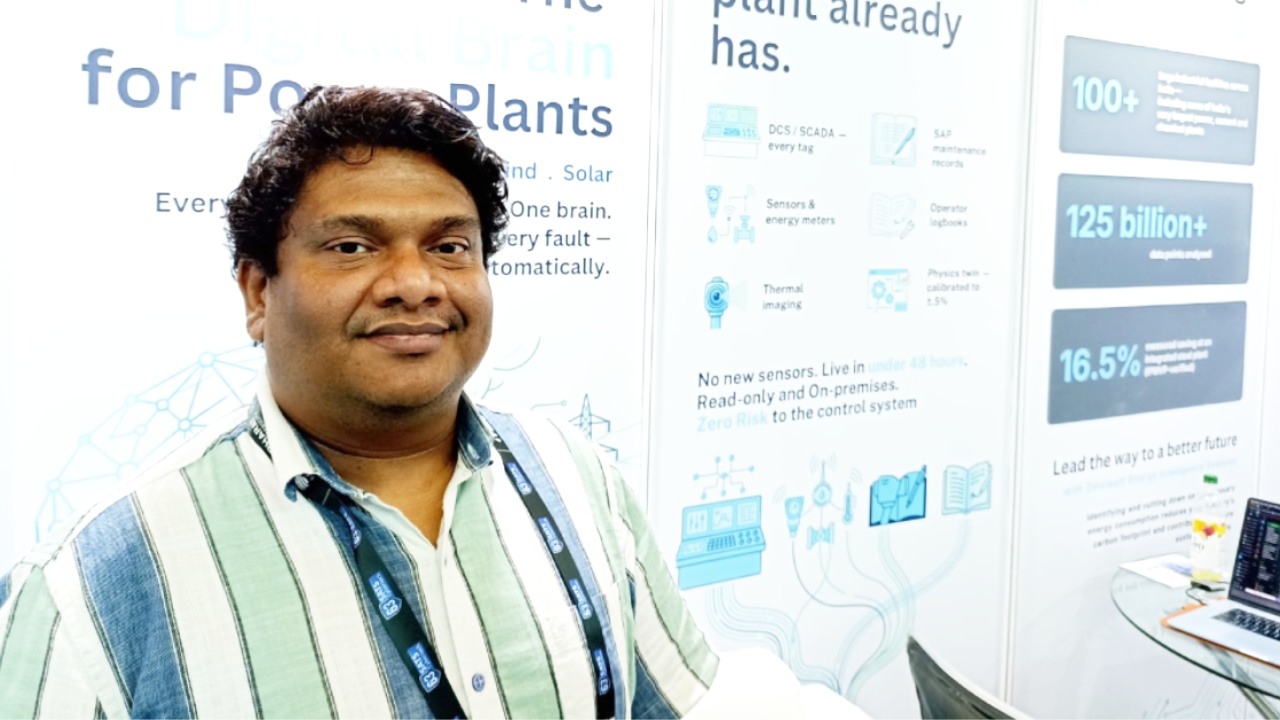
In an exclusive conversation with The Interview World at the India AI Impact Expo 2026, Sanjeev Kumar, Founder and CEO of Alphadroid, provides a detailed perspective on the company’s autonomous robotics and AI ecosystem. He explains how Alphadroid balances deep automation with calibrated human oversight to ensure responsible deployment. Moreover, he outlines a five-year innovation roadmap, articulates the strategic imperative of indigenizing both software and hardware, and presents a structured growth and market expansion agenda. What follows are the key insights from that in-depth discussion.
Q: Could you provide a detailed overview of Alphadroid’s autonomous robotics and AI solutions?
A: We design and deploy end-to-end AI solutions that span interaction through delivery, yet consistently preserve a human-like experience. At the front end, we implement multilingual conversational AI platforms that manage customer engagement with precision and contextual awareness. These systems strengthen customer service workflows while enhancing patient experience and streamlining patient-facing services.
However, once the process transitions from interaction to physical execution within a facility, our autonomous robotic systems take over. These robots manage intra-building logistics with reliability and control. In hospital environments, they transport diagnostic samples and medications while maintaining strict temperature compliance and chain-of-custody standards. As a result, they reduce manual handling, accelerate turnaround times, and significantly improve operational efficiency across the organization.
Q: Are your robotics and AI solutions designed for full end-to-end automation, or do they incorporate a human-in-the-loop model?
A: We have engineered a fully autonomous robotic platform that operates independently and executes tasks without continuous human intervention. However, we do not deploy it in isolation. Instead, we embed it within the broader operational architecture of the organization.
First, we conduct a rigorous process analysis to identify functions that machines can execute with greater speed, precision, and consistency. Next, we delineate the tasks that require human judgment, empathy, and contextual decision-making. By clearly defining these boundaries, we design a system that allocates responsibility intelligently.
As a result, our robots do not replace human effort indiscriminately. Rather, they complement it. The technology performs repetitive and logistics-intensive functions, while human professionals focus on supervision, critical thinking, and service quality. Consequently, the solution operates as an integrated human–machine collaboration model, where automation enhances, not displaces, human capability.
Q: Do you have a strategic roadmap to extend your solutions into additional industry verticals?
A: We focus deliberately and exclusively on the front office and the middle office. In practical terms, this means we operate where customer engagement and operational coordination converge. In the front office, whether in hospitals or retail environments, we enhance service delivery, patient interaction, and customer experience. In the middle office, we optimize internal logistics, streamline movement, and strengthen process efficiency.
However, we do not extend our mandate into manufacturing. We have made a clear strategic decision to concentrate on service-facing and logistics-driven functions, where intelligent automation generates immediate operational impact and measurable value.
Q: What innovations do you plan to develop over the next five years to augment your existing solutions?
A: First, we are unequivocally an Indian manufacturing company. More importantly, we intend to compete on equal footing with China and establish a decisive presence on the global stage. Our objective is clear: design, build, and export world-class robotics and AI solutions from India to international markets.
Second, we are making substantial, sustained investments in physical AI. We view this as the next inflection point in robotics. Today, most robotic systems remain predominantly sensor-driven; they react to inputs but lack higher-order contextual intelligence. In contrast, we are engineering systems that move beyond conventional sensor dependency. We are embedding deeper cognitive capabilities into physical machines so they can interpret environments, adapt dynamically, and make more intelligent decisions in real time.
Consequently, our approach does not merely refine existing automation. It redefines it. By advancing physical AI, we aim to build robotic solutions that are more autonomous, more adaptive, and fundamentally smarter, thereby delivering transformative value at a global scale.
Q: Are your hardware design and software development engineered and manufactured indigenously in India?
A: We have invested significant time and discipline in architecting the right solution—from system design and software development to full-scale build and deployment. In parallel, we have committed substantial capital to hardware research and engineering innovation. We treat hardware not as an afterthought, but as a strategic differentiator.
While we draw inspiration from global benchmarks, we design and manufacture the majority of our hardware components domestically. We source extensively from Indian suppliers and integrate in-house engineering expertise to ensure quality, resilience, and supply-chain control.
Moreover, we design and develop critical electronic systems within India. This includes PCB assemblies, motherboards, and specialized control boards. By localizing both design and production, we strengthen technological sovereignty, enhance customization capability, and reinforce our commitment to building globally competitive solutions from India.
Q: What is your five-year growth and market expansion strategy, and could you share the number of active clients?
A: As an Indian company, we have deliberately prioritized the domestic market as our primary launch platform. First, we focus on building robust use cases within India. Next, we solve real, high-impact operational challenges across diverse sectors. By validating performance in demanding, real-world Indian environments, we harden the solution architecture and strengthen reliability. Consequently, we position our platforms for scalable global deployment.
From a customer standpoint, we serve a broad and credible portfolio. In retail, we work with Reliance Retail. In healthcare, we collaborate with Apollo Hospitals and Artemis Hospitals. In the food and consumer segment, we partner with established brands such as Bikanervala.
Together, these engagements reflect a diversified and trusted customer base. More importantly, they demonstrate sustained institutional confidence in our technology, execution capability, and long-term vision.






2 Comments
thank your for this article, keep up the good work
thank your for this article, keep up the good work
Comments are closed.