
SenSen AI delivers a unified Live Awareness platform that integrates computer vision, sensor fusion, and AI to convert raw video and sensor streams into real-time operational intelligence for cities and enterprises. Established in 2007 as a spin-out from the University of Technology Sydney, the company has grown into a global provider, now supporting more than 100 cities worldwide. Its technology drives curbside and parking management, traffic optimisation, retail loss prevention, and public-safety operations for municipalities, law-enforcement agencies, transport networks, and major retailers. In addition, SenSen strengthens its offerings with a rigorous privacy and security framework, emphasising data minimisation, anonymisation, and compliance through its dedicated Trust Center.
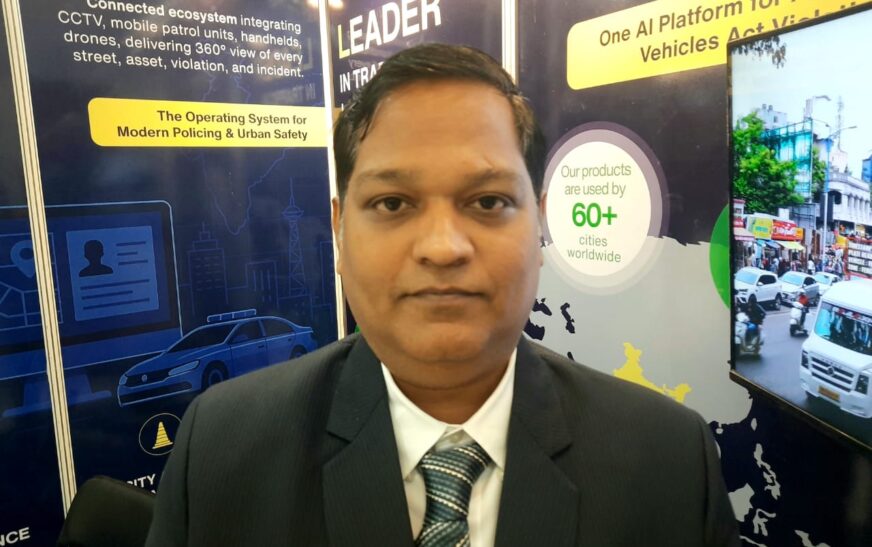
In an exclusive conversation with The Interview World at the FICCI Urban Transportation Conclave 2025, Vijay Khuspe, Director, Clients & Markets, India, SenSen AI, outlines how the company’s context-aware system advances the efficiency and safety of urban transportation and traffic management. He further articulates the distinct value proposition of SenSen’s solutions, explains how data and disruptive technologies are delivering actionable intelligence for broader traffic ecosystems, and demonstrates how their platforms are elevating urban safety.
The following are the key takeaways from this insightful discussion.
Q: How does SenSen AI’s context-aware system improve the efficiency and safety of urban transportation and traffic management?
A: SenSen AI has spent the past 15 years delivering advanced solutions to smart cities across the world, with a strong presence in North America and Australia. Now, the company is expanding its capabilities in India. It offers a robust data-fusion framework that captures inputs from cameras and diverse sensors and then interprets those inputs to produce actionable intelligence.
At the core of this capability is SenSen’s context-aware platform, which determines the purpose behind each data stream. While many systems today perform standard functions such as License Plate Recognition (LPR), SenSen goes further by enabling automated enforcement on the same platform. It identifies whether a vehicle complies with traffic rules and local motor-vehicle regulations, detects violations in real time, and generates enforcement-ready evidence. Authorities can then use this evidence to take action.
Moreover, the platform leverages both existing CCTV networks and SenSen’s proprietary AI-enabled cameras. It also supports mobile deployment models, including vehicle-mounted systems, drone imaging, and even data capture via authorised personnel’s mobile phones. Regardless of the input source, all data flows into a single unified platform that interprets context and produces meaningful insights. This is the essence of SenSen AI’s value proposition.
Q: What unique value are you delivering to the broader ecosystem, and how is India embracing and scaling these innovations?
A: We often focus on large-scale infrastructure investments for new highways, major roads, and extensive transit corridors. These initiatives are essential and unquestionably the right direction. However, we must simultaneously address the persistent micro-level inefficiencies that undermine overall system performance. For example, as one speaker noted, a metro station exit in a major city has become so narrow due to long-term encroachment that pedestrians struggle to walk out. The design was sound, but local non-compliance eroded its functionality.
Today, technology can accurately identify such encroachments, map non-compliant zones, and provide authorities with a unified, actionable view of what needs correction. These capabilities enable targeted problem-solving at the street level. In my view, India’s urban challenges can be solved effectively only by tackling both macro-level development and micro-level constraints. Large infrastructure will continue to play its role, but resolving local inefficiencies will unlock disproportionate impact.
For instance, when we deployed our enforcement solution on a street in Pune for three months, the system detected more than 10,000 violations that would otherwise have gone unnoticed. Moreover, the data revealed that repeat offences were below 1 percent. This demonstrates a clear behavioural shift: when people know they are accountable, they comply. These micro-level improvements ultimately scale into meaningful systemic change. That is the change we are enabling.
Q: As data becomes central to domains like road management, in what ways can emerging and disruptive technologies unlock new levels of accuracy, safety, and decision intelligence?
A: These technologies play a critical role in generating high-quality intelligence. Our City Intelligence platform, for example, supports authorities at multiple stages of the planning and operations lifecycle. During the planning phase, agencies often require Origin–Destination (OD) data, which is still largely collected through manual surveys. Our platform augments and, in many cases, automates this process by calculating OD patterns using vehicle classification, vehicle intelligence, ANPR, and related data sources. In addition, new mobile-based technologies can work alongside our platform to strengthen data accuracy and coverage.
Beyond data generation, the platform enables preventive and predictive analytics. Our vehicle-based system can traverse an entire city and automatically identify issues such as missing or illegal signage, unauthorised billboards, damaged signboards, poorly maintained footpaths, and other compliance or upkeep deficiencies. Authorities can monitor these conditions daily and receive automated tickets or alerts whenever anomalies are detected.
Importantly, this workflow replaces manual inspection processes. Instead of deploying personnel to check each location, the same automated inspection system can be mounted directly on vehicles already used by authorities. As they move through the city, the platform conducts continuous, real-time assessments. This end-to-end automation significantly strengthens operational intelligence and enhances urban management.
Q: To what extent are your solutions designed to enhance urban safety and strengthen citywide security frameworks?
A: Urban safety is paramount. Our surveys consistently show that in dense urban environments, violations such as wrong-direction driving, triple-seat riding, and riding without helmets occur at scale. These behaviours are widespread across cities nationwide and significantly contribute to accidents and broader safety risks.
Our technology equips authorities to monitor these high-risk violations in real time and take timely action. For example, the system can automatically detect triple-seat riding on two-wheelers and generate challans, and it can apply the same process to wrong-direction driving.
Moreover, once these systems are deployed across an entire city, they create consistent accountability. As violations are detected and addressed more reliably, on-ground traffic conditions improve. In effect, sustained enforcement enabled by automated intelligence can drive meaningful behavioural change and strengthen overall urban safety.