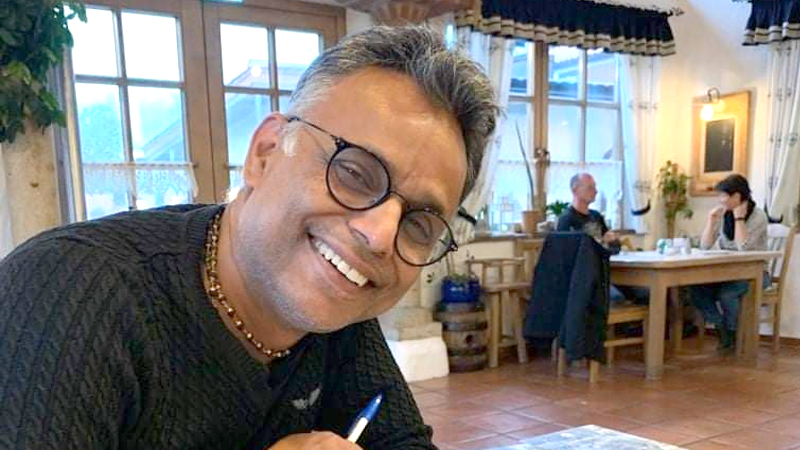


Prarthi Shah stands at the intersection of heritage conservation, environmental activism, and creative expression. As the Founder & CEO of Heritage Collective India and the Founder of Baroda Strickers, she leads with vision and impact. Her diverse identity as a heritage leader, environmental advocate, photographer, and singer-songwriter reflects her multifaceted commitment to social and cultural change.
Academically grounded, Prarthi holds a Master’s degree in Heritage Management from Ahmedabad University, following a Bachelor of Science in Geography from Maharaja Sayajirao University. She has transformed her academic insights into tangible action.
At Heritage Collective India, she curates initiatives such as Anukathan and Craftistry, which raise awareness about cultural heritage, champion conservation efforts, and spotlight traditional art forms like Bhavai. Blending innovation with preservation, her Heritage Selfie campaign uses social media as a storytelling tool. By capturing selfies at heritage sites and sharing contextual narratives, she has spotlighted nearly 50 locations to date—making heritage both personal and public.
Simultaneously, under the Baroda Strickers banner, Prarthi drives community engagement through dynamic campaigns. From plantation drives and environmental pledges to the unique Vrukshabandhan tree-tying festival, her efforts foster ecological consciousness. Initiatives like photography contests and the “To Vadodara With Love” cleanliness rally further reflect her belief in participatory activism.
Her artistic voice complements her advocacy. She co-wrote and performed “Tu Sambhal Jaa – The Earth Song,” an environmental anthem that calls for urgent action. She also lent her vocals to the theme song for the global One Billion Rising campaign, using music as a medium for movement.
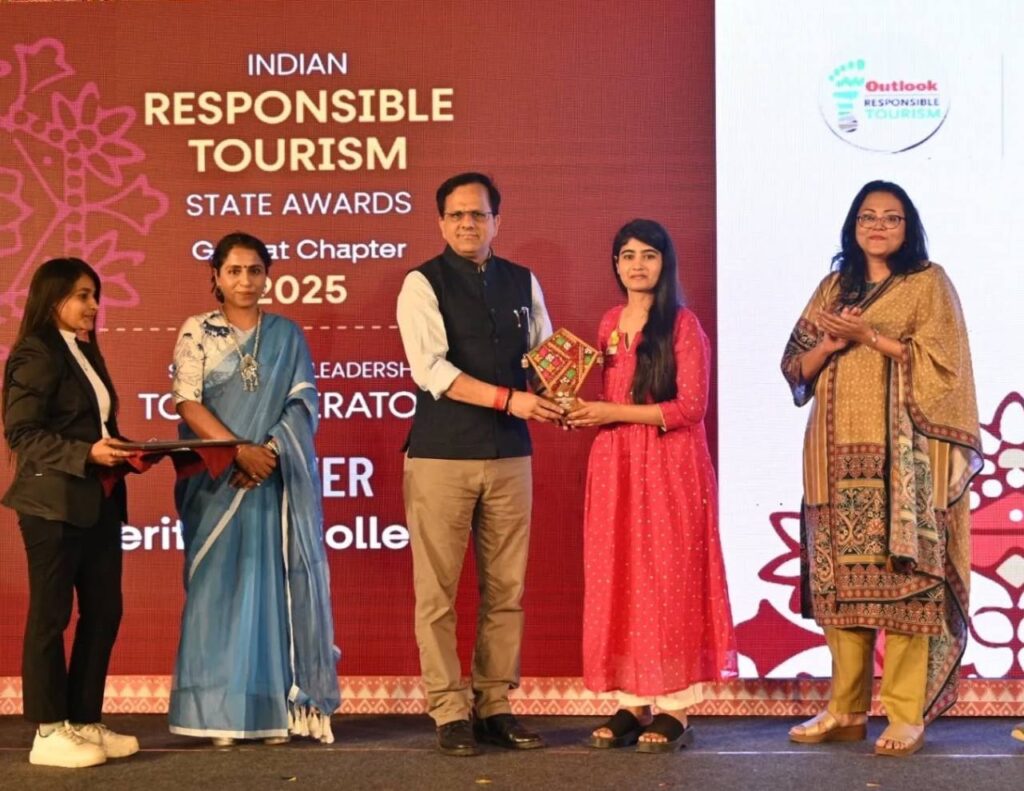
Her trailblazing contributions have earned widespread recognition. Awards such as the Salaam Vadodara Award (2017), Inspiring Green Mentors Award and Yuva Gaurav Sanmaan (2019), Vishisht Khadayta Sanmaan (2020), and Indian Responsible Tourism State Awards – Gujarat Chapter 2025 celebrate her leadership and enduring commitment to sustainability and cultural preservation.
In an exclusive interview with The Interview World at the Asia-Africa Global Investment Summit 2025—hosted by Sociafi Media—Prarthi Shah offers an in-depth look at the initiatives spearheaded by her organizations. She explains how sustainability seamlessly integrates into artistic practices, shares the number of artists involved, and highlights the scale of events organized under her leadership.
Here are the key takeaways from her inspiring conversation.
Q: Could you elaborate on the key initiatives and activities being undertaken by Heritage Collective India to promote and preserve cultural heritage?
A: At Heritage Collective India, we champion the rich heritage and cultural legacy of India—not just within the country, but across the globe. We operate as both a consultancy and an impact-driven platform, executing diverse projects and curating compelling events that bring heritage to life. Through our signature initiatives like Anukathan and Craftistry, we provide visibility to underrepresented artists who often lack access to mainstream platforms.
Equally important, we actively engage the youth—inviting them to participate, learn, and lead. By involving them in immersive experiences, we aim to cultivate a sense of ownership and responsibility toward cultural preservation. Our mission is clear: to not only promote India’s heritage, but to ensure its conservation through inclusive, community-led action.
Q: What types of artwork has Heritage Collective India promoted so far, and are there any specific art forms or traditions you are currently focusing on??
A: While we don’t focus on a single artwork, our current priority lies in showcasing the rich craft traditions of Gujarat. We actively promote local artists, artisans, and the region’s diverse textile and craft heritage. At the same time, we are working to forge meaningful collaborations with government bodies to scale these efforts.
Importantly, our commitment extends beyond crafts. We also celebrate Gujarat’s vibrant musical traditions and cultural festivals, embracing a holistic approach to preserving and promoting the state’s cultural identity.
Q: How is the concept of sustainability being integrated into the field of art, and what role does sustainable art play in this movement?
A: Authenticity, at its core, lies in products crafted using natural dyes and traditional, eco-friendly processes. These methods not only preserve cultural integrity but also embody true sustainability. However, with the rise of modern technology and automation, many such products are now mass-produced in factories. As a result, they often lose both their authentic essence and their sustainable value.
Q: How does your organization intervene in this space through its initiatives and programs?
A: We focus on empowering consumers to identify and purchase authentic products directly from the artists themselves. By eliminating middlemen, we encourage buyers to visit artisan villages, engage with the creators, and support their work at its source. This direct connection not only preserves authenticity but also ensures that artists receive the full value of their craft.
Q: How many artists have been associated with Heritage Collective India so far, and how many major events or exhibitions have you organized to date domestically or internationally?
A: We currently work with nearly 200 registered artists and maintain a curated database of close to 20,000. This growing network forms the backbone of our cultural outreach.
Domestically, we have organized numerous events in Vadodara and Ahmedabad, along with a wide range of online engagements. Through Anukathan, we’ve spotlighted traditional art forms such as Bhavai and rare musical instruments like Kasht Tarang, Sitar, and Rudravina—many of which remain unfamiliar to mainstream audiences.
Recently, traditional crafts like Tangaliya weaving have gained renewed attention, especially following their feature in the film F1. We’ve actively promoted crafts such as Tangaliya, Bandhani, Kachhi embroidery, and Ajrak through curated workshops and cultural demonstrations. These events not only offer artists a platform to share their stories but also connect them directly with audiences who value authentic, handcrafted work.
To date, we’ve successfully conducted nearly 20 such immersive events. Each event combines lecture, demonstration, and marketplace engagement—enabling knowledge exchange as well as direct sales. As for international expansion, we haven’t showcased our work abroad yet. However, we are strategically planning to take both the organization and our associated school to global platforms in the near future.