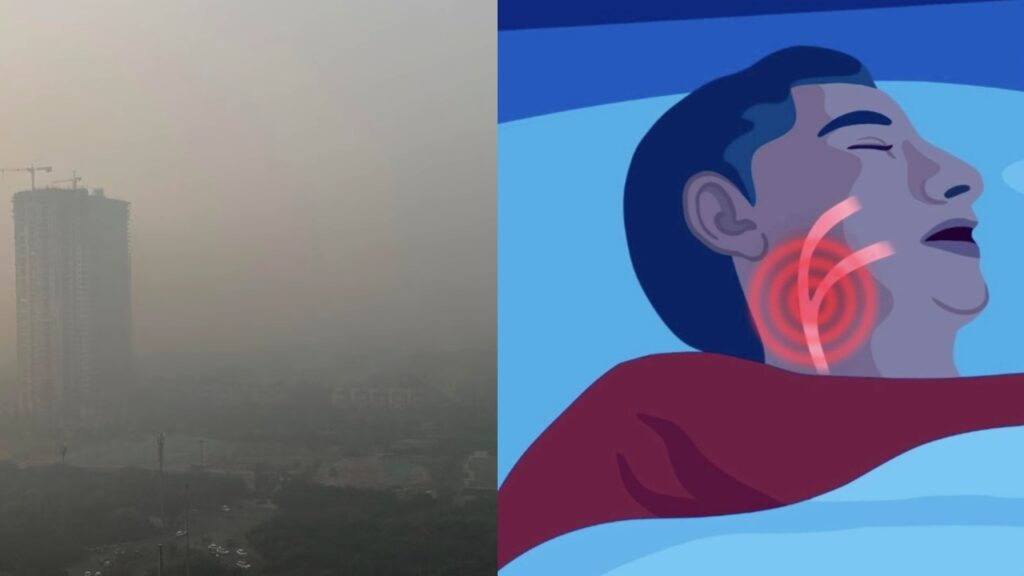


As urbanization accelerates, the relationship between environmental pollution and human health reveals consequences that extend well beyond the lungs. Air pollution increasingly disrupts the body’s most vital restorative functions: sleep and recovery. Fine particulate matter, particularly PM2.5, does more than irritate the respiratory system. It penetrates the bloodstream, reaches the brain, and interferes with neural regulation. At the same time, it inflames the upper airway, exacerbating conditions such as Obstructive Sleep Apnea (OSA). The result is not limited to disturbed sleep. It manifests as persistent daytime fatigue and triggers a cascade of systemic dysfunction affecting cardiovascular, pulmonary, and neurological health.
In high-stress, pollution-heavy environments, compromised sleep further amplifies physiological vulnerability. It slows tissue repair, weakens immune defences, and erodes cognitive and emotional resilience. Despite this, clinical practice and public health policy continue to undervalue sleep as a foundational determinant of health. This oversight is no longer tenable. Addressing environmental risk factors, improving patient awareness, and implementing targeted medical interventions have become imperative to protect sleep quality, overall well-being, and long-term health outcomes.
Against this backdrop, The Interview World engaged with Dr. Manu Madan, Senior Consultant in Respiratory and Sleep Medicine at Medanta, during the Conference on the Impact of Air Pollution on Health and Preventive Measures, organized by the Illness to Wellness Foundation (ITWF) in collaboration with FICCI.
During the discussion, Dr. Madan emphasized the detrimental impact of air pollution on sleep architecture and reinforced the central role of quality sleep in sustaining health under chronic stress. He also outlined how the medical fraternity can improve patient comfort, particularly sleep quality, to accelerate healing and recovery. In addition, he confirmed obesity as a significant contributor to snoring and sleep-disordered breathing, and offered critical insights into pollution-linked sleep disorders in India. His observations highlighted shifting patient demographics and a marked rise in cases driven by prolonged environmental exposure.
The following are the key takeaways from his insightful conversation.
Q: How does pollution adversely affect sleep quality and overall sleep health?
A: Airway and systemic inflammation impact the entire body. When PM2.5 particles enter the body, they penetrate the bloodstream and eventually reach the brain, directly affecting neural function and disrupting sleep. Simultaneously, these particles irritate the upper airway as they pass through the nose and throat, triggering inflammation and swelling. This swelling can exacerbate conditions like Obstructive Sleep Apnea (OSA), leading to increased snoring, nasal blockages, and disturbed sleep. Consequently, daytime sleepiness and other sleep apnea symptoms intensify. Overall, exposure to pollution not only inflames the airways but also undermines sleep, which is essential for overall health and well-being.
Q: How crucial is proper sleep for maintaining health in high-stress environments influenced by global or environmental factors?
A: Sleep plays a critical role in every aspect of health and disease because regeneration and healing occur primarily during rest. When you sleep, the body initiates repair processes essential for recovery. In clinical practice, I often ask patients who struggle with persistent coughing about their sleep quality. Without adequate sleep, symptom relief is limited. Therefore, my first priority is to help them sleep better at night, as healing cannot occur without it. Moreover, poor sleep directly affects productivity and amplifies work-related stress, further compromising health. Overall, sleep is the central pillar of well-being, yet it is frequently overlooked in medical discussions and healthcare agendas.
Q: How can the medical fraternity enhance patient comfort, including sleep quality, to promote better healing and overall recovery?
A: The first and most important step is awareness. Many patients come to me without realizing that snoring can signal a medical condition. In India, and particularly in cities like Delhi, snoring is often considered normal. However, persistent snoring increases the likelihood of Obstructive Sleep Apnea (OSA).
Snoring occurs when the upper airway, the windpipe, narrows. As air passes through this constricted passage, it generates the characteristic sound. The narrowing can occur in the nose or throat, and when it becomes severe, airflow may stop entirely during sleep. This cessation of breathing reduces oxygen levels, triggering a cascade of effects throughout the body.
Low oxygen levels elevate catecholamines, the body’s stress hormones, which further strain multiple systems. Sleep apnea impacts the lungs, potentially causing pulmonary hypertension. In the brain, it is associated with mood disorders, cognitive decline, dementia, and even Alzheimer’s disease. Cardiovascular complications include hypertension, heart failure, and arrhythmias. Moreover, the risk of stroke significantly increases.
In short, snoring is not merely a nuisance; it can indicate serious, systemic health consequences that affect the lungs, heart, brain, and overall well-being.
Q: Is obesity a contributing factor to snoring and related sleep-disordered breathing conditions?
A: Yes, absolutely. Obesity is the single highest risk factor for sleep apnea. As I mentioned, the airway narrows, and several factors contribute to this constriction. Extremes of age can relax airway muscles, causing partial collapse. Another major factor is excess weight. In obese individuals, fat deposits accumulate around the neck, compressing the upper airway and further reducing its diameter. This narrowing significantly increases the risk of developing sleep apnea symptoms. Therefore, it is crucial to evaluate all obese patients, especially those with large neck circumferences, for the possibility of sleep apnea.
Q: How is pollution-linked sleep disorder affecting Indian healthcare, patient demographics, and rising case numbers across India due to environmental exposure?
A: Studies show that approximately 10% of the population is affected by sleep apnea. Environmental factors, such as air pollution, can exacerbate the problem. Pollutants trigger nasal congestion and chronic low-grade inflammation, which further narrow the airway and increase the risk of Obstructive Sleep Apnea (OSA). Consequently, clinicians see a rise in patients presenting with OSA symptoms, including nasal blockage and daytime sleepiness. Many patients attribute their fatigue to cold weather or lifestyle factors, but underlying airway inflammation and sleep disruption are often key contributors.