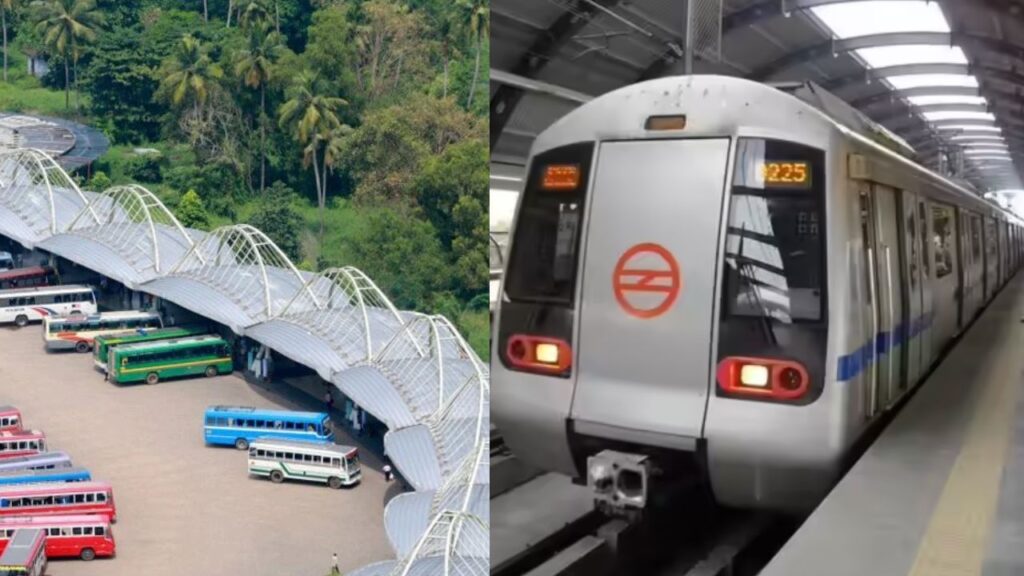


India’s mobility sector anchors the country’s economic trajectory by determining how effectively people, goods, and opportunities circulate nationwide. Because private vehicle ownership remains limited in a developing economy like India’s, the nation relies extensively on shared and public transport to keep its workforce mobile and its markets integrated. As a result, the quality, accessibility, and affordability of mobility infrastructure directly influence productivity, social equity, and long-term GDP growth.
In an exclusive conversation with The Interview World at the FICCI Urban Transportation Conclave 2025, Sanyam Gandhi, Director at Chartered Speed Ltd., outlines how structured mobility interventions, particularly in underserved regions, catalyse commerce, widen access to education and livelihoods, and stimulate local economic activity. He further analyses the enduring policy, institutional, and last-mile constraints that continue to restrict India’s mobility outcomes. Moreover, he explains why a renewed emphasis on public transportation, supported by consistent government investment, is critical to achieving equitable, scalable national development.
The following are the key insights from his discussion.
Q: What role does the mobility sector play in driving a nation’s GDP growth?
A: India’s mobility ecosystem fundamentally revolves around enabling people to move efficiently from one place to another. In developing countries, limited disposable income constrains private vehicle ownership, and despite the visible presence of cars, taxis, and two-wheelers, the majority of citizens still rely on shared modes of travel. Consequently, the system must deliver high-quality, affordable public transportation. Such a network is not merely desirable; it is essential. Reliable mobility enables people to access work, and in turn, widespread access to livelihoods directly fuels national productivity and sustained GDP growth.
Q: How does a high-quality public transport system enhance economic activity and contribute to national economic development?
A: Consider any project where structured mobility has been introduced. For example, in rural towns across Odisha, we began operating buses in 2023. Until then, neither the government nor private operators provided meaningful connectivity. We now work closely with the government under a model in which we procure the buses and manage the full operations and maintenance, while the government sells services and tickets on the scheduled routes.
This intervention has transformed local mobility. Residents can now travel from a Gram Panchayat to a Taluka and from a Taluka to the district headquarters. They can transport farm produce and other tradable goods from their villages to local markets. As a result, this connectivity directly stimulates GDP growth. When people can move, they can trade more, strengthen family and social ties, and access essential services. Moreover, a significant share of this travel supports education, enabling individuals to study, work, and live in different locations.
Q: What are the key challenges facing the mobility sector today?
A: A few structural challenges persist. First, the sector remains relatively underserved from a policy-priority standpoint. While electric buses receive substantial policy backing, which is encouraging, the broader public bus ecosystem does not benefit from the same level of attention. The government is driving two major national programmes, the PM-eBus Sewa and PM E-DRIVE schemes, which together target the deployment of 38,000 electric buses across India. This is an important step forward. However, the scale of India’s mobility needs far exceeds these numbers. A country of this size requires several lakh buses, not merely a few thousand, to achieve meaningful and inclusive connectivity.
Q: Given persistent last-mile connectivity gaps in both urban and rural mobility, how should the government address this challenge?
A: Last-mile connectivity remains highly fragmented because population density drops sharply as we move away from urban cores. Dense cities are easier to serve: there is always demand, and regular services can operate efficiently throughout the day. However, last-mile areas present a different reality. These regions still require dependable mobility, because the economic and social benefits I mentioned earlier depend on it, yet the lower ridership makes commercial viability difficult.
As a result, sustained government involvement becomes essential. Delivering last-mile services requires deliberate budgetary allocation, since these routes enable citizens to reach workplaces, educational institutions, and essential services. Without adequate public funding, these communities remain disconnected. Therefore, expanding last-mile connectivity demands significantly higher and more consistent financial support from the government.
Q: What is your perspective on the ongoing gaps in mobility service quality across the country?
A: Global public-transportation standards are exceptionally high, but India operates under a fundamentally different pricing model. Our metro systems and buses are among the cheapest in the world, and maintaining such low fares inevitably limits the scope for additional amenities. If operators were able to increase budgets or adjust ticket prices, they could introduce many of the enhancements commonly seen in developed markets.
However, that approach is not appropriate for India. As a developing nation, we must prioritize affordability above all else. Ensuring that the system remains accessible to the broadest segment of the population is more important than adding non-essential frills.