


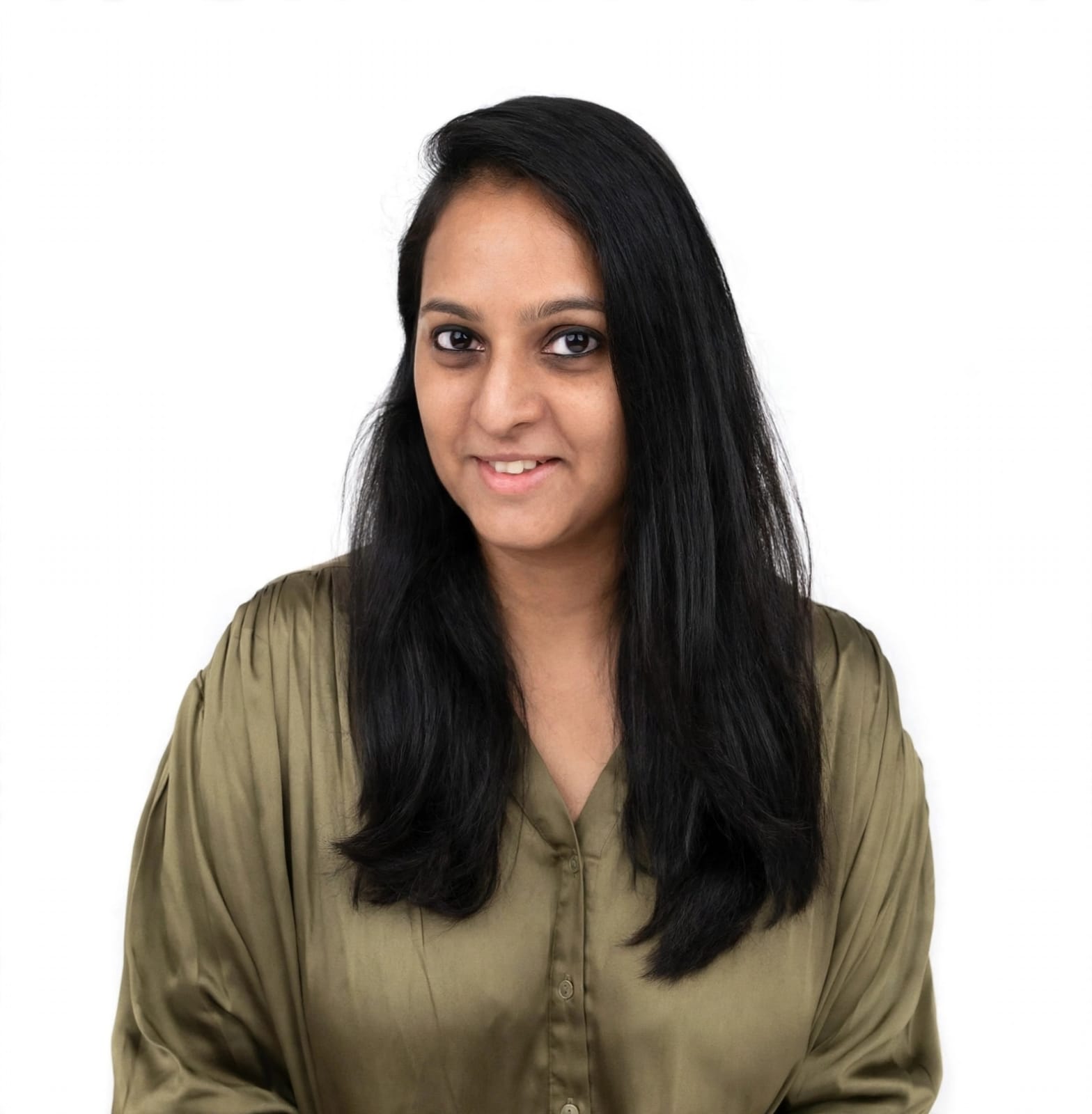
Jyotsna Dwivedi, a Delhi-based visual artist, explores the dynamic interplay between humanity and the vegetal world. Her work captures the subtle drama of plants, their aging, resilience, and intimate rhythms, reflecting our own impermanence. Through drawing, collage, photography, and film, she creates “plant fictions” that challenge human dominance and invite a more contemplative, empathetic way of seeing. In her acclaimed series “Who are they? Where do they come from?”, exhibited at Lalit Kala Akademi, Dwivedi reimagines desire and decay as intertwined forces of creation. Her practice is both poetic and investigative, forging an eloquent dialogue between nature, time, rage, and the fragile human body. Central to her work is the exploration of interactions between nature and gender, and her current exhibition probes what it means to be women outside the social frameworks constructed by society.
In an exclusive conversation with The Interview World, Jyotsna Dwivedi unveils the narrative threads that connect her paintings and the core emotions she seeks to evoke. She shares her perspectives on gender equality within the broader human context, reflects on the evolution of women’s roles in India since independence, and highlights the pivotal role of women leaders in shaping the next phase of progress. She also addresses the persistence of gender bias in society, reveals insights into the number of works featured in her current exhibition, and discusses how societal attitudes toward women are gradually evolving. Through her words, she emphasizes the urgent need for a progressive and inclusive outlook toward women in India. Here are the key takeaways from her compelling conversation.

Q: Could you share the underlying narrative that connects your paintings?
A: What I aim to convey through my work is that the women who emerge from it, though fantastical in form, express deeply real emotions and rage. They navigate symbols of beauty, desire, and frustration, embodying the spectrum of feelings women experience when confined within societal frameworks. These frameworks impose expectations around appearance, gender, and behaviour, often eliciting rage, helplessness, anger, and even a sense of violence. Through these figures, I seek to give voice to that complex emotional landscape, translating what is often internal and unspoken into a visual language.
Q: What core emotion do you seek to express through your paintings?
A: What I want to express is the deep, urgent need to move beyond a language shaped by male-centric perspectives and the values imposed by society. At times, this requires leaving behind familiar frameworks entirely and seeking a new language, one through which we can rediscover ourselves as fully realized human beings.
Q: What does equality between genders mean to you in the context of human existence?
A: For life to continue, both genders are essential. Technically, that is true. But through my work, I explore a deeper reality: the profound rage women feel at the meanings imposed upon them by society. These meanings shape who a woman is expected to be, and it is time to question, dismantle, and recreate them. This transformation does not happen overnight, yet it sparks a vital quest: Who am I? Am I a mother, a daughter, a sister, a contributor to society? Beyond these roles, what does it mean to be alive, to be human, to have desires, anger, and rage?
Women must confront and articulate these fundamental emotions. This exploration is not an opposition to men; rather, it is a pursuit of new meaning, a search for a new language, and a way to inhabit existence fully on their own terms.
Q: How do you perceive the evolution of women’s roles in India since independence?
A: I believe that women have always strived to assert themselves, not only after independence but long before it, against all odds. It is this relentless determination that has brought us to where we are today. The progress we see now is built on the efforts of our grandmothers and ancestors. I do not view it as an isolated moment; rather, it is a continuous, evolving process.
Certainly, women have advanced steadily in education, in the freedom to choose their professions, and in the ways they express themselves. Yet, I feel that male attitudes have not shifted at the same pace as women’s aspirations. This gap highlights the need for men to recognize women not merely as caretakers of the household, but as equals in every sense: partners in thought, action, and opportunity.

Q: How do you see women leaders emerging in India today, and do you believe they’re poised to lead the next phase of progress?
A: Undoubtedly, greater participation of women in social and public spheres inspires others to follow their lead. For instance, the first woman pilot faced far greater challenges than her male counterparts to secure a job. Yet, by breaking that barrier, she ignited the aspirations of countless other women who now dream of taking to the skies.
Q: Do you believe gender bias still persists in our society today?
A: Bias persists in many forms, and it does not stem solely from men. Women themselves sometimes perpetuate it, striving to prove they are exemplary mothers, devoted partners, and ideal homemakers. Society has glorified their multitasking and celebrated their roles as nurturers, often at the expense of their own health and well-being.
Q: Could you share how many artworks or paintings you’ve made for this exhibition?
A: For this show, I have created 54 paintings, each exploring women as they grapple with ideas of beauty, desire, rage, and the essence of life itself. These works capture raw, primal thoughts—intimate reflections on what it means to be alive. They probe questions of companionship, of shared existence, and of the ways women play, invent, and articulate new languages and structures to express themselves. Ultimately, they ask: what do women choose to reveal, and how do they choose to be?
Q: Given that expression is central to any form of development, do you believe society is evolving in terms of empowering women?
A: Yes, I see these changes most vividly in the new generation. Women today are more assertive, confident, and unafraid to claim space. This progress owes everything to our grandmothers and the women who came before, those who asserted themselves, pursued careers, and refused to remain confined to domestic spaces. Their courage laid the foundation for the freedom and agency we witness now.
Q: What attitude do you believe society should adopt toward women in our country?
A: Women deserve the same respect and the same space, whether public or domestic, that any man claims. More accurately, they do not merely deserve it; as human beings, they inherently possess it. Their identities, aspirations, and assertions exist by right and must not be constrained. Society should recognize them fully, without hindrance or compromise.




1 Comment
This was easy to follow, even for someone new like me.
Comments are closed.