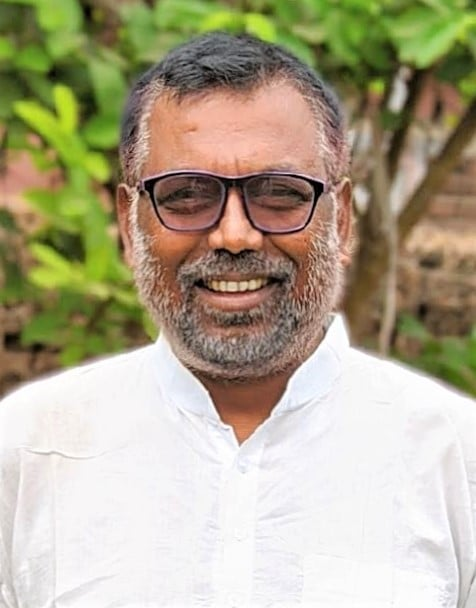


Dr. Rajendra Singh, revered across India as the “Waterman,” stands as a visionary water conservationist and environmental crusader from Alwar, Rajasthan. As Chairperson of Tarun Bharat Sangh (TBS), founded in 1975, he has turned desolate, drought-stricken villages into vibrant ecosystems. Through a powerful blend of ancient wisdom and modern innovation, Dr. Singh has pursued a singular mission: to return water—and dignity—to the land.
In the mid-1980s, faced with the anguish of communities crippled by drought, Dr. Singh took decisive action. He revived the age-old practice of building johads, traditional earthen ponds designed to harvest and store rainwater. What began as a modest local effort soon transformed entire landscapes. These johads did far more than provide drinking water; they replenished groundwater, restored soil fertility, and resurrected five once-dead rivers: Arvari, Ruparel, Sarsa, Bhagani, and Jahajwali.
Dr. Singh’s unwavering commitment to water restoration has earned him global recognition. His honors include the Ramon Magsaysay Award (2001), the Jamnalal Bajaj Award (2005), inclusion in The Guardian’s list of “50 People Who Could Save the Planet” (2008), and the Stockholm Water Prize (2015). Yet, beyond the accolades, his legacy lies in rekindling a timeless truth: saving water is saving life itself. His journey is not merely about reviving rivers; it is about restoring hope, one drop at a time.
In an exclusive conversation with The Interview World, Dr. Rajendra Singh, Chairperson of Tarun Bharat Sangh, reflects on the urgent environmental challenges of our time. He discusses the profound impacts of climate change and global warming on river systems, explains the causes behind rising river levels in mountainous regions and their consequences for local inhabitants, and exposes how corporate-driven industrialization continues to degrade river health and intensify water scarcity. He also shares his perspective on the Mahanadi Bachao Andolan, emphasizing how the movement empowers and safeguards the people of Chhattisgarh and Odisha.
Here are the key insights from his thought-provoking conversation.
Q: What are the impacts of climate change and global warming on river systems?
A: Climate change and global warming have set the planet ablaze with fever. The earth’s balance has fractured, and the climate has deteriorated sharply. As a result, floods and droughts now strike with increasing ferocity, reshaping not only our landscapes but also the very nature of our rivers.
In response, governments have tried to control these changing rivers by constructing dams and barrages. Yet, instead of healing them, these interventions have made the rivers sick. Today, our rivers lie in the intensive care unit of nature, struggling to breathe, struggling to flow.
Their revival is no longer optional; it is essential. When rivers remain ailing, the lifeblood of Indian society weakens with them. And when rivers die, cultures that once flourished along their banks wither and fade.
The eternal, free-flowing rhythm of our rivers has always been the heartbeat of our civilization, nurturing life, livelihoods, and spiritual continuity. But now, that flow faces disaster. The twin forces of floods and droughts have become the chief architects of this crisis.
Floods, in particular, suffocate rivers by depositing layers of silt that harden and seal their beds. As a result, the water that should course through the river’s veins escapes its channel and flows elsewhere. The river’s body remains, but its spirit, its living flow, begins to vanish.

Q: What are the reasons behind the rising levels of rivers in mountainous regions, and how are they impacting the people living there?
A: Government-led “development” has ravaged the fragile Himalayan and mountainous ecosystems. In the name of progress, all-weather roads, massive dams, and deep tunnels have been carved into these delicate landscapes. Each new project cuts into the heart of the mountains, and in doing so, drains the life from the rivers that once flowed freely through them.
As a result, severe erosion now scars the upper reaches of these regions. The displaced soil and debris rush downstream, settling at the riverbeds and hardening like concrete. Gradually, the river’s level rises, but its flow weakens. The water, unable to follow its natural course, spills into villages and cities instead of remaining within the river’s banks.
Today, this has become one of India’s gravest environmental crises: the water problem of our rivers. We must confront it with urgency and vision. The only lasting solution lies not just in technology or policy, but in rekindling people’s love and respect for their rivers.
Without that emotional and cultural bond, no engineering can save them. When love and reverence for rivers fade, the rivers themselves dry up and die, and with them, the very spirit of our civilization.
Q: How has industrialization by corporations affected river health and contributed to water scarcity for local communities?
A: Today, corporations are encroaching on the very lifelines of our land: the rivers. They occupy riverbanks, exploit their resources, and poison their waters by dumping untreated industrial effluents. Step by step, India’s rivers have slipped from the hands of the people into the grip of corporate power.
These corporations have dammed the natural flow, choked the currents, and reshaped rivers into tools of profit rather than sources of life. This is the stark reality of a corporate-driven democracy, a system where economic might outweighs ecological wisdom.
In such a democracy, rivers are no longer seen as public commons or sacred lifelines; they have been reclassified as corporate assets. And when rivers become property instead of heritage, both nature and democracy begin to wither.
Q: What is your opinion on the Mahanadi Bachao Andolan?
A: For the past eleven years, the Mahanadi Bachao Andolan has united people across communities in a shared mission: to restore the Mahanadi to her original glory. This people’s movement stands as a powerful reminder that safeguarding a river is not just an environmental duty, but a moral and cultural responsibility.
The work being done is vital, and its priority cannot be overstated. We must sustain this movement with conviction and hold the government accountable for protecting the river’s health and dignity. Rivers belong equally to people, animals, and birds, not to industries or corporate families.
If the rights of those who depend on the river are stripped away and handed to industrial interests, the struggle will only intensify. The spirit of resistance will grow stronger, not weaker.
I stand firmly with the people of Odisha in the Mahanadi Bachao Andolan and pledge my unwavering support until justice is done and the river flows freely once again. I am confident that this movement, driven by collective will and love for the Mahanadi, will soon achieve its goal.
Q: How will this movement benefit the people of Chhattisgarh and Odisha?
A: If this river dries up, its loss will devastate everything along its banks. Fields will wither, fish will vanish, and the people who depend on its waters will face hardship and displacement. A lifeless river means a lifeless land. But if the river is revived, the transformation will be profound. Agriculture will bloom again, fisheries will thrive, and livelihoods will return with dignity. When the river lives, it breathes life back into every community it touches.