

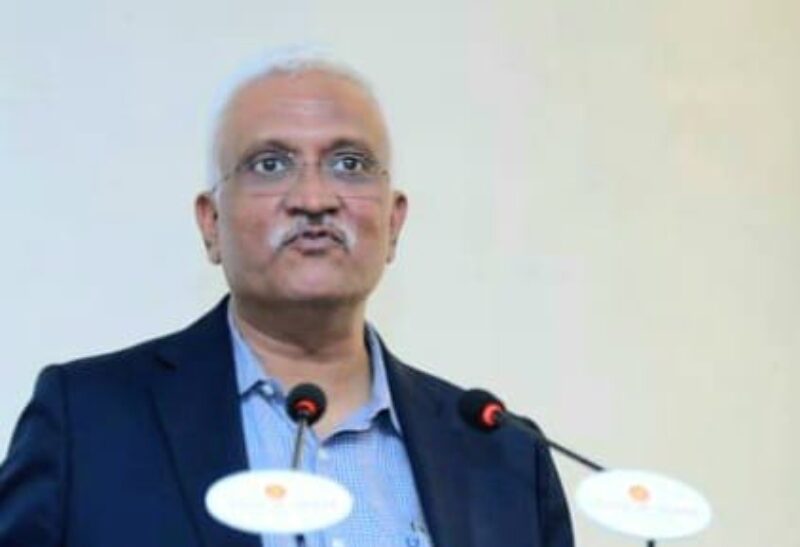
The report “Tariff Volatility and Stakeholder Dynamics in India’s Edible Oil Sector,” jointly produced by VeK Policy Advisory and Research, Jawaharlal Nehru University (JNU), and ASSOCHAM, analyses how tariff fluctuations and policy uncertainty shape India’s edible oil ecosystem, influencing everyone from farmers and processors to end consumers.
In an exclusive conversation with The Interview World, T. S. Vishwanath, Founder and Executive Chairman of VeK Policy Advisory and Research, discussed the report’s insights during the High-Level Policy Dialogue on “Navigating India’s Policy Landscape in the Edible Oil Sector,” organized by ASSOCHAM. The discussion delved into the report’s core findings and actionable recommendations—chief among them, the need for consistent and predictable policies, diversification of import sources, and deeper collaboration between the government and industry.
Furthermore, the dialogue explored practical strategies to boost domestic oilseed production, cut import dependence, and advance India’s pursuit of self-reliance in edible oils.
Below are the key takeaways from this engaging exchange.
Q: Could you please highlight the key findings and insights from the report “Tariff Volatility and Stakeholder Dynamics in India’s Edible Oil Sector”, jointly produced by your organization, JNU, and ASSOCHAM?
A: The report primarily emphasizes the critical need for greater policy stability concerning the import of ingredients used in the food processing sector. For this study, we concentrated specifically on edible oil, as fluctuations in imports in this category have far-reaching effects, impacting stakeholders across the value chain, from farmers who produce the raw materials to manufacturers and ultimately consumers. This makes edible oil an ideal case study to understand broader sectoral implications. Our analysis of the industry, conducted through this lens, enabled us to develop targeted recommendations aimed at mitigating uncertainty and promoting sustainable growth.
Our findings reveal that clearer and more consistent tariff and import policies would offer significant advantages to the sector. Frequent policy changes create unpredictability in ingredient costs, directly affecting manufacturers who often cannot adjust consumer prices accordingly. This volatility erodes profit margins, hampers long-term planning, and weakens the sector’s resilience. Therefore, ensuring stable and predictable import policies is essential for fostering growth, stability, and efficiency in the food processing industry.
Q: Considering the current geopolitical developments and India’s increasing dependency on edible oil imports, what policy measures should the government implement to enhance the stability and resilience of this sector?
A: The urgency for policy stability has grown significantly due to dramatic shifts in the global geopolitical landscape. Countries that were once considered predictable trading partners, such as the United States, are now exhibiting increasing levels of uncertainty, creating challenges for planning and procurement. At the same time, India’s dependence on a limited number of key suppliers, particularly Malaysia and Indonesia, remains high. While these countries have historically been reliable, it is crucial to diversify sourcing to reduce vulnerability and enhance supply chain resilience.
Equally important is the need for greater transparency and clarity in import procedures. Stakeholders require detailed information on quantities being imported, prevailing prices, and applicable tariffs. While global markets ultimately influence prices, government policies must be clearly defined, consistent, and predictable. Such stability would enable the industry to better navigate geopolitical risks, mitigate tariff-related shocks, and prepare proactively for any unforeseen disruptions in supply chains, thereby ensuring sustained growth and resilience.
Q: With oilseed cultivation area showing little growth and farmers not receiving adequate benefits, what steps can the government take to boost this sector and improve farmer incentives?
A: The conference generated a number of valuable and actionable ideas for strengthening the edible oil sector. One key recommendation is that edible oil producers should receive the same level of support and incentives currently extended to rice and wheat farmers. Providing such support could encourage the expansion of cultivation areas, thereby boosting domestic production.
Another important point raised was the need to identify specific regions within the country that are most suitable for increased edible oil production. This targeted approach would ensure optimal use of land and resources. Additionally, participants emphasized the importance of diversifying production beyond palm oil to include other viable oil crops. Such diversification would not only increase overall output but also enhance the resilience of the sector against price fluctuations and supply disruptions.
Taken together, these measures underscore the critical importance of closer collaboration between industry and government. Our study highlights that both sectors must work hand in hand to identify prime cultivation areas and implement strategies efficiently, ensuring sustainable growth and stability in edible oil production.
Q: What strategies can be adopted to reduce India’s dependency on palm oil imports, and which indigenous oils, such as mustard, hold the greatest potential to serve as viable alternatives?
A: Mustard oil holds significant potential as a domestic alternative, but reducing the country’s dependence on palm oil requires a more comprehensive and well-coordinated strategy. Encouraging the production and consumption of healthier edible oils aligns closely with the Prime Minister’s call to lower overall edible oil consumption. By promoting oils that are better for health, we can gradually influence consumer behaviour, making the transition away from palm oil both practical and sustainable over the long term.
Simultaneously, the government’s focus on self-reliance can play a crucial role in supporting the domestic production of these healthier alternatives. Investments in cultivation, processing, and distribution infrastructure will strengthen the supply chain, ensuring that healthier oils are widely available and affordable. By combining consumer awareness initiatives with government support, India can effectively reduce its import dependence while enhancing public health and strengthening national food security.
Q: The National Mission on Edible Oils seeks to enhance India’s self-sufficiency in this sector in the next seven years. Do you think this target is achievable, or does it require further policy impetus and support?
A: I don’t believe any of this will be easy, as agricultural initiatives inherently involve numerous and often unpredictable challenges. Nevertheless, pursuing self-reliance remains the right and necessary course of action for the country’s long-term growth and resilience.
We have committed ourselves to this path, fully aware of the obstacles that lie ahead. Achieving success will require active collaboration with all stakeholders, as government action alone cannot address the complexities of agricultural development. Policies must be adaptive, evolving through continuous dialogue and consultation, while carefully considering the realities on the ground and the experiences and perspectives of farmers, producers, and other key participants in the sector.








2 Comments
I like how you presented both sides of the argument fairly.
I really needed this today. Thank you for writing it.
Comments are closed.