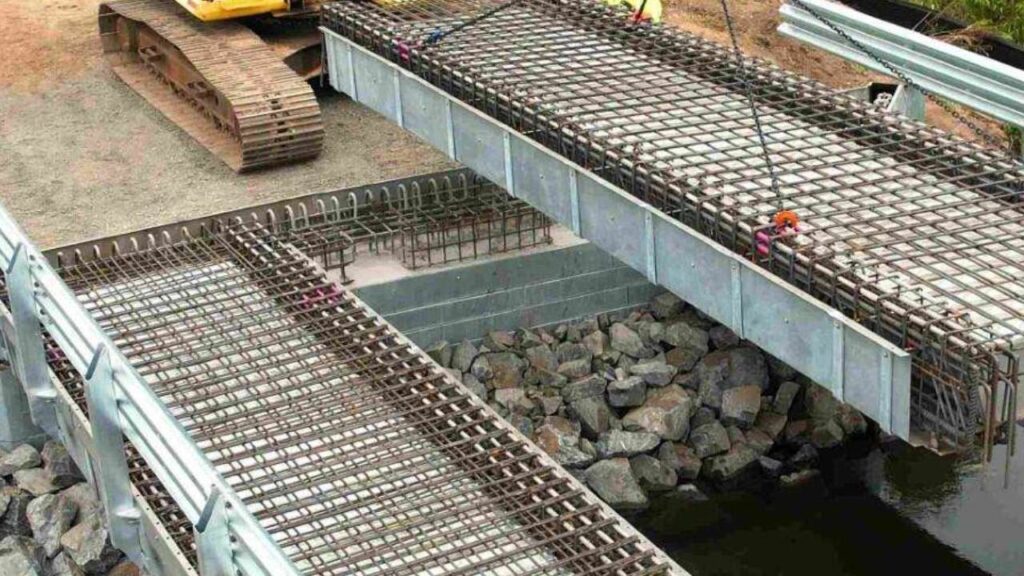
InQuik Group builds cutting-edge modular bridging systems that are transforming how concrete bridges are constructed. Through its flagship InQuik Bridging Systems, the company delivers pre-engineered, pre-certified, and pre-fabricated components designed for road, rail, maritime, and defence projects. These lightweight, stackable modules allow crews to install bridges quickly with small cranes. Moreover, they simplify transport logistics, cut maintenance demands, and improve worker safety by enabling assembly entirely from above the deck. Certified for long-term resilience, every bridge meets industry codes and offers a 100-year design life. By speeding up delivery and lowering costs, InQuik equips infrastructure developers worldwide to build faster, safer, and more efficiently.
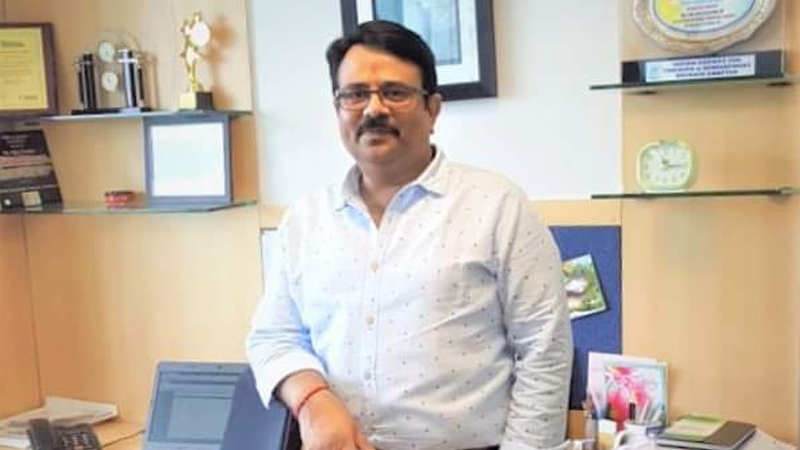
In an exclusive conversation with The Interview World at the FICCI Urban Transportation Conclave 2025, Logan Mullaney, Global CEO of InQuik Group, underscores the distinct advantages of modular bridge technology, illustrates the wide range of its applications, and breaks down the core engineering principles that power the system.
The following points capture the most compelling insights from his discussion.
Q: What unique value has InQuik Group added to India’s urban transportation ecosystem, and how has it addressed the sector’s specific challenges?
A: We have developed a modular bridge construction technology that enables rapid bridge assembly with minimal skilled labour. Because the system is extremely lightweight, it also reduces on-site risk. Yet, despite its low weight, the structure is engineered for a service life of more than 100 years with zero maintenance. In Australia, we created this solution as a truly unique advancement, and it is now available worldwide. Moreover, we are building a proof of concept with Tata Steel on the expressway between Kolkata and Varanasi, scheduled for construction early next year.
Q: Are these bridges designed for road traffic, railway use, or both?
A: Yes, our system supports both use cases. We are currently prioritizing a road-based proof of concept. However, the same technology can also be deployed for rail and metro lines, significantly accelerating the construction of those projects as well.
Q: How cost-effective are these bridges compared to conventional bridge-building methods?
A: We have built many of these bridges around the world, often at costs lower than conventional construction. At the same time, we cut project timelines dramatically, reducing construction periods from months to mere days. In fact, in several cases, we have replaced a bridge on an active roadway in just three to five days.
Q: Are these bridges safe for multi-purpose uses, and are they being adopted in other countries as well?
A: Road and bridge design standards are extremely stringent, and the IRC mandates rigorous approval and verification processes. Our system has undergone exhaustive technical reviews and not only meets these requirements but consistently exceeds them. As a result, we have secured approvals in many countries worldwide, including the United States, across Europe, and several additional international markets.
Q: What core engineering principles underpin the construction of these bridges?
A: Our system works by shifting the most technical aspects of bridge building offsite. Traditionally, contractors assemble reinforcement and formwork directly at the construction site, a labour-intensive process that demands high skill and carries significant risk. Instead, we fabricate the formwork and reinforcement offsite as fully prefabricated components. These units arrive ready to install, are self-supporting once placed, and only need to be filled with concrete. By moving the complex and high-risk tasks offsite, we dramatically accelerate on-site construction and improve overall project safety and efficiency.
Q: Does your company also provide maintenance services for these bridges?
A: As a company, we do not offer maintenance services because our system is engineered to eliminate the need for maintenance altogether. By redesigning the construction method, we remove traditional maintenance-heavy components such as bearings, expansion joints, and tie-downs. Eliminating these elements also removes long-term liabilities for the asset owner, ensuring a more durable and cost-efficient structure over its lifespan.