

India’s progress in reducing poverty, especially child poverty, has been both significant and instructive. Over the past two decades, the country has sharply reduced monetary and multidimensional poverty through a steadily expanding ecosystem of policies and programmes. Yet understanding child poverty demands a shift from household-level indicators to the specific deprivations individual children experience. With nearly 200 million children still missing at least one essential service, India’s scale remains a defining challenge. Even so, recent gains, most notably the rapid expansion of social protection, show the power of sustained, rights-based investments.
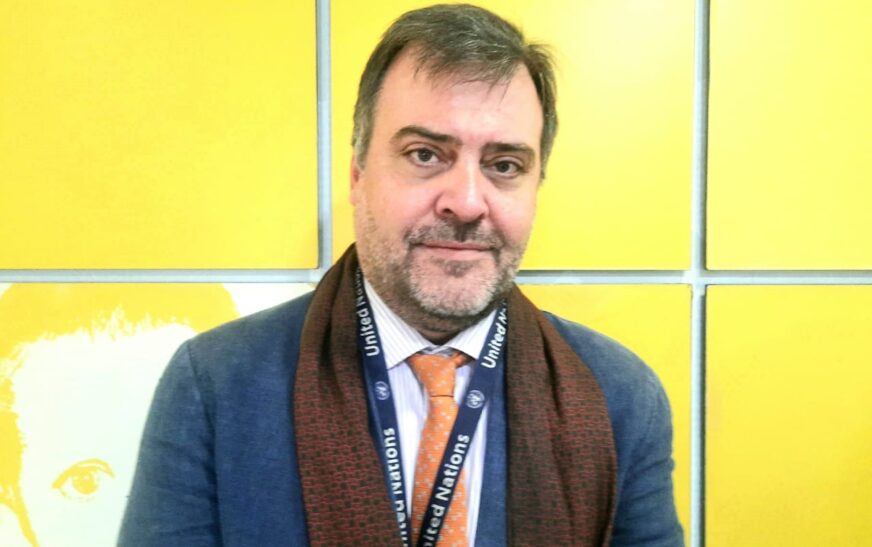
Against this backdrop, The Interview World spoke with Christopher Garroway, Economist and Development Coordination Officer, UN in India. He reflected on India’s achievements in eradicating child poverty, examined the model’s global relevance, emphasized children’s role as human capital, and outlined the priorities that should guide India’s next phase. The following are the key insights from his conversation.
Q: How do you evaluate India’s progress in eradicating poverty, specifically with regard to children?
A: India has witnessed a dramatic reduction in poverty across the country, both monetary and multi-dimensional. However, assessing child poverty remains inherently complex because poverty is usually measured at the household level. Typically, we determine whether a household is poor, not whether an individual child is deprived. Analyses such as those in the UNICEF report therefore play a crucial role: they shift the lens from households to children themselves. Through this child-focused approach, we also see substantial progress over the past two to three decades.
Yet, India’s scale presents a continuing challenge. As the world’s most populous nation, it still has nearly 200 million children who lack at least one essential service, according to the National Family Health Survey (2019–21). These essential services include nutrition, health, education, housing, water, and sanitation. Under the rights-based framework used in the UNICEF report, missing even one of these six services places a child in deprivation.
Even so, the overall trend is encouraging. The number of deprived children continues to decline as national and state policies, delivered through a wide range of schemes, expand, overlap, and converge to ensure that fewer children fall through the gaps. One of the most striking and positive developments in recent years is the rapid expansion of social protection coverage. The share of India’s children and families receiving at least one form of basic social protection has risen from 19 percent in 2015 to more than 64 percent in 2025, according to the latest ILO data. This expansion is a major driver behind the steady reduction in child deprivation and child poverty.
Q: To what extent do you think the Indian model can be replicated in other countries?
A: There is much the world can learn from India’s success in reducing poverty. To begin with, India’s digital public infrastructure, anchored in the JAM trinity, has transformed the delivery of welfare. Its accessibility sharply reduces leakage and ensures that anyone with a mobile phone can receive direct transfers and government benefits with speed and transparency.
Equally significant is India’s formidable food security architecture. The Public Distribution System, designed as a rights-based guarantee, proved its strength during the COVID-19 pandemic. While many countries faced severe food shortages, India avoided a surge in food insecurity. Prices did rise, but the system’s reliability protected millions from hunger. This alone offers a valuable lesson for other nations.
India also demonstrates the importance of employment-based safety nets. The Mahatma Gandhi National Rural Employment Guarantee Scheme played a crucial role in strengthening household resilience during the pandemic. Likewise, the Mid-Day Meal Scheme remains a cornerstone of India’s strategy to ensure adequate nutrition for children and young people.
Together, these initiatives illustrate practical and scalable approaches that many countries can adapt from India’s experience.
Q: How do you view the role of children as human capital in a developed nation?
A: Children are often described as the future, and in India’s case, that statement carries extraordinary weight. Today’s children will form the largest youth generation ever concentrated in a single nation. The opportunities they receive, the schools they attend, the skills they acquire, and the livelihoods they can pursue, will directly shape India’s trajectory.
As these children grow into adulthood and build families of their own, they will drive the country’s economic, social, and technological progress. By the time India turns 100, it is entirely possible for this vast youth population to live in a prosperous, resilient nation. This future is within reach, even as the country navigates the complex challenges of climate change and global geopolitical tensions.
Q: How can India chart its path forward, and what major initiatives should it focus on next?
A: India has made remarkable progress in reducing extreme poverty, deprivation, and multidimensional poverty. At this stage, the country’s priority must shift toward last-mile delivery, ensuring that every scheme and programme reaches every individual it is designed to serve. These initiatives should function not only as safety nets that prevent people from slipping into poverty but also as springboards that help them build human capital.
Through these programmes, people must gain the skills, knowledge, education, and health support necessary to secure better livelihoods. When that happens, they can access better jobs, expand their opportunities, and enable their children to achieve an even higher quality of life. In this way, effective last-mile implementation becomes the pathway to sustained and intergenerational progress.




1 Comment
World mein Kahin bhi Kisi Desh mein , Manavta aur Insaaniyat ki Raksha Honee Chahiye.
Comments are closed.