

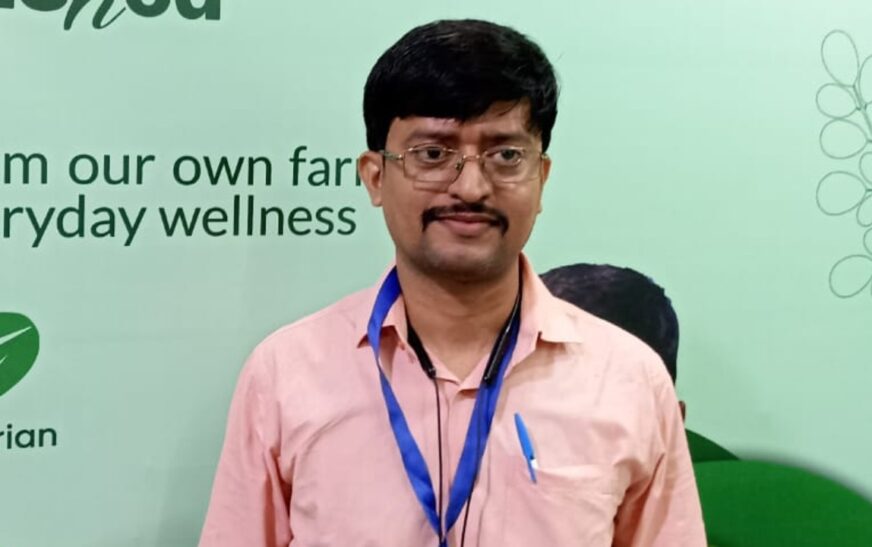
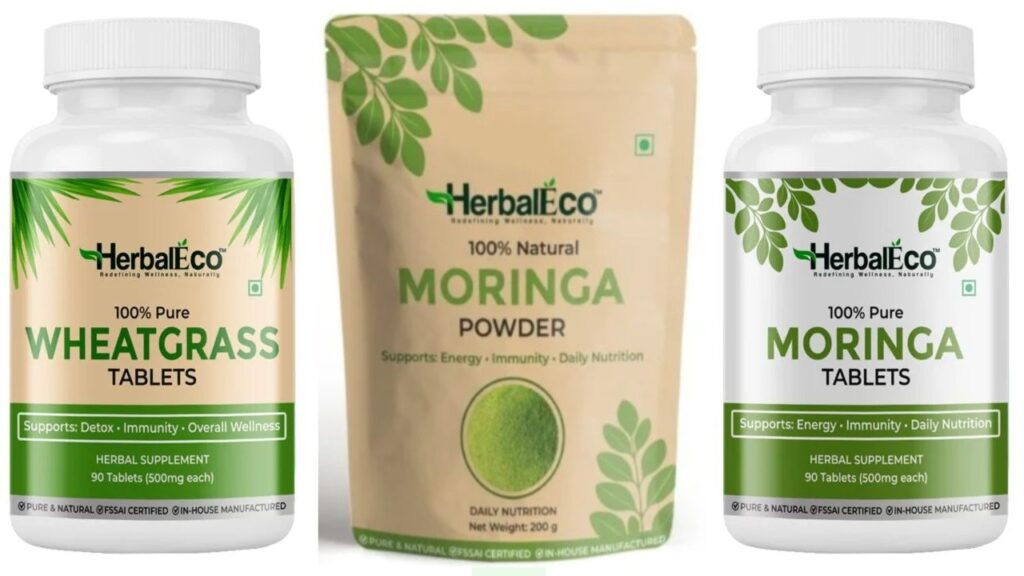
HerbalEco is an Indian wellness brand that champions organic, plant-based nutrition and herbal wellness. Drawing from its own farms and a wide farmer network across India, the company cultivates more than 10,000 acres under organic and natural farming practices. It follows a disciplined, end-to-end process: chemical-free cultivation, traceable sourcing, careful harvesting, shade drying, precision milling, and rigorous lab testing. As a result, it preserves both purity and nutritional integrity. Its portfolio prominently features moringa and wheatgrass in powders, capsules, and tablets, designed to support daily immunity, energy, digestion, and overall well-being. Through this model, HerbalEco positions itself as a farmer-centric, sustainability-led brand that delivers clean-label, ethically sourced products from India to global standards.
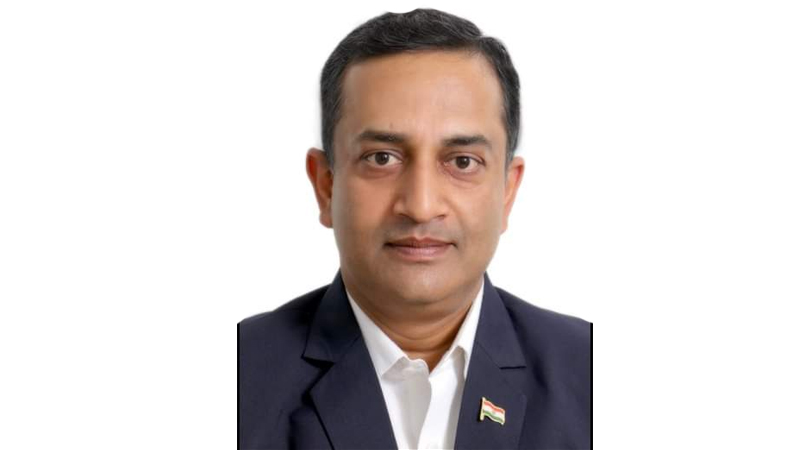
In an exclusive conversation with The Interview World at Organic Expo 2026, Brahmananda Behera, Co-founder and CEO of HerbalEco, discusses the company’s organic product range and the features that set it apart. He explains how HerbalEco safeguards the authenticity of its organic claims, identifies its core customer segments, evaluates the market potential for its offerings, and outlines his long-term vision for expanding both product lines and market reach. Here are the key insights from that engaging conversation.
Q: What organic products does HerbalEco manufacture, and how do they differ from comparable products currently available in the market in terms of quality, ingredients, and value?
A: First, we cultivate on our own farms and also partner closely with agripreneurs. At the same time, we actively support young people who want to enter farming, whether in organic, natural, or conventional agriculture.
We have built strong partnerships with growers in Surat, other parts of Gujarat, and Odisha. As a result, we manage the entire journey from farm to finished product with flexibility and control across the value chain.
At every stage, our team monitors the process carefully. Our lab technicians verify quality, and our production team ensures consistency and precision. This integrated approach clearly sets our products apart. Unlike many others, we maintain control from field preparation and cultivation to processing and final production. Therefore, our products reflect a level of traceability, quality assurance, and operational discipline that distinguishes us in the market.
Q: What measures and quality-control mechanisms do you follow to ensure your products are genuinely organic and consistently produced according to organic standards?
A: Before we prepare any field, we begin with soil testing. We assess soil quality first because it determines the right course of action. Based on those results, we treat the land strictly in line with organic farming practices.
Next, we nourish and protect the crop without chemical pesticides. Instead, we use compost-based inputs and natural solutions such as cow dung, neem, and cow urine for soil health and pest management. We produce these inputs in-house, which gives us tighter control over quality and consistency.
Thereafter, we follow every step within a disciplined organic farming system. At the same time, we train the farmers associated with us to transition methodically from conventional farming to natural practices and, ultimately, to certified organic cultivation. Through this approach, we strengthen both product integrity and farming capability at the grassroots level.
Q: Could you share insights into your key customer segments and the products they source from you most frequently?
A: Across India, a wide range of B2B buyers and large farms source from us. Our product basket includes moringa powder, moringa leaves, alfalfa powder, alfalfa leaves, barley powder, barley leaves, and even dried mango.
We source these products primarily from Odisha, especially from the Dhenkanal and Angul districts. As a result, our buyers rely on us not only for product variety, but also for dependable origin, consistent quality, and scalable supply.
Q: How do you assess the market opportunity for your products, and what has been the level of acceptance among your B2B customers?
A: At present, the market is expanding primarily in the moringa segment. By contrast, alfalfa and barley have not yet seen comparable growth in India, particularly in the B2B space. For now, demand for these products comes largely from exporters and institutional buyers rather than from the domestic mass market.
Moringa, however, stands on a different footing. In India, it is witnessing strong demand from both end consumers and exporters. Consequently, moringa has emerged as the most promising and commercially dynamic category in this segment.
Q: What is your long-term vision for the next decade, and what new products, innovations, or areas of growth are you planning to develop?
A: Our immediate priority is to strengthen and scale operations at our Surat farm. From there, we plan to establish a stronger farming base in Odisha, particularly in the Dhenkanal and Angul districts.
Next, we aim to build a network of 100 to 200 agripreneurs. We will work closely with them to transition farming practices in a structured way, from conventional methods to natural farming, and then to organic cultivation. This step will lay the foundation for both scale and long-term quality assurance.
Once this ecosystem is firmly in place, we will expand from domestic supply to direct exports in key international markets, especially the United States, Canada, and the Middle East. We have also built ties with Ghana, which adds further strategic depth to our expansion plans.
Over the next decade, our goal is clear: to create a robust agripreneur-led sourcing network, strengthen organic production at scale, and emerge as a direct exporter to global markets. For now, we continue to supply within India, including to food aggregators, while preparing for the next phase of international growth.





1 Comment
You write with so much clarity and confidence. Impressive!
Comments are closed.