
India’s effort to balance its soaring energy demand with the net-zero 2070 pledge calls for regulations that are both visionary and flexible, anchored firmly in the Electricity Act of 2003. Transmission networks remain relatively strong, yet distribution losses, aging infrastructure, and subsidy burdens continue to erode efficiency. The solution lies in strengthening grids, modernizing systems, and accelerating the adoption of decentralized energy resources (DERs): solar, wind, biomass, and storage. These measures not only ease systemic pressure but also empower rural youth and reduce distress migration.
Moreover, DER-driven micro-industrialization creates local jobs, strengthens food security, and nurtures sustainable livelihoods. However, the regulatory framework must anticipate emerging challenges, particularly in solar panel and battery waste management. Without such foresight, the green transition risks creating a new layer of environmental liabilities.
Innovation, strict compliance, and participatory governance together form the foundation of India’s sustainable energy future, one where growth, equity, and environmental responsibility converge.
In an exclusive interaction with The Interview World at the 3rd Energy Summit hosted by the Indo-American Chamber of Commerce, Ashok Kumar Rajput, Former Member (Power Systems) and Ex-Officio Additional Secretary to the Government of India, Central Electricity Authority, Ministry of Power, outlined the regulatory reforms needed to meet rising energy demand while honouring the nation’s net-zero commitment. He explained methods to reduce distribution losses, stressed the urgency of distributed energy resources to secure 24×7 power supply, emphasized their economic advantages, and highlighted the pressing need to address solar and battery waste as India accelerates its clean energy transition. Here are the key takeaways from his compelling conversation.
Q: How can India design and implement regulatory changes that simultaneously address rising energy demand while ensuring compliance with its commitment to achieve net zero emissions by 2070?
A: Regulation emerges from necessity and is guided by long-term vision. A sound regulatory process remains flexible, just as policies must remain adaptive yet forward-looking. However, the true strength of regulation lies not in its design but in its compliance. Executives, regulators, and all stakeholders, whether directly or indirectly involved, must implement and uphold these provisions with integrity.
At its core, regulation protects stakeholders on both sides: utilities and consumers. In the energy sector, India operates under a robust framework anchored in the Electricity Act, 2003. This legislation empowers a multi-tiered system of oversight and reform. At the central level, a strong regulatory authority presides, mirrored by state regulators. For smaller states and union territories, joint electricity regulatory commissions ensure fair governance. These bodies function as independent, quasi-judicial institutions, tasked with balancing diverse interests.
Importantly, if stakeholders disagree with a commission’s order, they can appeal before the Appellate Tribunal for Electricity (APTEL). Should dissatisfaction persist, the path extends further to the Honourable Supreme Court of India.
Thus, the regulatory mechanism is not merely procedural. It is a dynamic safeguard, visionary in scope, rigorous in structure, and ultimately designed to uphold fairness, accountability, and trust in India’s energy landscape.
Q: What innovative technologies and systemic changes are needed in India’s power sector to effectively reduce massive distribution losses and enhance efficiency?
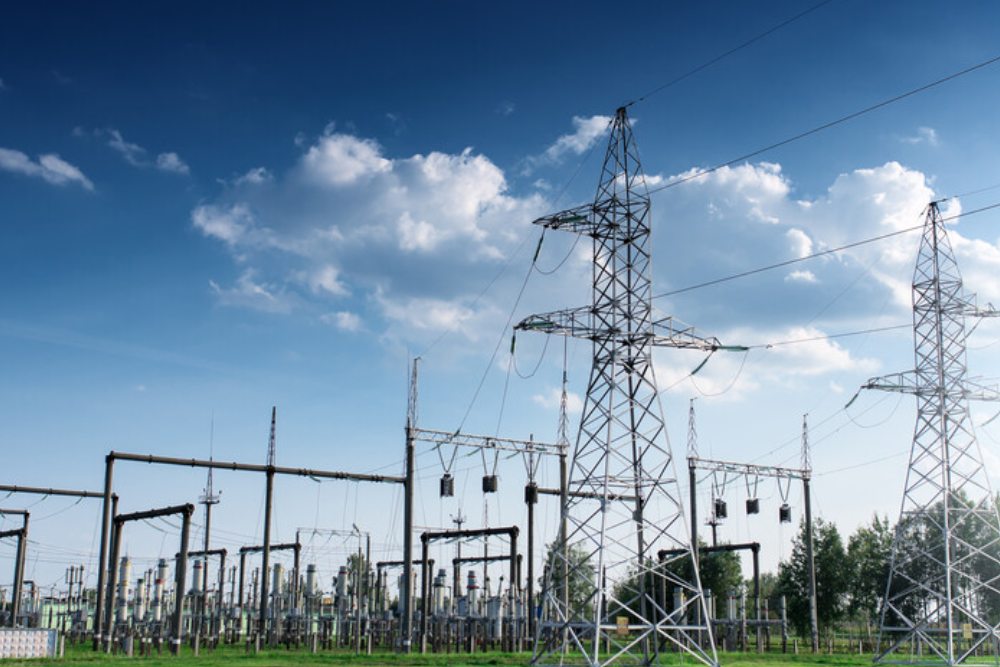
A: The distribution system remains one of the most complex components of the power sector. Our geographical spread is vast, and consumer density varies dramatically. This diversity, coupled with extensive low-tension (LT) lines, has made them the primary source of high technical losses. In contrast, transmission losses are contained within 3 to 3.5 percent, well within international benchmarks and considered efficient by any standard.
The challenge lies largely within the distribution framework. Designed as a radial system, it often carries simultaneous loads across a single line. When that line becomes overloaded, the physics of electricity dictate the outcome: losses rise in proportion to the square of the current. In other words, as demand spikes, inefficiency multiplies.
Compounding the problem is the outdated infrastructure. The network was originally built to meet the requirements of a different era. While upgradation has begun, the pace of strengthening and capacity expansion has lagged behind the explosive growth in demand. Funding remains a critical bottleneck. Governments must balance limited resources across multiple sectors, while distribution companies, though now independent corporate entities, struggle with the dual burden of high procurement costs and subsidized supply. In many states, compensation for subsidies is partial or delayed, weakening the financial health of discoms and limiting their ability to invest in infrastructure upgrades.
Aging assets further erode efficiency. Distribution transformers, deployed in large numbers, inherently suffer load-dependent losses. With rising demand, these losses escalate. Failures, though limited, occur due to factors such as water ingress, lightning, overloading, unbalanced loading, or harmonics. Rewinding failed transformers reduces efficiency even further, compounding technical losses.
Quality of construction adds another dimension. Loose connections, poor earthing, sagging wires, and frequent faults cause interruptions that reverberate upstream, destabilizing the wider system. Each disturbance feeds back into the grid, amplifying imbalance.
Modern load profiles intensify the strain. The system was designed for sinusoidal loads, but today’s digital appliances, welding equipment, and other non-linear devices inject harmonics into the network. These distortions not only reduce efficiency but also accelerate wear on equipment, driving losses higher.
In sum, technical losses in distribution stem from a combination of outdated design, insufficient capacity augmentation, financial constraints, aging infrastructure, and changing load dynamics. Transmission remains efficient, but unless distribution receives focused investments in modernization, harmonics mitigation, and system balancing, losses will persist at levels far above global norms.
Q: Where does India currently stand in building a robust national grid and diversified energy feeding systems to ensure reliable, continuous 24×7 power supply for all citizens?
A: I can confidently state that India’s transmission system is both robust and adequate. It has been designed with N-1 redundancy in mind, ensuring contingencies are addressed with foresight. Adequate capacity margins are built in as well, making the transmission backbone resilient and reliable by any standard.
However, the distribution network presents far greater challenges. Demand is expanding at an unprecedented pace. Rising living standards, rapid urbanization, and the electrification of rural areas are driving exponential growth in load density. While significant progress has been made to strengthen distribution, the scale of expansion calls for much more aggressive reinforcement.
Here, the food–water–power nexus becomes unavoidable. India must secure food supplies, which means sustained production of energy-intensive crops such as rice, sugarcane, and wheat. Agriculture, however, relies heavily on groundwater, often extracted from increasingly deeper aquifers. Climate change and reckless land use have aggravated the problem. Ponds and natural recharge bodies have disappeared under urban sprawl, reducing groundwater replenishment. As water tables fall, farmers consume ever more electricity to lift the same volume of water. This vicious cycle threatens sustainability on multiple fronts. Yet, solutions exist.
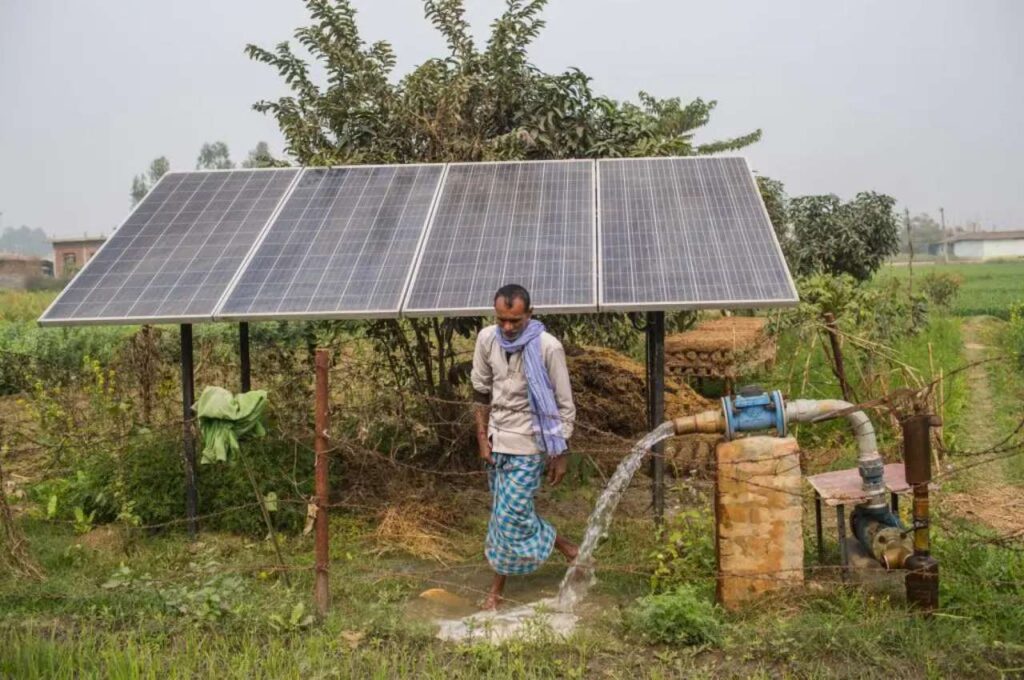
One clear remedy lies in diversifying our dependence away from centralized grid power. Distributed Energy Resources (DERs) can shoulder part of the burden. Initiatives like the PM Suryaghar Yojana, alongside widespread adoption of rooftop solar, can ease grid stress. India has already committed to a 500 GW target from non-fossil sources. Contrary to popular belief, this is entirely achievable. Consider the mathematics: India has six lakh villages. If each village generates even 0.5 MW, the contribution totals 300 GW. Combined with over 200 GW of existing renewable capacity and the large-scale projects under development, the 500 GW target is well within reach.
Small, distributed steps can indeed build a vast ocean of clean power. The potential lies not only in solar rooftops but also in floating solar installations on artificial lakes, in biomass and biogas systems, and in localized wind energy. Emerging vertical-axis turbines now operate efficiently even at low wind speeds, making them suitable for decentralized rural deployment. Collectively, these systems could easily account for hundreds of gigawatts.
The benefits extend far beyond energy security. Rural India houses millions of unemployed youth. Empowering them to manage, operate, and co-own distributed energy assets can create a powerful socio-economic multiplier. For instance, local cooperatives could be tasked with managing solar farms, floating solar plants, or hybrid bioenergy projects. Slight fluctuations in supply are acceptable in rural areas, and small-scale storage solutions can further stabilize operations.
Such localized generation will sharply reduce technical losses. Electricity will no longer need to travel from distant substations to rural feeders. Lower transmission distances mean reduced “I²R” losses, improving efficiency across the network. Most importantly, decentralized energy aligns perfectly with global commitments to energy transition and net zero. These are not aspirational slogans. They demand concrete actions, and DERs provide a practical pathway.
Large-scale utility generators, thermal, hydro, and gas, should continue supplying bulk continuous loads for industries and critical infrastructure. Simultaneously, rural and small consumers should draw power locally from decentralized sources. This dual model ensures equity, where both large industrial hubs and small villages receive reliable access.
The institutional framework, however, requires innovation. Discoms possess the technical expertise, yet they often perceive solar and DERs as a threat to their consumer base. A collaborative model can dissolve this conflict. Shared ownership, say 50-50 or even 70-30 between discoms and local cooperatives, can harness the strengths of both. Discoms would oversee technical standards, grid integration, and revenue management. Local youth, under trained managers, would operate and maintain the systems. This partnership would protect discoms’ interests while creating meaningful employment at the grassroots.
India stands at a decisive juncture. The transmission system has proven its strength; the challenge now lies in transforming distribution through innovation, decentralization, and local participation. If we build distributed energy with the same determination that we built our transmission backbone, the country can meet its renewable targets, empower its rural population, and accelerate the march toward net zero with confidence.
Q: What economic opportunities and livelihood benefits can Distributed Energy Resources (DERs) create for rural youth, fostering employment, entrepreneurship, and sustainable community development?
A: Access to reliable electricity at the village level transforms rural life in profound ways. When power reaches people at their doorstep, the immediate benefit is the reduction of mass migration to urban areas. Families no longer feel compelled to abandon their homes in search of livelihood opportunities. Instead, they can sustain and even expand their economic activities within their own communities.
Take livestock rearing, for instance. In the absence of refrigeration or processing facilities, villagers hesitate to keep milk-producing cattle. Without electricity, milking, storage, and processing become formidable challenges. As a result, milk, curd, or ghee production often remains untapped. With electricity, however, micro-level industries can flourish. Small dairy units can process milk into value-added products. Similarly, fruit that would otherwise rot can be preserved and processed in small food units, preventing wastage and creating income streams. These small-scale industries lay the foundation for rural industrialization.
Education is another critical factor. Many families migrate because schools are absent or inadequate in villages. If proper educational infrastructure exists alongside electricity, children can study in their own communities. Power also enables evening study hours, expanding learning opportunities. It further supports artisans, tailors, and knitters, who can extend their work into the night, enhancing productivity.
Migration also stems from the lack of basic infrastructure: roads, drinking water, and irrigation. Integrated development demands more than rhetoric; it requires planned investments in these essentials. Villagers often walk miles to fetch water from deep wells or distant lakes. If ponds and local water bodies are developed, they can serve multiple purposes, providing water for cattle, percolating into groundwater for drinking needs, and supporting irrigation. This not only improves crop yields but also ensures food security.
Electricity strengthens rural services further. Flour mills, for example, often remain non-functional due to unreliable power, forcing villagers to waste time and labour. A steady supply ensures timely operations, saving valuable human effort. Moreover, electricity enhances healthcare delivery, supports local enterprises, and even improves access to healthy entertainment. Collectively, these developments create a more vibrant, self-reliant village economy.
In essence, electricity is not merely a convenience. It is the backbone of rural empowerment. It curtails migration, enables micro-industrialization, and improves education, health, and livelihoods. With power, villages gain the means to prosper, and people gain the dignity of thriving in their own homeland.
Q: As India rapidly expands solar energy generation, what long-term regulatory frameworks are needed to effectively manage e-waste from solar PVs and ensure sustainable environmental practices?
A: I realized early on that solar energy presents a unique challenge because it is not directly governed by the Ministry of Power but by the Ministry of New and Renewable Energy (MNRE). Their guidelines mandate that once solar installations reach the end of their life cycle, the panels must be recycled. Anticipating this issue, the Central Electricity Authority (CEA) initiated action. The Ministry of Power approved dedicated funds for the Central Power Research Institute (CPRI), a premier body responsible for research and testing in the power sector. However, this approval came with a clear stipulation: CPRI had to include projects on recycling solar panels, storage batteries, and even turbine blade fibers. Thus, the foundation for a recycling ecosystem was laid years ago.
My concern about solar panel disposal dates back to my first visit, nearly 14 years ago, to a modest three-megawatt plant near Kolar, 80–90 kilometers from Bangalore. The site faced rocky terrain and poor earthing conditions, forcing operators to pour water frequently for grounding. During that visit, I asked about the operational life of solar panels. Unlike thermal plants, which reliably last 30–40 years, the response was sobering: solar panels had an expected life span of only 20–25 years. That left me wondering. What would happen when acres of land became filled with expired panels? The local supervisor had no answer. Since then, I have raised this question at every scientific and policy forum, urging stakeholders to act before the problem becomes unmanageable.
Encouragingly, some beginnings are visible. In discussions with companies, particularly when exploring opportunities for solar manufacturing in Uttar Pradesh, I pressed them to consider recycling as an equally critical focus. While many of these companies highlighted their integrated solar ecosystems, from wafer to module, they admitted they were not yet pursuing recycling. Their reasoning was simple: large-scale recycling would only become viable once enough panels reached end-of-life, as the process demands bulk volumes and considerable energy. Still, they assured that the technology exists, though safeguarded, and would be deployed at the right time.
On the research front, CPRI has invited proposals, and progress is also evident at the National Physical Laboratory. A senior scientist there confirmed that their team has successfully extracted original-grade silica from used solar panels through advanced recycling methods. This breakthrough offers not only technical validation but also a ray of hope that India can create a truly circular economy in renewable energy.