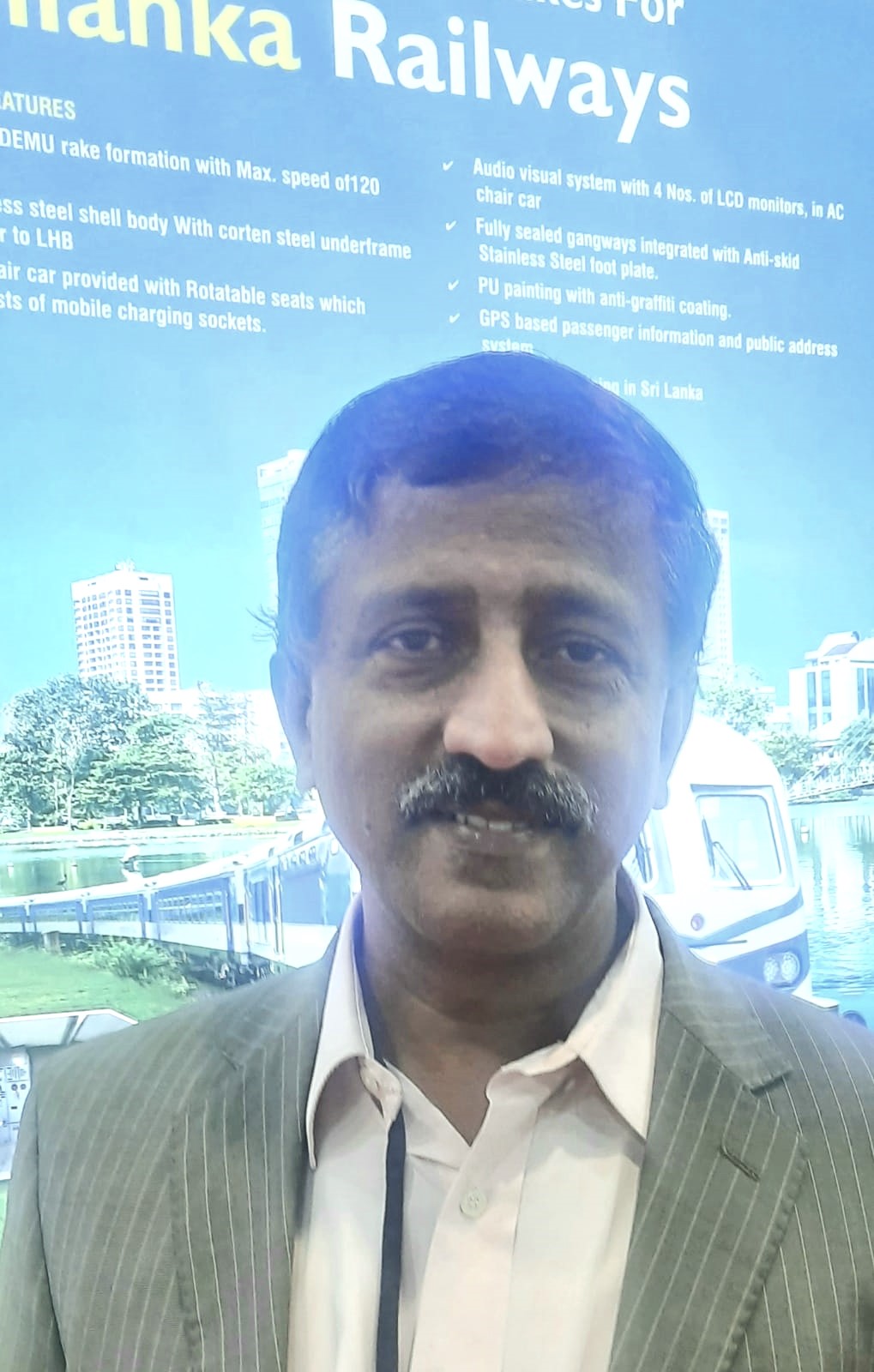
Dr. Sanjeev Chopra’s The Great Conciliator, published by Bloomsbury India, delivers a forceful and meticulously constructed reassessment of Lal Bahadur Shastri, overturning the long-standing belief that his brief tenure and modest public presence limited his impact. Chopra demonstrates how Shastri advanced swiftly through India’s political landscape, first as an astute party organiser and principled parliamentarian, then as one of Jawaharlal Nehru’s most trusted lieutenants. He foregrounds Shastri’s unwavering commitment to agrarian reform, public accountability, and institutional integrity, while tracing his decisive leadership during the 1965 Indo-Pakistan war.
At the same time, he illuminates Shastri’s transformative initiatives, including the White Revolution and the creation of several foundational national institutions. Drawing extensively on primary English sources, Chopra builds a narrative that is authoritative, incisive, and deeply respectful, revealing Shastri’s strategic clarity, moral courage, and conciliatory statesmanship. The result is a landmark biography that restores Shastri to his rightful place among India’s most influential leaders and makes a significant contribution to modern political scholarship.
In an exclusive interaction with The Interview World at the States’ Policy Conclave 2025, hosted by PHDCCI, Dr. Sanjeev Chopra, Former Director of the Lal Bahadur Shastri National Academy of Administration, explains what inspired him to write The Great Conciliator, identifies the chapter that resonates with him most, distils leadership lessons that today’s policymakers and administrators should adopt, and articulates Shastri ji’s enduring vision.
The following points capture the key insights from this substantive conversation.
Q: What prompted you to undertake The Great Conciliator, and what inspired you to position Lal Bahadur Shastri as one of India’s most consequential leaders in this new work?
A: The straightforward answer is that when I assumed charge as Director of the Lal Bahadur Shastri National Academy of Administration in Mussoorie, I visited the library and discovered an unexpected gap: there were remarkably few substantive books on Shastri ji. This absence compelled me to act. As the head of an institution that bears his name, I felt a clear obligation to study his life with rigor and to understand the leader who shaped so much of India’s administrative and political ethos.
As I delved deeper into his journey, I found myself learning far more than I had anticipated. I encountered the discipline of humility, the force of truthfulness, and the power of simplicity, values that, had I internalised them two or three decades earlier, would have made me a far more grounded administrator. For too long, we had overlooked Shastri ji, and the limited literature available did little to illuminate how he became the leader we now recognise. While the Tashkent Agreement and the controversies surrounding his death dominate public discourse, these are not the elements that define his true significance.
What truly matters is understanding how a man from a modest background rose through sheer perseverance, driven by unwavering patriotism and a deep sense of duty to transform the nation. He worked with leaders as ideologically diverse as Lala Lajpat Rai, Purushottam Das Tandon, Jawaharlal Nehru, and Mahatma Gandhi. Few people realise that he began his public life in Lahore under the mentorship of Lala Lajpat Rai, having left Varanasi to do so. His earliest work centred on the eradication of untouchability, a cause he pursued with remarkable commitment.
Equally important is his foundational contribution to India’s agricultural policy architecture. In 1935, he authored the Congress Agrarian Commission Report, an exhaustive 150-page document that reads like a doctoral thesis. In it, he examined the structural roots of rural poverty, analysed the dynamics between zamindari and agricultural productivity, outlined the responsibilities of the state, and proposed frameworks for taxation and minimum support prices. Many of the institutions and policies that would later emerge, such as the Commission for Agricultural Costs and Prices (CACP) and the Food Corporation of India (FCI), are grounded in the principles he articulated in that report. In fact, even the ideas underpinning contemporary employment guarantee schemes trace back to his analysis.
Thus, the agricultural and rural policy ecosystem we take for granted today can be directly linked to the intellectual and administrative foundations Shastri ji laid as early as 1935.
Q: Is there a particular chapter in the book that resonates with you the most, and if so, what makes it especially meaningful?
A: The chapter that resonates most deeply with me examines Shastri’s India alongside Ayub Khan’s Pakistan. In the 1960s, a widely held belief, supported by economic indicators of the time, was that Pakistan was outperforming India. That perception was not unfounded; Pakistan’s early economic trajectory appeared stronger. Yet the real story lies in how the two leaders shaped their nations in profoundly different ways.
Shastri built consensus with deliberation and clarity. He expanded India’s capabilities step by step, forged unity across regions and communities, and reinforced institutional cohesion. In contrast, Ayub Khan’s policies over the subsequent five years deepened divisions within Pakistan and ultimately destabilised the state he sought to consolidate.
The most transformative moment in Shastri’s leadership emerged after the setback of 1962. India’s loss shook national confidence, yet by 1965, under his stewardship, the country achieved a decisive military victory. For the first time, the Indian Army advanced towards Lahore, Sialkot, and deep into Rajasthan. This turnaround reflected Shastri’s exceptional judgement and resolve.
When he invoked the call “Jai Jawan, Jai Kisan,” he did so with conviction. He placed absolute trust in the nation’s soldiers and its farmers, recognising them as the twin pillars of India’s security and strength.
Q: What key lessons from Shastri ji’s leadership do you believe today’s policymakers and administrators should internalize and apply?
A: The most critical lesson that policymakers, and indeed all citizens, must take from Shastri ji is the discipline of listening to opposing viewpoints. He never viewed political opponents as adversaries. Instead, he treated disagreement as a difference in perspective, not a clash of identities or intentions. This mindset allowed him to navigate complex national issues without polarisation.
For example, during the debate on the three-language formula, the southern states opposed the perceived imposition of Hindi, while strong Hindi proponents demanded that English be removed altogether. In this charged environment, Shastri ji modelled calm, inclusive leadership. He listened, engaged in sustained dialogue, and balanced competing expectations without compromising national cohesion.
His life demonstrates four essential qualities: the willingness to hear every side, the capacity for sincere dialogue, the courage to take difficult decisions, and the integrity to act on what one declares. These principles form the core of Shastri ji’s leadership legacy and remain profoundly relevant today.
Q: In the context of today’s political environment, how does Shastri ji’s vision differ from current practices, and which aspects of his approach do you believe should be integrated into contemporary politics?
A: Economic realities evolve every 15, 20, or 30 years, and national priorities must evolve with them. Many policies that made sense when India was a poorer, predominantly agrarian country, with its focus on agriculture, rural development, and basic capacity building, no longer apply in the same way. The country has transformed, and therefore today’s policies must reflect today’s context.
In Shastri ji’s time, the world was shaped by the Cold War. There was no information or communication revolution, and national decision-making operated under very different constraints. Consider nuclear policy: until China tested its first atomic bomb, India had maintained a clear stance against pursuing nuclear weapons. However, the moment China conducted its test in 1964, Shastri ji recalibrated that position. His shift illustrates a fundamental truth: leaders must make decisions within the realities of their own era.
Therefore, it is neither accurate nor meaningful to speculate about what Shastri ji would have done today. As a historian, I rely on documented evidence. I can analyse what he did then, but projecting those decisions onto the present ignores the decisive role of context. Ultimately, leadership choices depend on the circumstances of the moment, and those circumstances change.
Q: Is there anything further you would like to share with our readers that would deepen their understanding of the book or its central themes?
A: Everything is in order, but I would emphasise one point.
I have begun extensive research on Shastri ji’s life, yet several dimensions remain unexplored. His years in Meerut and Muzaffarnagar, nearly five to six years devoted to Achhut Udhar, Khadi, and the Swadeshi movement, are particularly under-documented. I have not yet been able to access the archival material from that period.
Similarly, the Dwarkadas Library at Lajpat Bhawan in Chandigarh holds important documents that remain unindexed and improperly classified. Once those records are organised, they may reveal new insights.
The phase of Shastri ji’s life from 1924 to 1932 is especially intriguing to me. I want to understand this period more deeply, but the available information is still limited. I will continue to pursue additional sources and uncover more material as the archives permit.
Q: Are you currently pursuing further research related to this subject or planning to expand on it in future work?
A: No, I am not undertaking that work. I have devoted four years to this project, and I cannot continue it further. However, I would be glad to support the younger generation in taking it forward. They will carry this research ahead.