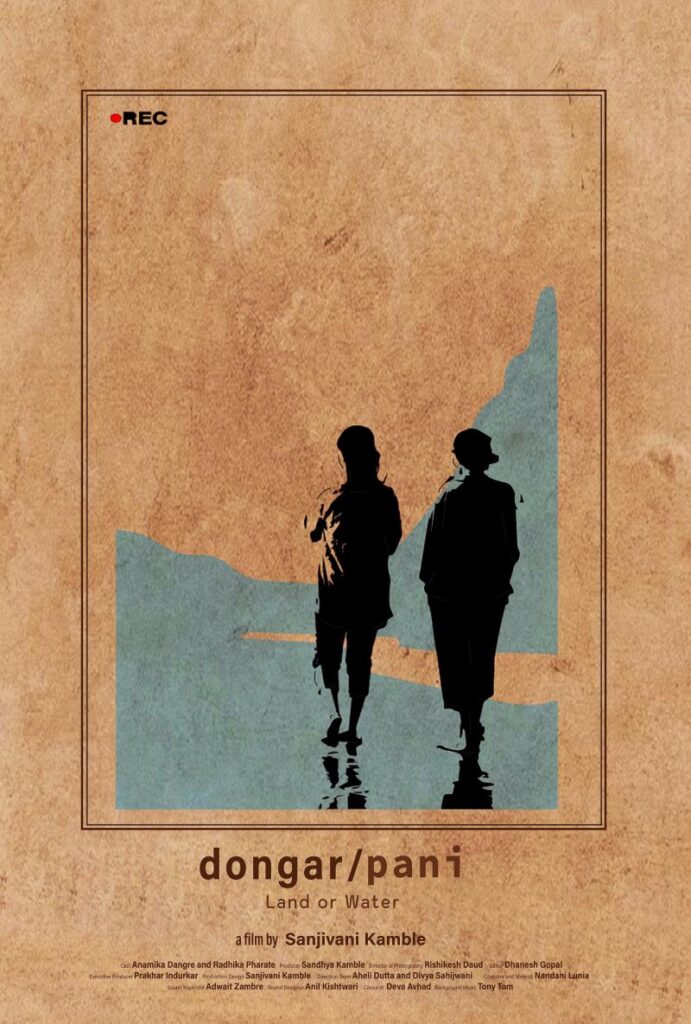
Dongar/Pani (Land/Water) is a Marathi short drama directed by Sanjivani Kamble that examines the emotional intricacies of friendship, love, and personal transformation. The narrative follows Savi, who prepares to leave Mumbai after securing a new job in Alibaug. As she readies herself for this transition, she shares a quiet, introspective farewell with her roommate and closest friend, Anu. However, beneath the surface of this seemingly simple goodbye lies a deeper emotional undercurrent. While Savi moves forward with resolve, Anu grapples with unspoken feelings and an unresolved tension that lingers between them. Gradually, the farewell unfolds into a poignant exploration of their fragile bond. Through restrained performances and reflective storytelling, the film captures the delicate process of growing up, confronting separation, and ultimately learning to let go.
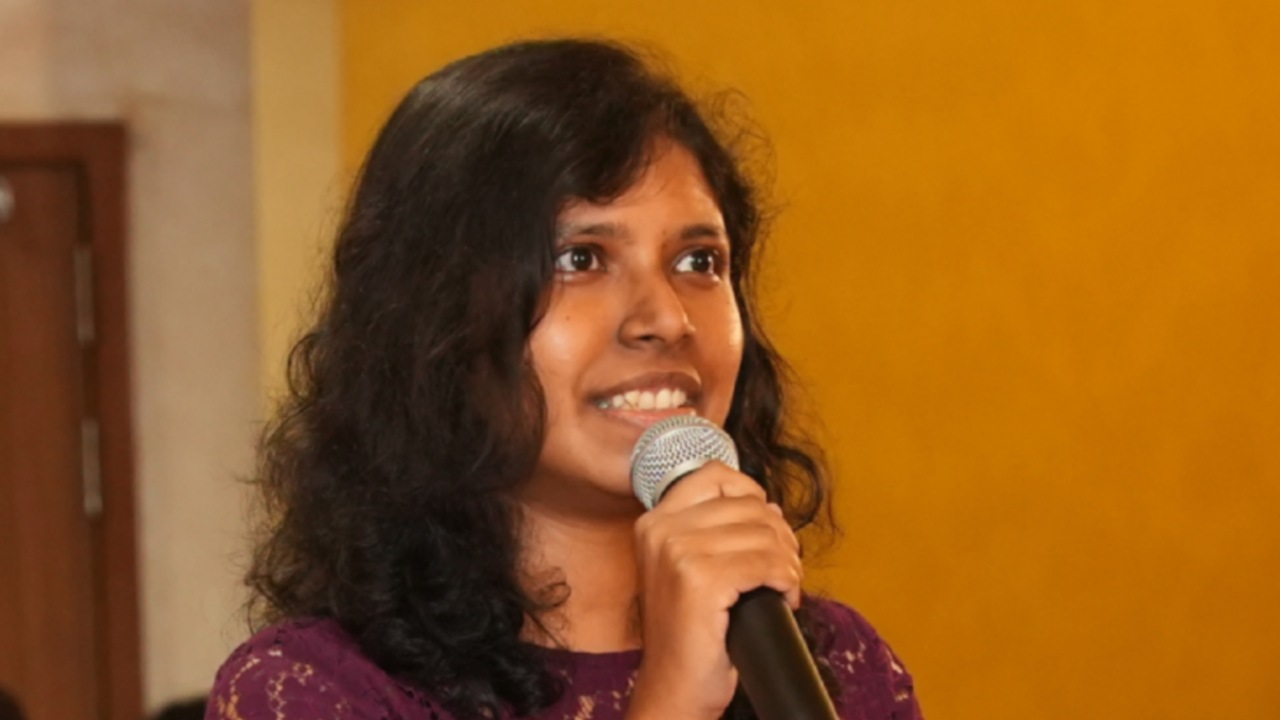
In an exclusive conversation with The Interview World at the 21st Asian Women’s Film Festival, organised by the India Chapter of the International Association of Women in Radio and Television (IAWRT), Kamble offers deeper insight into the film’s creative vision. She explains the narrative architecture of Dongar/Pani (Land/Water) and reflects on the emotional philosophy of “moving on.” Moreover, she clarifies the artistic reasoning behind the film’s extended silences and the deliberate use of the camera viewfinder as a recurring visual device. At the same time, she articulates her perspective on the human tendency to hold on, to memories, emotions, and relationships, even as life demands change. The conversation reveals the creative and emotional foundations that shape the film’s understated yet powerful storytelling.
Q: Could you elaborate on the storyline and central themes of the film Dongar/Pani?
A: At the core of Dongar/Pani, the story follows two friends as they navigate a landscape of complicated emotions and prolonged silences. Their relationship appears simple on the surface; however, beneath that familiarity lies a reservoir of feelings neither has ever articulated nor openly confronted.
The emotional equilibrium shifts when one friend prepares to relocate for work. This impending departure disrupts the quiet stability they have long shared. Consequently, the friend who stays behind begins to confront a series of feelings that have remained unspoken, unexpressed, and deliberately avoided for years.
As the moment of separation approaches, both friends find themselves suspended between attachment and acceptance. On one hand, they struggle to hold on to the emotional bond that defines their relationship. On the other, they must reconcile themselves to the inevitability of letting go. Throughout this process, silence becomes their shared language: awkward, heavy, yet profoundly revealing. Ultimately, within that silence, they navigate the fragile transition from togetherness to departure.
Q: These days, the idea of ‘moving on’ has become quite common. How do you interpret this trend from your perspective?
A: From my perspective, moving on rarely comes easily. Instead, I tend to hold on, to moments, relationships, and experiences, for as long as I possibly can. I resist the instinct to let go prematurely. Rather, I remain committed to preserving what matters until circumstances make continuation impossible. Only when things inevitably slip beyond my control do I accept their departure. In that sense, I do not actively choose to move on; instead, I arrive at it only after I have held on as long as I can.
Q: The film features extended silences and prominently uses the camera viewfinder as a visual motif. Were these deliberate choices, and what narrative purpose did they serve?
A: I deliberately foregrounded the camera because it symbolizes the instinct to preserve what one fears losing. When words fail and emotions remain difficult to express, people often turn to images as a substitute for presence. In that sense, the camera becomes a tool of emotional preservation.
At the same time, Anu’s actions reflect this impulse. She tries to hold on: to a moment, to a memory, and ultimately to a person. By capturing images, she believes she can momentarily suspend time. In her mind, recording the moment creates the reassuring illusion that she still possesses it. Through the lens, she attempts to retain both the image and the relationship it represents.
However, that fragile belief begins to fracture when the camera battery dies. The moment unsettles her, not dramatically, but subtly and deeply. Suddenly, the mechanism she relies on to preserve the moment fails her. As a result, she confronts an unsettling realization: if she cannot capture the image, how will she preserve the person in her life? How will she hold on to what is slipping away?
This creative choice ultimately emerges from my own temperament. I often find myself trying to hold on to moments, memories, and relationships, even when they begin to drift beyond my control. The film channels that instinct, the persistent, human desire to preserve what time inevitably takes away.
Q: From your perspective, is it more meaningful to hold on to things in life, or to embrace the idea of letting go?
A: Naturally, people tend to hold on to what they value. I am no different. However, letting go often takes time for me because I experience deep emotional connections, with certain people as well as with particular moments and places. That intensity shapes how I understand life and relationships.
At the same time, working on Dongar/Pani gradually reshaped that perspective. I came to realize that it is perfectly natural to hold on for as long as one needs. Yet there also arrives a moment when letting go becomes necessary. In that sense, the process of making the film became deeply cathartic.
Through the act of writing, filming, and revisiting these emotions, I slowly began to process them. The creative journey allowed me to confront feelings that had remained unresolved. Eventually, something shifted within me. Today, when I watch the film, I recognize that the memories and emotions it carries no longer hurt as intensely as they once did. In many ways, Dongar/Pani itself helped me process those experiences, and, finally, release them.