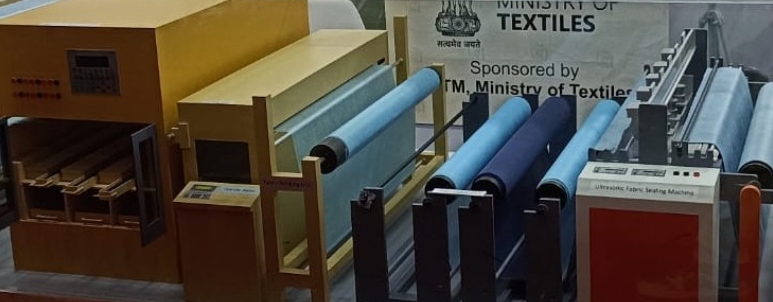


Established in 1947, Ahmedabad Textile Industry’s Research Association (ATIRA) stands among India’s foremost textile research institutions, driving innovation across the textile and allied sectors. Recognized by the Department of Scientific and Industrial Research (DSIR), ATIRA spearheads advancements in technical textiles, composites, geotextiles, and next-generation materials. Moreover, its Nanoweb Technology Division, founded in 2006, has emerged as a Centre of Excellence for nanofibre-based technologies. Leveraging cutting-edge electrospinning techniques, the division develops high-performance solutions, including advanced filtration media, face masks, and liquid and air purification systems. Through its sustained focus on research, technology transfer, and commercialization, ATIRA continues to strengthen India’s capabilities and accelerate the nation’s journey toward self-reliance in advanced textile technologies.
In an exclusive interaction with The Interview World at Bharat Tex 2026, Dr. V. Yogeshwar Chakrapani, Project Coordinator of ATIRA’s Nanoweb Technology Division, discusses the division’s pioneering nanotechnology initiatives and breakthrough innovations. He explains the expanding industrial applications of HEPA filters and outlines the commercialization roadmap for these technologies. In addition, he sheds light on the underlying pricing strategy and shares the division’s vision for future innovations. Presented below are the key insights from this engaging and thought-provoking conversation.
Q: Could you elaborate on the nanotechnology projects you are undertaking at ATIRA, and the key innovations and technologies developed through these initiatives?
A: One of ATIRA’s flagship initiatives is the National Technical Textiles Mission (NTTM)-sponsored project on High-Efficiency Particulate Air (HEPA) filters. At present, India imports nearly 99 percent of its HEPA filter media, underscoring a critical dependence on foreign suppliers. To address this challenge, ATIRA has developed synthetic filter media using entirely indigenous raw materials. More importantly, the institution is actively building a robust domestic supply chain to reduce import dependence and advance India’s self-reliance in this strategically important segment.
To achieve this objective, ATIRA employs electrospinning, a sophisticated process that produces ultrafine nanofibres ideally suited for advanced filtration applications. Subsequently, the team subjects these nanofibres to a series of specialized post-processing techniques to enhance their performance and durability. The process ultimately transforms the engineered material into high-efficiency HEPA filters capable of meeting stringent industrial and environmental standards.
Q: Could you highlight on the industrial applications of HEPA filters and explain how they are used across different sectors?
A: HEPA filters play a critical role across industries that demand exceptionally pure air and tightly controlled environments. For instance, semiconductor manufacturing facilities rely on them to maintain contamination-free clean rooms. Similarly, laboratories, pharmaceutical plants, and biotechnology facilities use HEPA filtration systems to safely handle sensitive biological materials and ensure compliance with stringent quality standards.
Consequently, the applications of HEPA filters span a wide range of sectors, from advanced manufacturing and healthcare to life sciences and research. As industries continue to prioritize precision, safety, and environmental control, demand for HEPA filtration technologies is rising steadily, making this segment one of the fastest-growing areas within the advanced materials and filtration ecosystem.
Q: Have these products been commercialized and introduced to the market, or are they still in the development and pre-launch stages?
A: The technology is currently undergoing commercialization. ATIRA has successfully completed multiple industrial trials, all of which have yielded encouraging results. Building on this momentum, the institution is actively identifying and onboarding supply chain partners to support a full-scale market launch.
Furthermore, the commercialization process has now entered its final phase. With validation largely complete and strategic partnerships taking shape, ATIRA is well positioned to bring the technology to market in the near future.
Q: How do you determine pricing for these indigenously developed products, and how competitive is your pricing strategy?
A: We have not finalized the pricing yet. However, our preliminary assessments indicate that the initial cost will be relatively higher, primarily because we are introducing a new technology into the market. At present, imported glass-fibre-based HEPA filter media, predominantly sourced from China, benefits from established manufacturing ecosystems and economies of scale. Consequently, matching their price point during the early stages of commercialization may not be feasible.
That said, glass-fibre media presents several inherent limitations. Over time, fibre shedding can occur, posing contamination risks in highly sensitive environments such as semiconductor fabrication facilities and other precision manufacturing settings that demand ultra-high purity standards. As a result, many industries are increasingly seeking alternatives that offer superior performance and greater process integrity.
In this context, ATIRA’s indigenously developed filtration media offers a compelling value proposition. As production scales and industrial partnerships mature, manufacturing efficiencies will improve significantly. Accordingly, the cost is expected to decline, enabling broader market adoption while reinforcing India’s capabilities in advanced filtration technologies.
Q: What are your future plans and strategic priorities for driving innovation and developing new technologies in this segment?
A: Electrospinning is a widely adopted technology with applications spanning filtration, healthcare, energy storage, and advanced materials. However, its most significant limitation lies in its low throughput, which has historically constrained large-scale commercialization.
In this regard, ATIRA occupies a unique position within India’s innovation ecosystem. To the best of our knowledge, it is the only organization in the country equipped with an industrial-scale electrospinning facility that supports both research and commercial applications. This capability bridges a critical gap between laboratory innovation and market deployment.
Most electrospinning-based developments remain confined to research laboratories and rarely progress to industrial production. Yet, scaling from proof of concept to commercial manufacturing is essential for any product seeking market acceptance. Recognizing this challenge, ATIRA provides innovators, researchers, and industry stakeholders with the infrastructure and technical expertise required to transition their ideas from the lab to the production floor. As a result, the institution is playing a pivotal role in accelerating the commercialization of nanofibre-based technologies in India.