

Agrofab Sustainable Pvt. Ltd. stands at the forefront of India’s circular textiles movement. The Raipur-based startup transforms agricultural residues, including banana stems, rice straw, and flax stalks, into premium natural fabrics and yarns. By integrating sustainability with innovation, the company has built a production ecosystem that delivers both environmental and social value while repurposing waste.
Moreover, Agrofab combines responsible manufacturing with inclusive growth. Its operations are powered by an 80 percent women-led workforce and supported by a network of more than 3,000 handloom artisans across India. Through low-water, low-chemical production methods, the company advances a zero-waste philosophy while preserving the country’s rich weaving traditions. Consequently, its eco-conscious textiles have found applications across apparel, home furnishings, and premium fashion segments, reinforcing Agrofab’s position as a leader in sustainable material innovation.
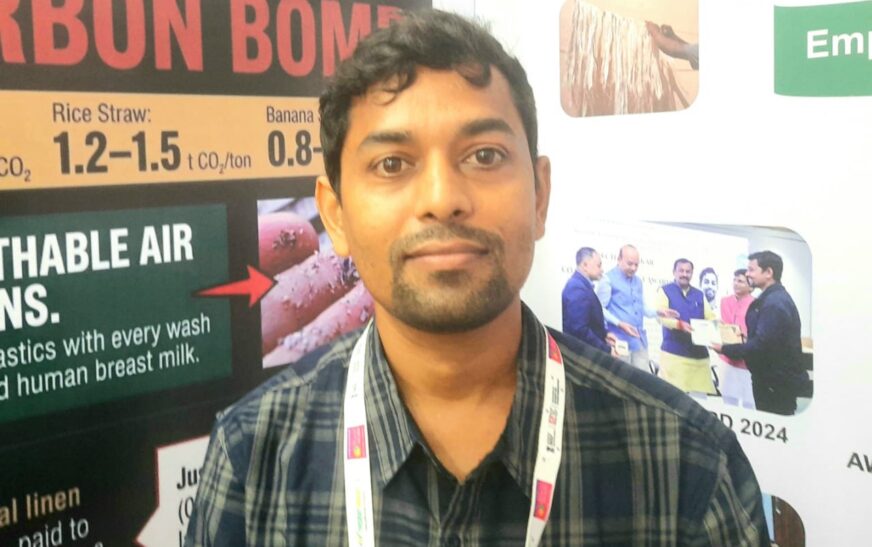
In an exclusive interaction with The Interview World at Bharat Tex 2026, Dr. Karan Chandrakar, Founder of Agrofab Sustainable Pvt. Ltd., discusses the company’s flagship initiatives in the circular textiles space. He explains how Agrofab is addressing the persistent challenge of stubble burning through a circular textile ecosystem and outlines its efforts to generate additional income streams for farmers by converting agricultural waste into high-value products. Furthermore, he shares insights into the scale of farmer participation within the organization’s ecosystem and highlights the nature of government support that has enabled these initiatives to grow. Presented below are the key insights from this engaging and thought-provoking conversation.
Q: Could you elaborate on Agrofab’s key initiatives in the circular textiles domain, particularly translating agricultural waste to fibers?
A: Agrofab Sustainable Private Limited specializes in agricultural waste management with a clear focus on circularity and sustainability. The company sources agricultural residues from farmers across the tribal regions of Chhattisgarh and transforms these underutilized resources into sustainable textile fibres. It then converts these fibres into high-value, eco-friendly textiles within the same region.
By building this localized and circular value chain, Agrofab not only addresses the challenge of agricultural waste disposal but also creates sustainable livelihoods in tribal communities. As a result, the company is turning waste into opportunity while advancing Chhattisgarh’s position in the sustainable textiles ecosystem.
Q: How many textile fibres has Agrofab developed from agricultural waste?
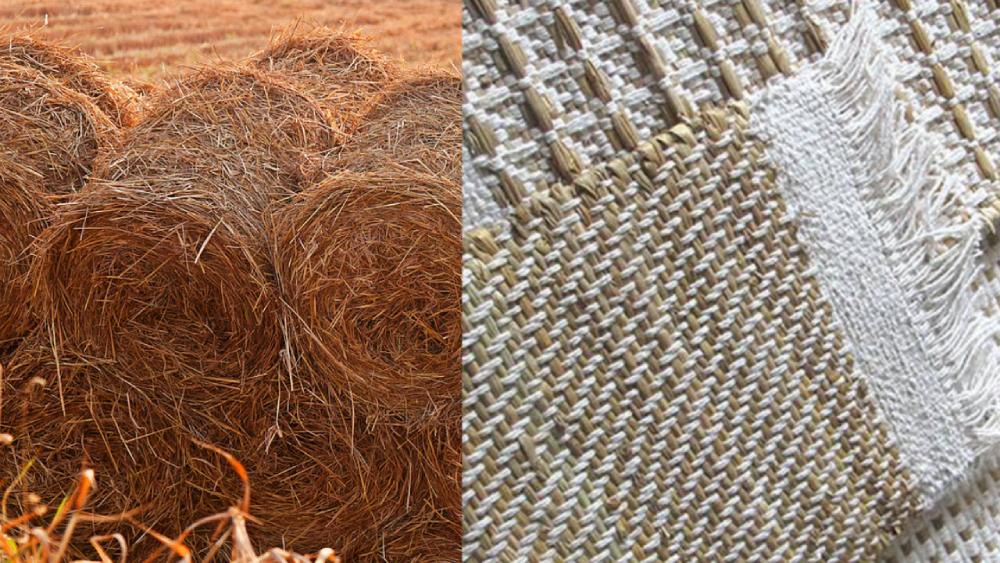
A: We work with three distinct categories of agricultural residues that are abundantly available across Chhattisgarh: linseed (flaxseed) waste, rice straw, and banana plant waste. By converting these natural resources into sustainable fibres, we create a diverse range of value-added textile products.
These fibres are subsequently woven into premium fabrics that serve multiple applications. Our product portfolio includes bed sheets, stoles, shawls, and shirt fabrics, each reflecting our commitment to sustainability, craftsmanship, and innovation. In doing so, we transform agricultural waste into commercially viable textiles while promoting a more circular and responsible manufacturing ecosystem.
Q: To what extent does Agrofab contribute to addressing the challenge of stubble burning through its circular textile ecosystem, and how are agricultural residues being transformed into value-added textile materials?
A: We extract fibres from rice straw, commonly known as paddy residue, and harness their unique natural properties. These fibres possess a hollow structure, which gives them excellent insulation characteristics. Consequently, they offer significant potential for applications that require effective thermal management.
Leveraging these inherent qualities, we develop specialized insulation fabrics for both wearable textiles and industrial applications. In addition, the material is well suited for the automotive sector, where its thermal insulation capabilities can enhance comfort, energy efficiency, and sustainability. By transforming rice straw into high-performance textile solutions, we are creating new avenues for agricultural waste utilization while addressing the growing demand for environmentally responsible materials.
Q: How do Agrofab’s initiatives create value for farmers by utilizing agricultural waste, and what economic benefits do these efforts generate for farming communities?
A: Primarily, we procure agricultural waste directly from farmers, thereby creating an additional and sustainable source of income beyond their primary crop sales. As a result, farmers are able to monetize materials that were once discarded, significantly enhancing their overall earnings.
Furthermore, we conduct training and capacity-building programs for farmers and rural communities across the tribal regions of Chhattisgarh. These initiatives equip stakeholders with the knowledge and skills required to participate effectively in our value chain. Consequently, our model generates shared economic benefits, strengthens rural livelihoods, and fosters greater community participation in the circular economy.
Q: How many farmers are currently associated with Agrofab, and what does your engagement model look like?
A: We work closely with approximately 340 farmers and five Self-Help Groups (SHGs) comprising women from rural communities. These stakeholders play an integral role across the value chain, from fibre extraction to fabric production, contributing directly to the creation of our sustainable textile products.
In addition, we provide comprehensive training and continuous skill development to strengthen their technical capabilities. Through this collaborative model, we not only enhance production efficiency but also create meaningful livelihood opportunities in rural and tribal regions. Consequently, our initiatives empower local communities, promote women’s economic participation, and reinforce the social impact of our circular textile ecosystem.
Q: What forms of support has Agrofab received from government bodies?
A: We have received several startup grants from the Government of Chhattisgarh, which have played a pivotal role in supporting our growth and innovation journey. These initiatives have enabled us to strengthen our capabilities, expand our operations, and accelerate the development of sustainable textile solutions.
Moreover, the government has consistently encouraged our participation in prominent industry platforms and exhibitions. Its support enabled us to showcase our innovations at Bharat Tex 2026 at Bharat Mandapam, providing valuable opportunities to engage with stakeholders, build partnerships, and enhance our visibility within the global textiles ecosystem. Such institutional backing continues to reinforce our mission of advancing circular textiles and rural economic development.







1 Comment
You bring a fresh voice to a well-covered topic.
Comments are closed.