

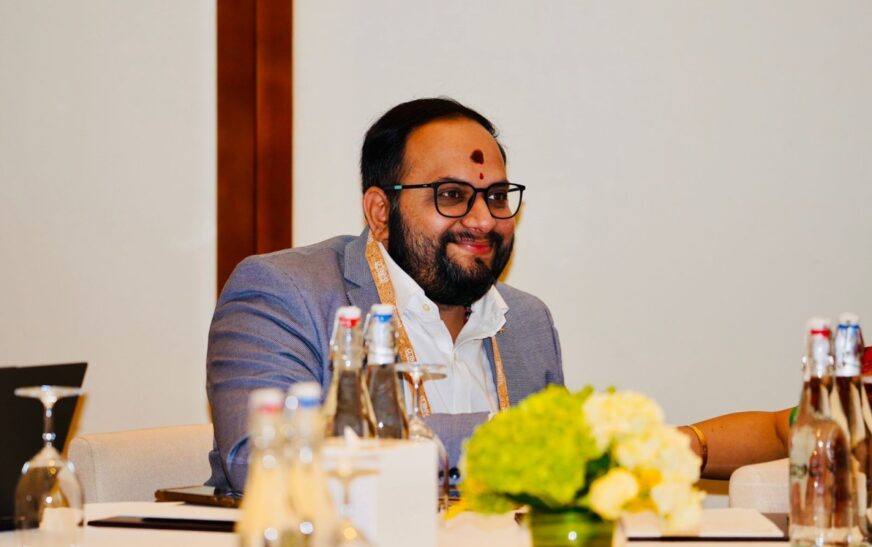
C-Astra Technologies is not just building products, it’s engineering tomorrow. With a fusion of advanced computing, materials science, and aerospace brilliance, this bold startup redefines what “sustainable innovation” means. At Aganitha Space Technologies, the mission is equally audacious: to craft the future of high-resolution satellites, laser communication, and orbital sustainability. Together, these two powerhouses embody India’s new frontier in deep tech and space innovation, where curiosity meets courage, and engineering meets imagination. Together, these two trailblazers are India’s bold new vanguard in deep tech and space, where raw curiosity collides with fearless engineering.
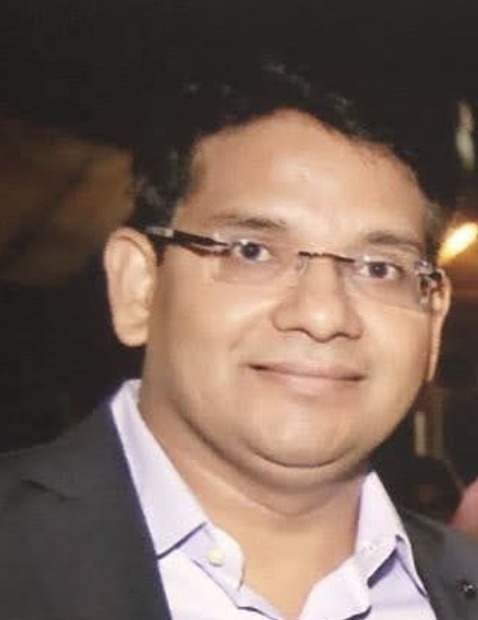
In an exclusive chat with The Interview World, Narasimha Sharma Narayanam, Group CEO of C-Astra Technologies and Aganitha Space, opens up about conquering the toughest hurdles in aerospace and satellite systems, outpacing global rivals, keeping moonshot R&D commercially grounded, sparking relentless innovation without losing sight of the bottom line, and the game-changing milestones he’s targeting over the next five years.
Here are the standout insights from a conversation that crackles with vision.
Q: Across aerospace, satellite systems, and space-debris removal, which challenge surprises you most and how do you approach it?
A: What truly surprises me is how fragmented the space industry remains. Data, operations, orbital assets, regulatory compliance, and environmental consequences are still trapped in separate silos. Launching rockets was never the hard part; the real hurdle is building a space ecosystem that’s sustainable, truly interoperable, and aware of its broader context.
That’s why we tackle it with a system-of-systems mindset, seamlessly weaving together Earth observation, onboard AI, advanced materials, orbital analytics, and responsible mission design into a single, cohesive operational framework.
This approach lets us create solutions that are scalable, inherently safe, and globally compatible right from the start.
Q: With rapidly evolving space tech, how does your leadership keep teams ahead of global competition?
A: Our culture rests on three simple but powerful ideas that keep us sharp and ready for whatever comes next.
First, we always go back to first principles. Before jumping on the latest trend, we ask: What are the real fundamentals here? This habit keeps us steady in a world where tech changes overnight.
Second, nobody stays in one lane. Our people move between geospatial AI, materials research, satellite design, and ESG strategy. That constant mixing of perspectives sparks ideas no single specialty could produce on its own.
Third, we learn out loud with the best in the world. We work hand-in-hand with agencies, top universities, and groups like OGC, ESA networks, and the IEEE GRSS Climate & Disaster Working Group. These partnerships stretch our thinking and hone our skills.
These three habits don’t make us react faster; they make us think further and build better.
Q: For C-Astra’s Advanced Materials & Computing, how do you maintain commercial viability in high-risk R&D?
A: We pursue a balanced, two-track approach to research and development, one that keeps bold discovery in lockstep with real-world delivery.
Track 1 is pure exploration. Here, our scientists run lab experiments, build cutting-edge models, and chase breakthroughs in next-generation materials: ultra-strong alloys, magnetizable composites, and other ideas that sound like science fiction today. This is where we push the limits of what’s possible.
Track 2 is about getting those ideas out of the lab and into customers’ hands fast. We roll out early commercial products whenever the performance upside is undeniable: lighter satellite structures, intelligent thermal-management systems, and subsystems that simply use less power.
By running both tracks in parallel, we never have to choose between dreaming big and shipping now. The exploratory work keeps the pipeline full of game-changing ideas, while the market-facing products bring in revenue, prove the concepts, and light the way forward.
Q: How does Aganitha integrate orbital debris mitigation into its business model?
A: For us, debris mitigation is not an afterthought, it’s a core design constraint.
We start by prioritizing in-orbit serviceability, modularity, and low-debris architectures. Every mission begins with responsibility built into its design. Our Earth Observation and GeoAI platform continuously tracks orbital pathways and collision risks, integrating this data into our core environmental intelligence systems.
During mission planning, we follow a principle we call “Responsible Orbit Economics.” If we go to orbit, we also commit to managing and protecting that environment.
Simply put, we build systems that don’t just operate in space, they safeguard it.
Q: As Group CEO of both organisations, how do you foster innovation without losing commercial focus?
A: We operate with one shared vision, but distributed leadership that keeps innovation focused and agile.
At C-Astra, we lead deeptech R&D, explore advanced materials, and drive strategic innovation. Meanwhile, Aganitha Space focuses on operational platforms, commercialization, partnerships, and large-scale deployment. Each team moves fast within its domain while staying aligned with the broader mission.
I empower domain leaders to own execution and decisions. This allows me to focus on long-range strategy, institutional partnerships, cross-company integration, and cultural alignment.
Together, this structure fuels innovation without diluting focus, a unified vision, led by many hands.
Q: Looking five years ahead, what milestone signals success?
A: For me, success means building a globally recognized, interoperable Earth-to-Orbit sustainability platform.
This platform should guide smarter environmental decisions, disaster preparedness, energy planning, and responsible orbital management, all with measurable public benefit.
If, in five years, cities use our geospatial intelligence to cut climate risks, renewable grids are designed more intelligently, and satellite missions leave no trace of harm in orbit, then our vision will be real.
That will be the moment I know we’ve created something truly meaningful: technology that serves both Earth and space responsibly.




2 Comments
I appreciate how genuine your writing feels. Thanks for sharing.
Excellent work! Looking forward to future posts.
Comments are closed.