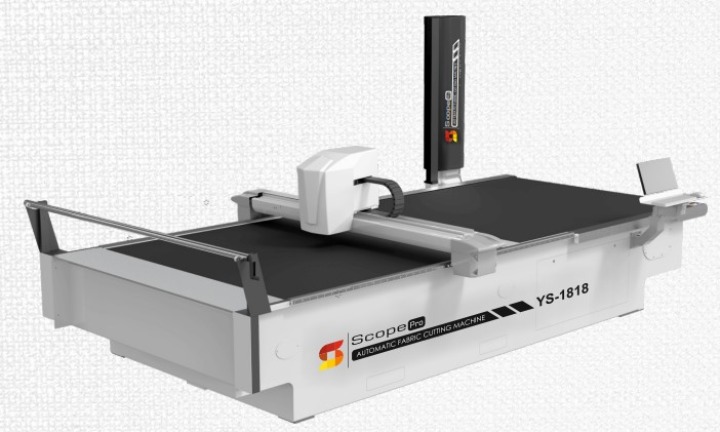

Studio Next Technology Pvt. Ltd., established in 2003 and headquartered in Mumbai, has transformed the way India designs and manufactures apparel. With a client base of more than 6,000 across the country, the company does more than sell CAD/CAM solutions; it fuels the future of fashion through precision, speed, and scale enabled by state-of-the-art automation.
As the exclusive Indian partner of RICHPEACE, Studio Next delivers advanced hardware and software under its flagship SCOPE brand. These include intelligent fabric spreading and cutting machines that dramatically boost efficiency and elevate quality. Yet, the company’s strength lies not only in its technology. It has built a comprehensive ecosystem, garment design software, turnkey cutting-room automation, design consultancy, training, sampling, and dedicated after-sales support, making it a one-stop partner for the apparel industry.
At the core of its innovation stands India’s first Cutting Room Automation Experience Centre. Here, customers can witness automation at work, seeing, testing, and experiencing the future of garment manufacturing first-hand. By combining deep technical expertise with world-class global partnerships, Studio Next has positioned itself as the undisputed leader in apparel automation across India.
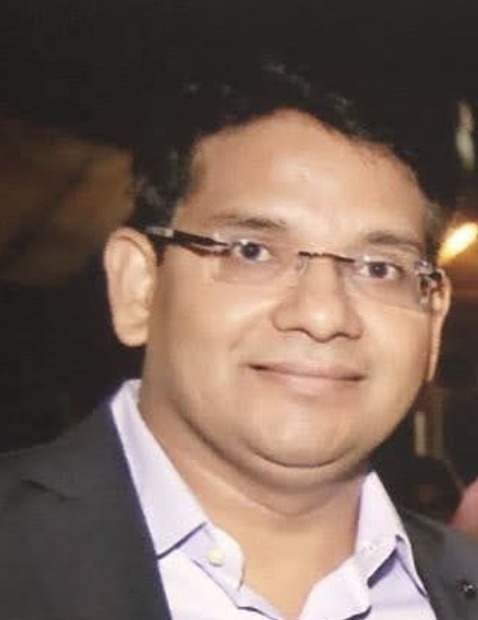
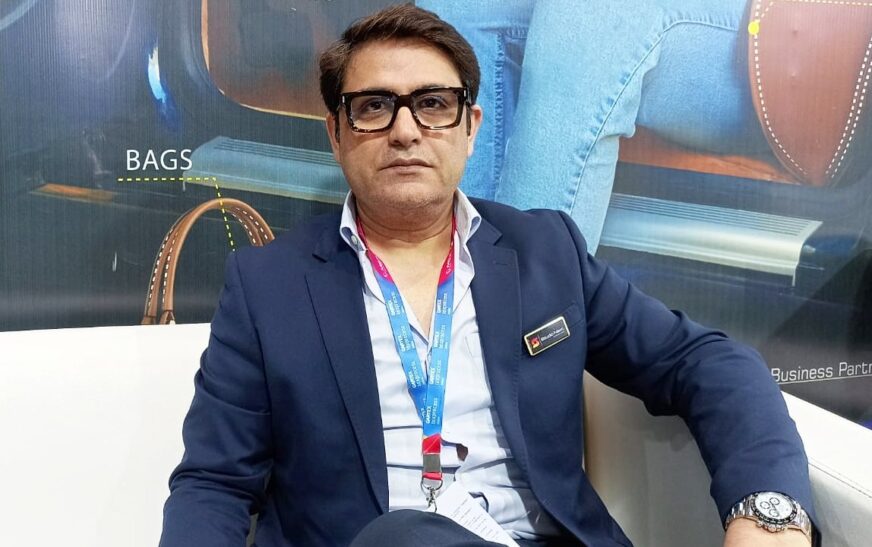
During an exclusive interaction with The Interview World at Gartex Texprocess India 2025, Vishal Sher, Managing Director of Studio Next Technologies Pvt. Ltd., shed light on the company’s automation solutions for the garment sector. He explained how clients achieve significant cost savings and labour optimization, outlined the pricing strategy and ROI customers can expect, and shared insights on upcoming innovations. He also revealed his long-term vision for business growth, fuelled by the garment industry’s rapid embrace of automation.
Here are the key takeaways from his compelling conversation.
Q: Can you elaborate on the automation solutions your company provides for the garment industry?
A: We focus exclusively on cutting-room automation for garment manufacturers. Our solutions integrate advanced technologies that ensure precise cutting, optimize material usage, and consistently deliver superior quality. For the past 22 years, we have been equipping the industry with this automation, driving efficiency and transforming production standards.
Q: To what extent do your machines enhance efficiency in the garment industry, particularly in terms of cost savings and labour optimization?
A: Compared to traditional methods, our software and cutting-room automation deliver immediate, measurable benefits. We help companies save between 5 and 8 percent of fabric. To put this in perspective, a manufacturer with fabric turnover worth ₹10 crores can save nearly ₹80 lakhs in the very first year. Such savings make the return on investment both clear and compelling.
But that is only one dimension. The industry today struggles to find skilled manpower, and this shortage disrupts production. Automation fills that gap. It ensures consistency, reliability, and uninterrupted output even when skilled labour is scarce. Without automation, unfulfilled orders translate into direct losses. With automation, production runs smoothly.
Moreover, automation scales effortlessly. When order volumes increase, companies can simply extend machine usage into double shifts without incurring the overtime costs associated with human labour. In a sector as labour-intensive as garment manufacturing, this advantage becomes transformative.
Q: What pricing strategy do you follow for your machines, and what kind of return on investment (ROI) can clients typically expect?
A: As I mentioned earlier, the return on investment depends largely on how effectively a company manages its cutting room. For a CAD system, businesses typically recover their investment within six months. For a complete CAM setup, the payback period ranges between one year and eighteen months. In both cases, the ROI remains clear and achievable. Pricing begins at around ₹5 lakhs for a CAD solution and can extend up to ₹80–90 lakhs for a fully automated cutting room.
Q: What new innovations do you plan to develop over the next five to ten years to build upon your existing technologies?
A: Yes, we are constantly innovating. Artificial Intelligence, now at the forefront of global technology trends, forms a key pillar of our roadmap. We are leveraging AI to make our software smarter, enabling customers to achieve greater savings and higher efficiency.
Our next big leap lies in AI-driven pattern making. By harnessing a rich database, we are building systems where entirely new styles can be generated automatically by the computer. This advancement will not only accelerate design but also redefine how garments are conceived and produced.
At the same time, we are integrating AI with our machines. This integration will deliver real-time insights, offering precise efficiency metrics, accurate calculations, and diagnostic feedback. For example, managers will instantly know why a machine has stopped and how to address the issue.
In short, our pipeline is filled with breakthrough projects that fuse AI with automation to create smarter, faster, and more reliable manufacturing ecosystems.
Q: With the rapid advancement of automation technologies in the garment industry, where do you envision your company’s business growth over the next five to ten years?
A: Today, automation has become an integral part of the garment industry. A decade or two ago, such solutions were often dismissed. High costs and hesitation to embrace new technology kept manufacturers from adopting them. But the landscape has changed. Now, manufacturers not only recognize the need for automation but actively seek it out and implement it in their factories.
The shift is dramatic. Earlier, we would close two or three projects in an entire year. Today, we execute the same number of projects every month. This momentum continues to accelerate, and I confidently anticipate scaling to ten projects a month in the near future.
The reasons are clear. Post-COVID, the shortage of skilled manpower has become a critical challenge. At the same time, automation technologies have become far more affordable. What once felt out of reach is now within easy access. As a result, manufacturers are investing decisively, not just to reduce dependence on labour but also to ensure consistency, efficiency, and competitiveness.
Q: Do you also export your technologies? If yes, which countries are your key markets?
A: At present, our operations in India keep us fully engaged. Yet, international demand continues to find us. We have successfully executed projects in Madagascar, Dubai, the UAE, and Kenya. More such opportunities are already in the pipeline.
Interestingly, we are not actively pursuing these markets, clients are approaching us. This organic demand underscores the global relevance of our solutions. In particular, Africa represents a vast, untapped opportunity for this technology, and the market there is showing immense promise.