
SoftCore Solutions Pvt. Ltd. stands as a premier enterprise solutions provider headquartered in Thane (Mumbai), with active operations in major Indian cities including Pune, Ahmedabad, Chennai, and Noida. Since its inception in 2007, the company has amassed over 22 years of experience in ERP and IT services, with a proven track record of more than 19 years implementing SAP Business One.
As a certified SAP Business One Gold Partner, SoftCore Solutions excels in delivering bespoke ERP, CRM, HRMS, and cloud-based solutions. Its portfolio spans industry-leading platforms such as SAP Business One (HANA/SQL), Oracle NetSuite, Zoho, and Spine HRMS.
The company brings deep domain expertise across a wide range of industries—covering both process and discrete manufacturing, trading and distribution, logistics, project-driven enterprises, and the service sector. With a client base exceeding 700 across 18 industry verticals, SoftCore Solutions offers end-to-end services, including tailored implementation, customization, licensing, system migration, and ongoing support.
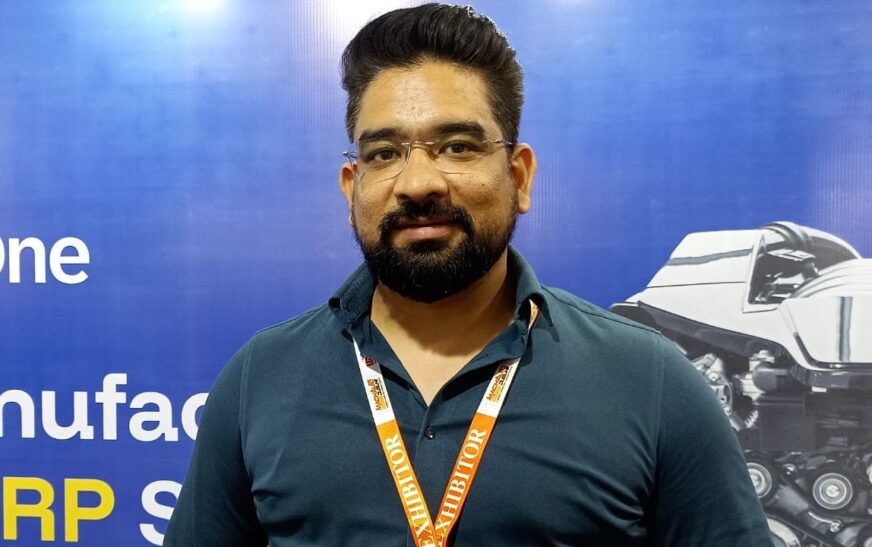
At MachAuto Expo, in an exclusive conversation with The Interview World, Vipiin Rawwat, Business Head – North & East, shared powerful insights into SoftCore Solutions’ innovative ERP offerings. He spotlighted how their SAP-based customized solutions are evolving to integrate seamlessly with AI, and how their platforms harness data from IoT and sensor-based systems to drive smarter operations. He also outlined his strategic roadmap for business expansion across North and East India over the next five to ten years.
Here are the key takeaways from his forward-looking conversation.
Q: What innovative solutions has Softcore Solutions developed, how are they customized, and which industries currently benefit from these tailored offerings?
A: Let me begin with a brief introduction to our organization. We are a Gold Partner of SAP, proudly serving the market for over 23 years—more than two decades of consistent growth, innovation, and client satisfaction.
Today, we support a client base of more than 700 enterprises across India. Headquartered in Mumbai, we operate through five strategically located offices to ensure nationwide coverage and efficient client service.
To serve the northern and eastern regions, we operate from our dedicated office in Sector 59, Noida. This regional presence allows us to respond swiftly to client needs and provide localized support.
From a solutions standpoint, we specialize in delivering highly tailored customizations. Our teams have developed and implemented industry-specific enhancements, particularly for sectors such as pharmaceuticals, which make up a significant portion of our client base.
We’ve also led numerous successful upgrades and custom deployments for fast-growing industries, including automotive, where modernization is critical. While SAP offers a robust standard application framework, we’ve gone further by developing proprietary industry-specific plug-ins and custom modules.
These custom-built enhancements are designed to seamlessly integrate with SAP, allowing our clients to leverage its full potential while addressing their unique operational requirements. Over the years, we’ve not just delivered software—we’ve delivered transformation.
Q: With rapid AI advancements disrupting industries, how do you envision integrating AI into SAP applications over the next 2–3 years for enhanced automation and analytics?
A: SAP, as a German-engineered product, naturally reflects the precision and technological excellence Germany is renowned for. What sets SAP apart is its relentless commitment to innovation. The platform undergoes continuous enhancements—updated quarterly or even semi-annually—to ensure it evolves in sync with the latest technological advancements.
This consistent evolution guarantees that SAP users stay aligned with emerging trends and industry best practices. From a technology standpoint, it ensures organizations always move forward—never lagging behind.
As you rightly pointed out, artificial intelligence, including tools like ChatGPT, is already on SAP’s strategic roadmap. In the coming months—or certainly within the next few years—these AI capabilities will become an integral part of SAP’s standard offerings. Users can expect these intelligent features to be seamlessly embedded into the core application, making SAP not just a business tool, but a forward-looking digital platform.
Q: With growing IoT adoption and both human- and machine-fed data, how are your applications aligned to capture and analyze insights from sensor-based systems?
A: From an IoT perspective, it’s important to understand the distinction between SAP’s offerings. SAP Business One primarily targets the SME and MSME segments, providing a robust yet scalable solution tailored to the needs of small and mid-sized enterprises.
However, when it comes to more advanced IoT integration, that functionality is built into SAP S/4HANA, SAP’s enterprise-grade solution designed for larger organizations. These are two distinct variants of SAP—each engineered for a specific market segment.
While SAP Business One focuses on affordability and efficiency for smaller businesses, SAP S/4HANA incorporates deep IoT capabilities as a core part of its architecture. In short, for comprehensive IoT-driven operations, SAP S/4HANA already has the infrastructure in place to support real-time data, automation, and intelligent enterprise functions.
Q: How do you foresee long-term growth in the North and East regions over the next 5 to 10 years from a business perspective?
A: Over the past five years—particularly since the pandemic—the MSME sector has undergone a significant paradigm shift. The crisis served as a wake-up call. Businesses realized that relying solely on internal “heroes” or manual processes was no longer sustainable. Instead, they needed robust, reliable systems to ensure business continuity and scalability.
This shift has fuelled a growing recognition of the value of enterprise resource planning (ERP) solutions. As a result, the ERP landscape in India has become increasingly competitive, with several new players entering the market. Yet competition is a healthy sign—it indicates demand, innovation, and a maturing ecosystem. The future for ERP adoption, especially in the MSME space, looks exceptionally bright.
However, when it comes to automation, the adoption rate remains surprisingly low. Currently, only about 15% of MSMEs have transitioned to modern ERP platforms. A staggering 75% still rely on outdated systems—such as legacy versions of Tally or basic accounting tools—offering limited integration and functionality.
This presents a tremendous market opportunity. With such a vast portion of the sector still untapped, India holds enormous potential for ERP providers to transform operations, drive digital adoption, and power the next wave of industrial growth.