
Growdea Technologies Pvt. Ltd., founded in 2018 and incubated at IIT Delhi, is an in-silico life sciences startup headquartered in Gurugram and New Delhi. Co-founded by Dr. Avinash Mishra and Prof. Anurag Singh Rathore, the company pioneers AI/ML-powered drug discovery through its proprietary platform, “Analogue.”
Specializing in computational biology, bioinformatics, and AI-driven research, Growdea delivers advanced capabilities in genomics, structural biology—including molecular dynamics, docking, QSAR, and fragment design—alongside virtual screening and predictive modeling of protein–ligand interactions. Notably, the company employs graph neural networks for precise IC50 estimation.
By blending life sciences with cutting-edge computational intelligence, Growdea empowers drug discovery with speed, accuracy, and efficiency. Backed by an interdisciplinary team skilled in both scientific research and technical writing, the company has successfully served over 240 clients. These include academic institutions, pharmaceutical companies, and NGOs, with collaborations spanning IIT Delhi, AIIMS Delhi, Banaras Hindu University, Amity University, Maharshi Dayanand University, and several international partners.
In recognition of its impactful innovations, Growdea received the Startup Maharathi Award in the Health & Bio category at Startup Mahakumbh 2025 in New Delhi.
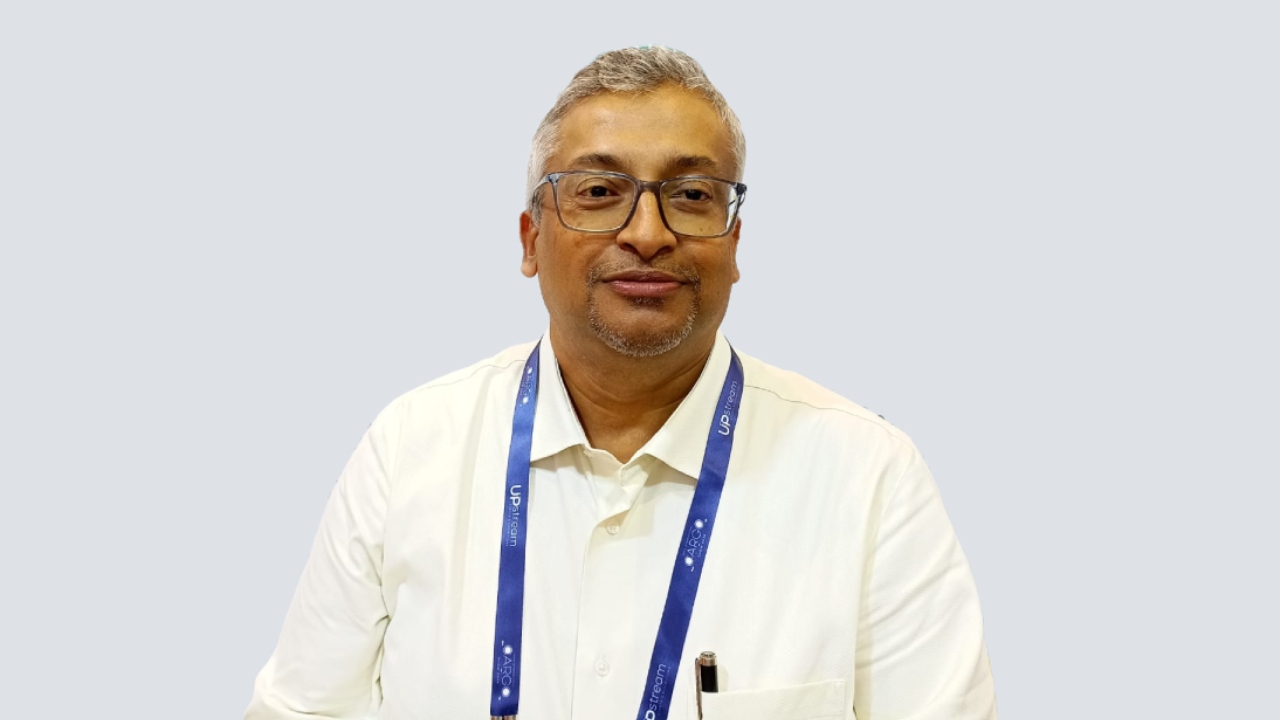
During an exclusive interaction with The Interview World at the Industry Meet of Bengaluru Tech Summit 2025, Dr. Avinash Mishra, CEO of Growdea Technologies, outlined how the company is reshaping the future of drug discovery. He explained how their platform boosts cost-efficiency and operational precision, emphasized the growing adoption by domestic and global clients, and shared his ambitious roadmap for the next five to ten years. He also highlighted the strategic expansion initiatives poised to scale Growdea’s footprint in the biotech innovation ecosystem.
Here are the key takeaways from this insightful and forward-looking conversation.
Q: How is Growdea Technologies redefining the landscape of drug discovery through its innovative solutions?
A: Growdea Technologies emerged from IIT Delhi with a clear mission: to revolutionize early-stage drug discovery using a powerful blend of machine learning, artificial intelligence, and physics-based algorithms.
Traditionally, the early phases of drug discovery demand extensive experimentation—consuming significant time, resources, and funding, all while carrying substantial risk. At Growdea, we address these challenges head-on through computational methods that dramatically reduce time, cost, and uncertainty.
By replacing labor-intensive trial-and-error with precise, data-driven insights, we streamline and de-risk the entire discovery process. As a result, our solutions not only enhance efficiency but also empower our clients to accelerate innovation with greater confidence and clarity.
That’s the value we deliver—cutting through complexity to make drug discovery faster, smarter, and more efficient.
Q: How do your technologies optimize efficiency and cost-effectiveness in drug discovery for your clients?
A: We focus primarily on the early phase of drug discovery—a stage that typically consumes five out of the 15 to 16 years in the entire development pipeline. Traditionally, this phase is both time-consuming and expensive. However, by integrating machine learning, physics-based algorithms, and advanced computational methods, we can compress this five-year timeline to just one year.
This transformation isn’t just about speed—it’s about cost-efficiency. The entire drug discovery process can cost upwards of $3 billion. Of this, the early discovery stage alone accounts for approximately $10 million. By applying computational models, we can cut those early-stage costs by nearly half, saving around $2 to $3 million per candidate.
Instead of relying solely on exhaustive lab trials, we generate predictive insights through our algorithms—guiding experimental design and significantly reducing the burden of trial-and-error. This hybrid approach bridges digital precision with practical testing, making drug discovery faster, smarter, and far more economical.
Q: Have you achieved commercialization, and who are the primary industries or clients currently leveraging your solution?
A: We have already successfully commercialized our solutions and are actively working with clients across India and Australia. These companies operate in distinct domains within drug discovery. For instance, our Australian partner focuses on neurological disorders, while our Indian client is advancing research in oncology, specifically targeting cancer and tumor pathways.
We’ve been collaborating with both for nearly two years, consistently delivering AI- and physics-driven solutions that help them reduce cost, time, and development risk. Our computational models have enabled them to streamline their discovery pipelines and accelerate progress with greater confidence.
Today, both partners have advanced to the experimental validation phase—where they are actively testing drug candidates generated through our platform. This milestone not only reinforces the efficacy of our approach but also underscores our impact in real-world therapeutic innovation.
Q: How do you envision the evolution of your solutions over the next 5 to 10 years, and what breakthrough innovations are on the horizon?
A: I completed my PhD in Computational Biology from IIT Delhi at a time when the field was still in its nascent stage. Since then, particularly over the past five years, I’ve witnessed an extraordinary surge in its growth and adoption. Looking ahead, I believe this momentum will only accelerate.
However, with every emerging technology—especially those like AI—comes a wave of hype. It’s easy for myths and misconceptions to cloud the real potential. As scientists, we must remain vigilant. This is a discipline rooted in evidence, and we have a responsibility to separate noise from substance.
My focus now is on deepening the scientific foundation that complements AI—applying rigorous biological principles to enhance its predictive power and reliability. I believe this integrated approach will lead to more accurate, scalable, and robust solutions in drug discovery.
That’s the direction I’m committed to, and I’m confident we’re on the verge of realizing it.
Q: Where do you see the company heading in the next decade in terms of growth, geographic reach, and industry impact?
A: India is advancing rapidly across sectors—including biotechnology. However, the majority of cutting-edge research still originates in the West. To truly scale and remain globally competitive, we must engage with that ecosystem and offer our services to Western markets. That’s precisely where I’m focusing my efforts.
I’m actively building collaborations in the UK and the US to establish a strong international presence. These partnerships will enable us to bring our solutions to global clients while expanding our footprint beyond India.
At the same time, we remain deeply committed to India’s growing research landscape. The innovation ecosystem here is gaining momentum, and platforms like the Bengaluru Tech Summit offer a powerful stage for showcasing our technologies. Events like these not only spotlight Indian innovation but also open doors to global visibility and traction.
By balancing global outreach with local engagement, we aim to position Growdea at the forefront of computational drug discovery—both in India and worldwide.