
Viridian Testing Laboratories, headquartered in Tirupur, India, operates as a highly specialized analytical facility delivering advanced GMO testing for agricultural commodities and their derivatives. The laboratory applies robust molecular screening techniques to accurately detect genetically modified traits across key crops, including cotton, rice, maize, wheat, and soybean. In addition, it rigorously tests processed derivatives, thereby ensuring comprehensive coverage across the value chain.
Moreover, the lab extends its analytical capabilities to cottonseed, fibers, grains, and a wide range of food products. This breadth of testing strengthens regulatory compliance and facilitates seamless export certification. Recognized by APEDA, Viridian consistently ensures precise identification of GMO presence across diverse crop categories. Consequently, it enables end-to-end traceability, reinforces quality assurance, and ensures strict adherence to international biosafety and labelling standards within global agri-food supply chains.
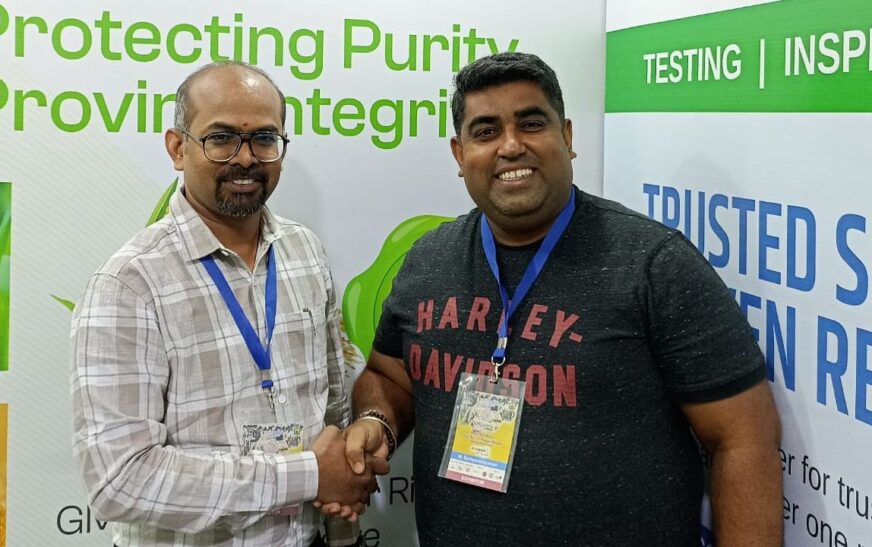
In an exclusive interaction with The Interview World at Organic Expo 2026, M. Sathyanarayanan, Senior Business Development Manager at Viridian Testing Laboratories LLP, provides a detailed perspective on the company’s GMO testing services. He further outlines the organization’s growing client base, evaluates emerging market opportunities in GMO testing, and articulates Viridian’s strategic vision for new service launches and advanced testing capabilities over the next five to ten years. The following are the key insights from this in-depth and thought-provoking discussion.
Q: Can you provide a detailed overview of the GMO testing services offered by Viridian?
A: We operate as an accredited testing laboratory under the NABL framework while also functioning as a dedicated food testing facility recognized by APEDA. We have secured APEDA certification for food testing, thereby reinforcing our credibility within the food industry.
Moreover, we specialize in GMO testing across key agricultural commodities, including rice, wheat, maize, and soybean. As a result, clients consistently recognize us as the preferred and most reliable GMO testing laboratory in South India.
Importantly, we also stand as the only laboratory in South India with established capabilities for GMO testing in cotton. This unique positioning further strengthens our authority and leadership in the region’s GMO testing landscape.
Q: Could you share the current number of active clients using your services?
A: We currently serve a client base of over 100 customers, reflecting strong and sustained market trust. At present, we actively conduct GMO testing for organic products across key crops, including rice, wheat, maize, and soybean.
At the same time, we are strategically expanding our scope. We plan to extend our GMO testing capabilities to millets and a broader range of agricultural products. In addition, we aim to include commodities such as honey and other agri-produce, thereby strengthening our portfolio and addressing evolving market demand.
Q: What market opportunities do you see for GMO testing services in India?
A: In line with current government directives, particularly from the Government of India, all organic products must undergo mandatory testing. This requirement has become critical, especially in the export segment, where exporters cannot ship products overseas without valid test certification.
Accordingly, the Government of India has taken a proactive role in strengthening the testing ecosystem. In parallel, state governments are also extending support to accredited laboratories. Together, these efforts enable testing facilities to efficiently certify organic products and ensure full compliance with both domestic regulations and international export standards.
Q: Is your operational footprint pan-India, or is it currently concentrated in specific regions such as South India?
A: We actively pursue a pan-India footprint while simultaneously expanding our presence in international markets. We already serve clients in Sri Lanka, Pakistan, and the Middle East, thereby demonstrating our growing global reach.
Furthermore, we support a diverse portfolio of food products. In particular, we handle testing for spices, as well as fruits and nuts, ensuring consistent quality and compliance across varied export categories.
Q: What is your vision for launching new services or expanding into additional testing capabilities over the next 5–10 years?
A: At present, we operate across multiple testing verticals with a structured and diversified approach. First, we conduct testing for medical textiles. Next, we cover hygienic product segments. In addition, we provide comprehensive testing for apparel, including both woven and knitted garments. We also extend our capabilities to home textiles, thereby ensuring end-to-end coverage across textile categories.
More recently, we have expanded into GMO testing for organic cotton, strengthening our position in specialized agricultural and textile-linked testing domains. Furthermore, over the past year, we have initiated GMO testing for food products, specifically targeting key crops such as rice, wheat, maize, and soybean.
Looking ahead, we are sharpening our focus on the next five years with a clear emphasis on innovation-led services. We plan to introduce advanced testing solutions in pollution monitoring, including air and water testing. In parallel, we are preparing to enter the medical testing domain, thereby broadening our scientific and regulatory capabilities.
Through these strategic initiatives, we aim to position Viridian Testing Laboratories as a leading testing facility in South India, particularly in the GMO segment and beyond. We already support a wide network of spinning mills by delivering reliable and high-precision testing services, further reinforcing our industry leadership.