
Maple Fashion has evolved significantly over the past five years, from an apparel manufacturer into a trusted international manufacturing partner serving more than 12 buyers across six countries, including the USA and European markets. Repeat customers account for approximately 60% of its orders, reflecting the company’s growing credibility for quality, technical execution and delivery reliability.
Based in Tiruppur, Tamil Nadu, Maple Fashion specialises in elevated casualwear and loungewear for men, women and children. During the last five years, the company has increased its production capacity by approximately 2.5X. Its export volumes have risen from about 200,000 pieces in the first year to 1.2 million pieces in the fifth year, while revenue has more than doubled year-on-year.
The company is now entering its next phase of growth. Rather than focusing solely on manufacturing, Maple Fashion is building product-development capabilities that will enable international brands to translate product ideas into commercially viable, scalable apparel.
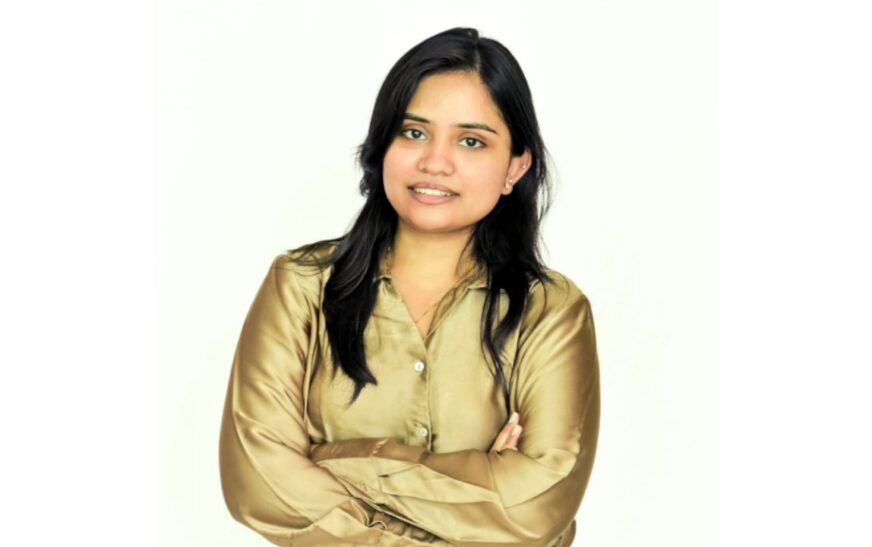
In an exclusive conversation with The Interview World, Madhusshri P, Director, Maple Fashion, discusses the company’s most significant growth indicators, explains how she has built design understanding, technical precision and delivery discipline into the business, reflects on a pivotal growth challenge that reshaped her approach to entrepreneurship, and outlines her vision for Maple Fashion over the next three to five years. Here are the key takeaways from the conversation.
Q: What are the strongest indicators of Maple Fashion’s success so far: international buyers, repeat business, product categories, production capacity or export growth?
A: Maple Fashion has been operating for five years, and during this period we have built a customer base of more than 12 international buyers across six-plus countries, including the USA and European markets. Approximately 60% of our orders now come from repeat customers. For us, that is one of the strongest indicators of customer satisfaction and confidence in our execution.
Our strongest product categories have been elevated casualwear and loungewear. These include oversized T-shirts, sweatshirts and joggers across men’s, women’s and children’s segments. These categories have helped us establish a strong manufacturing base while also giving us exposure to varied product requirements.
The business has grown considerably since its inception. Our production capacity has increased by approximately 2.5X, while revenue has grown by more than 2X year-on-year. At the same time, our export volumes have increased from approximately 200,000 pieces in the first year to 1.2 million pieces in the fifth year.
However, these numbers represent more than business growth. They reflect our transition from establishing ourselves as an apparel manufacturer to developing the customer relationships, technical capabilities, production systems and execution discipline required to manage larger and increasingly complex international orders.
Q: Global buyers expect design understanding, technical precision and dependable delivery. How have you built these capabilities into Maple Fashion?
A: From the beginning, I understood that manufacturing capacity alone would not differentiate us in international markets. We therefore focused on understanding the product before we committed to producing it.
During the initial years, I deliberately brought in a technical professional with more than 15 years of industry experience. This helped us create a systematic approach to breaking down a product—from understanding the design and selecting the right raw materials to evaluating intermediary processes, technical feasibility and final garment construction.
Whenever we receive an enquiry, we examine the product closely. My background in Textile Technology also helps me evaluate materials, processes and product feasibility at a deeper level. We do not confirm an order until we are confident that we have identified a technically feasible and commercially viable route to execute it.
Delivery follows the same disciplined approach. We work backwards from the customer’s required delivery date and establish deadlines and buffers for every stage of production. If we identify a potential delay anywhere in the chain, we communicate proactively with the customer and work to recover the lost time without compromising the intended sale date.
This combination of product understanding, technical precision and execution discipline has translated into repeat business.
One customer, for example, works across a broad range of apparel, from basic to differentiated products across men’s, women’s and children’s categories. We initially executed three orders for the customer and subsequently developed five additional samples. The quality and precision of those samples, followed by consistent execution, resulted in continuous orders.
Today, approximately 60% of our orders come from repeat customers. That experience has reinforced an important principle for us: our competitive advantage is not simply our ability to manufacture garments. It is our ability to understand what the customer wants to achieve and translate that requirement into a commercially viable product.
Q: Which experiment or mistake taught you that progress can create clarity, and why did it become an inflection point for Maple Fashion?
A: One of the most important learning experiences came about two years into the business.
A new customer initially placed an order for 15,000 pieces of a single style. We successfully delivered the order and demonstrated the quality and reliability of our execution. The customer then offered us four additional orders totalling more than 240,000 pieces, with a delivery requirement of less than three months.
At that point, I questioned whether we were ready to take on the volume.
Apparel manufacturing has a long upstream cycle. Raw-material procurement, knitting, dyeing, printing and other processes can take between one and one-and-a-half months before the fabric even reaches our manufacturing facility. Managing more than 240,000 pieces within such a short timeframe would require significant working capital, equipment, manpower and skilled labour. At the same time, we had to protect quality and delivery commitments.
I was not certain that we were fully prepared. However, I also realised that waiting until we had every capability in place could mean losing an opportunity that might fundamentally change the scale of the business.
So, we accepted the orders.
Instead of trying to solve every problem before we started, we approached the challenge step by step. As new issues emerged, we addressed them, built the required capabilities and strengthened our systems along the way.
We successfully executed the orders and subsequently handled larger quantities for the same customer. More importantly, the experience pushed us to invest in equipment, develop a stronger skilled workforce and establish execution systems capable of managing larger volumes within tighter timelines.
That experience became an inflection point for Maple Fashion because it changed my approach to growth.
I learned that an opportunity can itself create the clarity and capability required to pursue it. We do not always need to have every answer before taking the first step. Sometimes, we need to commit to the opportunity, build the capability and solve each challenge as it emerges.
Q: Looking ahead three to five years, what is your vision for Maple Fashion?
A: Over the next three to five years, our vision is to evolve Maple Fashion from a manufacturing partner into a product-development and manufacturing partner for international apparel brands.
Today, customers often approach us with a product requirement that needs to be translated into the right materials, processes and garment construction. We want to move further upstream in that value chain. Our ambition is to work with brands from the product-development stage and help them make better decisions about material selection, manufacturing processes and garment structures based on the intended end-use and performance of the product.
We are targeting approximately 3X growth in production capacity and 2.5X growth in revenue over the next three to five years.
Our next customer-growth engine will be direct relationships with apparel brands and importers that manage multiple brands and value product improvement. We also see opportunities to strengthen our presence in markets such as the UK and Australia.
To achieve this, we need to deepen our product-development capabilities, expand our material and process expertise, strengthen our technical team and build scalable quality and production systems. We also need stronger capabilities for direct customer acquisition.
Capital will primarily support working capital requirements as we take on larger orders, along with selective investments in equipment, people and technology.
Ultimately, our ambition is not simply to manufacture more pieces. It is to create greater value before manufacturing begins. We want to help brands make better decisions about materials, construction and processes and then translate those decisions into high-quality products that can be produced reliably and scaled efficiently.
That is the next chapter for Maple Fashion: moving beyond manufacturing capacity to become a more integrated product-development and manufacturing partner for global apparel brands.