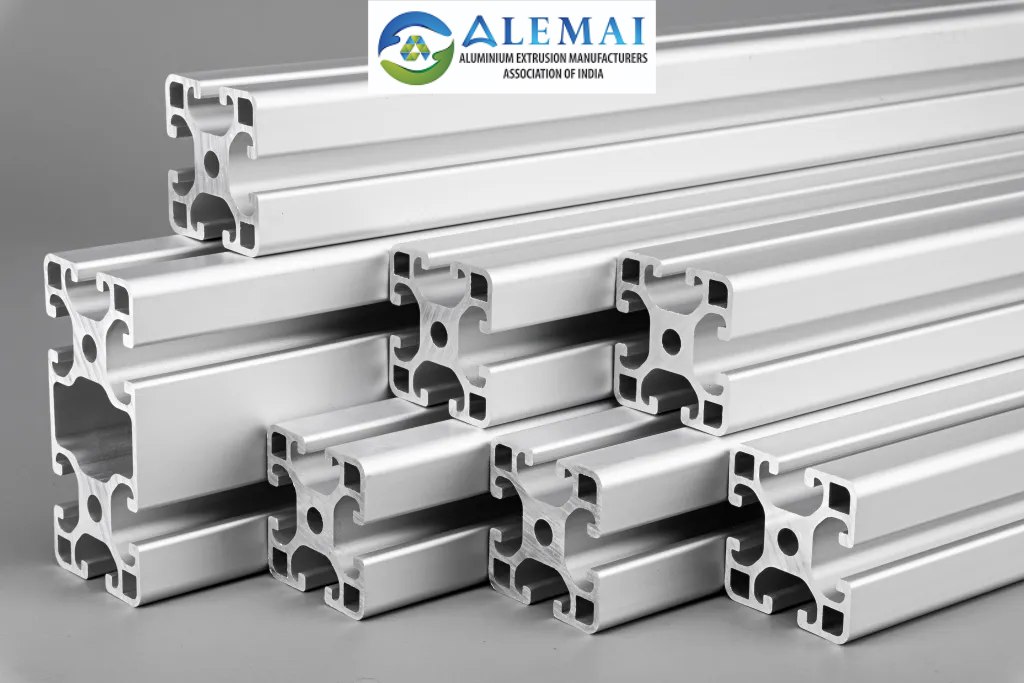

The Aluminium Extrusion Manufacturers Association of India (ALEMAI) embodies the collective strength of an industry that fuels modern infrastructure, design, and innovation. With over 200 members, spanning agile MSMEs to dominant industrial players, ALEMAI brings credibility, coherence, and visibility to India’s extrusion landscape. Its technical committees relentlessly advance manufacturing excellence. At the same time, its flagship event, ALUMEX India, showcases the sector’s ingenuity and scale on a national stage.
Yet ALEMAI is far more than an industry body. It is a movement, driving influence, shaping standards, and positioning India as a formidable force in the global aluminium extrusion arena. It is the crucible where collaboration sparks transformation and ambition evolves into leadership.
In an exclusive dialogue with The Interview World, Jitendra Chopra, President of ALEMAI, offers a deep dive into the current state of India’s aluminium market. He highlights the policy and regulatory measures the industry expects from the government to accelerate growth. He examines the ripple effects of US tariffs on domestic players. And he underscores the industry’s decisive strides toward sustainability and net-zero practices, setting a blueprint for responsible growth.
Q: How would you describe the current state of the domestic aluminium market in the country?
A: India’s domestic aluminium market stands at 30 lakh tonnes or 3 million tonnes annually. Of this demand, the country produces only 12–13 lakh tonnes, leaving the remaining requirement to be filled through imports.
The gap persists because aluminium from ASEAN and other FTA partner nations enters India at zero duty. Traders and factories leverage this tariff-free regime, making imports more cost-effective than domestic sourcing.
As a result, despite India’s substantial market capacity of 3 million tonnes per year, a significant portion of demand continues to be met by foreign suppliers rather than homegrown production.
Q: What is the current contribution of the aluminium and mining industry to the country’s GDP?
A: I do not have precise data on the aluminium industry’s direct contribution to India’s GDP. However, metals undeniably play a pivotal role in driving economic growth. Steel, aluminium, copper, and brass form the backbone of industrial progress, infrastructure, and manufacturing.
Only recently has the government fully acknowledged the strategic importance of metals. The wake-up call came when access to rare metals was disrupted, forcing policymakers to confront the nation’s vulnerabilities.
Contrast this with China. As early as 25 years ago, it prepared a comprehensive vision document on aluminium—outlining its goals, strategies, and future roadmap. That long-term clarity positioned China as a global leader in the sector.
India, by comparison, drafted its aluminium vision document barely two years ago. Even so, the effort remains incomplete, only half implemented and far from achieving the decisive impact it was meant to deliver.
Q: What key policy and regulatory measures do you expect from the government to strengthen and boost the growth of the aluminium industry?
A: The government’s foremost responsibility lies in prioritizing value-added and downstream industries. Simply producing aluminium and exporting it is not enough. Take China, for instance. It does not export raw bauxite or plain aluminium. Instead, it actively discourages such exports and focuses on selling finished, value-added goods.
China exports doors, chairs, windows, and auto parts, not raw metal. To strengthen this strategy, it offers export incentives ranging from 13% to 28%. This policy has created an ecosystem where multiple industries thrive simultaneously. When value is added, growth does not remain confined to aluminium alone. It fuels expansion across glass, rubber, steel, chemicals, packaging, hardware, locks, and bearings. China’s model is clear: build industries by exporting only value-added products.
India must draw lessons from this. We should not remain content exporting bauxite, ingots, or billets. Instead, we must develop a policy framework that drives exports of finished products. If we embrace value addition as a national priority, ten other industries will rise alongside aluminium. This is not about metal alone; the same principle applies to cotton or any other raw material. Why export it raw when we can export garments, textiles, and advanced fabrics?
At the same time, we must confront the issue of unfair trade practices. Our domestic industry has the capacity to produce 30 lakh tonnes, yet we are stuck at 12–13 lakh tonnes. Why? Because cheap imports are flooding the market under outdated FTAs, which remain unreviewed for years. Unless we impose countervailing or safeguard duties, our domestic industry will never reach its potential.
Every country has the right to protect its industries. The United States has already imposed tariffs to defend its market. Why should India hesitate? The government must rethink its stance on import duties and commit to fostering a value-adding industrial ecosystem. Only then can India achieve true economic strength and industrial self-reliance.
Q: What potential impact do you foresee the recently imposed US tariffs having on the aluminium industry?
A: India is not a major exporter to the United States under its tariff regime. When we speak of our aluminium exports, the contrast is stark. China ships aluminium worth nearly $200 billion. India, by comparison, exports barely $170 million. The impact of this gap is undeniable.
How do we mitigate this? The answer lies in boosting domestic consumption. At present, our figures are dismally low. China consumes 25–30 kilos of aluminium per person. The United States averages 15–18 kilos. Globally, the average stands at 11–12 kilos. India lags far behind at only 3–4 kilos.
The way forward is clear. We must expand domestic consumption first. As consumption grows, our industry gains momentum. With increased demand, we can utilize full capacity: 30 lakh tonnes. Once production scales up, unit costs will fall.
That, in turn, makes Indian aluminium globally competitive. At scale, we can match China not only in price but also in strength. Domestic demand, therefore, is not merely an option, it is the foundation of our global competitiveness.
Q: You emphasize mining and sustainability. How is the aluminium industry preparing to balance growth with sustainable practices?
A: The government continues to place disproportionate emphasis on mining alone, without thinking beyond it. Extracting ore and producing raw metal is not enough. We turn iron ore into sponge iron, only to see that very sponge iron exported to China and other markets. From there, it returns to us as coils, channels, and angles. In effect, we are importing finished goods made from our own raw material.
This approach reduces India to a trading nation rather than a manufacturing power. Our production capacity stands at 13 lakh tonnes, yet imported goods flood the market. Instead of building an industrial base, we are slipping into the role of a trading hub.
What does this mean in practice? Mining alone cannot secure industrial strength. If we channel mined resources into domestic industries and supply them at globally competitive rates, our industries will survive and thrive. More importantly, they will create value by manufacturing finished products.
And once we shift focus from exporting raw material to exporting value-added products, we will not just trade; we will lead.
Q: With net zero emerging as a core ESG target for sustainability and the environment, what role is the aluminium industry playing in advancing this goal?
A: Our industry has embraced recycling for decades. We melt down the entire scrap generated in India and even import scrap from across the world to sustain operations. Unlike mining-based production, the aluminium we manufacture is entirely recycled.
From the outset, we have aligned ourselves with the goals of net-zero emissions and carbon neutrality. Recycling is not a new practice for us, it has always been our foundation. As an industry dominated by MSMEs, we have consistently contributed to the government’s climate and sustainability agenda.
In truth, we are not replicating the environmental damage caused by mining. We are doing the opposite. We are recyclers in the purest sense, turning waste into value and driving India’s transition toward a greener economy.