
Aquaritin is redefining water, turf, and agricultural care through the precision of nanotechnology. Its breakthrough solutions reduce nutrients to particles just one to thirty nanometers wide, small enough to penetrate plant leaves effortlessly and deliver results exactly where they matter.
The company’s flagship turf products, including Aquaritin 19 and Aquaritin Defend, do more than nourish grass—they strengthen it. Lawns gain deeper color, firmer structure, and enhanced resilience against stress and disease. Fertilizers and fungicides perform better, lasting longer while minimizing waste.
Aquaritin’s impact extends well beyond turf. Its water management solutions boost dissolved oxygen and encourage diatom growth, naturally restoring clarity, suppressing harmful algae, and neutralizing foul odors. All of this happens without harsh chemicals and without compromise.
At its core, Aquaritin fuses science, sustainability, and simplicity. The outcome is tangible: healthier ecosystems, greener turf, cleaner water, and a bold alternative to conventional treatments.
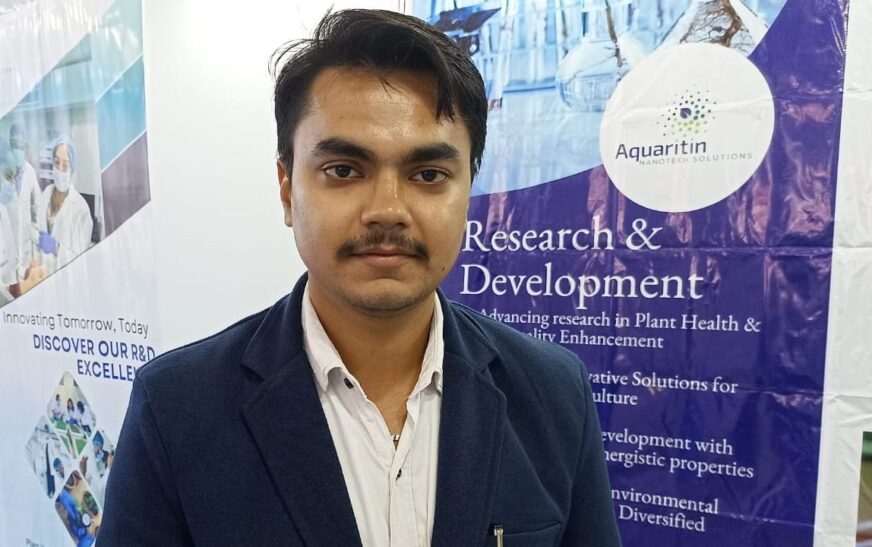
At Delhi Water Expo 2025, Shivam Gupta, Business Development Manager of JS Aquaritin Global Pvt. Ltd., shared exclusive insights with The Interview World. He explained how the company leverages nanotechnology for water treatment and rejuvenation, highlighted successful case studies on large water bodies, detailed the environmentally friendly microbial manufacturing process, and outlined Aquaritin’s strategic vision for innovation and market growth over the next five to ten years.
Here are the key takeaways from his illuminating conversation.
Q: Could you elaborate on the specific nanotechnology-based solutions your organization employs for water treatment and rejuvenation?
A: We are a global leader in in-situ phyco-remediation of wastewater. Our approach requires no permanent construction. Instead, we harness nature itself to rejuvenate water, using the remarkable power of algae. Specifically, we work with a species called diatoms. These low-light photosynthetic microorganisms are naturally present in nearly every water body and play a crucial role in increasing dissolved oxygen levels.
To accelerate their growth, we manufacture a specialized nutrient media that can be sprayed directly into the water. This media enhances diatom proliferation, which in turn raises dissolved oxygen levels. Once oxygen levels improve, we introduce microbial consortia specifically engineered for different effluent types, such as paper and pulp, dairy, and sugar industry wastewater. These microbes consume oxygen to degrade pollutants and nutrient loads, effectively reducing BOD, COD, TSS, and pH levels. Within three weeks, this intervention can restore water to irrigation-grade quality.
Our solution is both cost-effective and environmentally sustainable. Diatoms, as phytoplankton, form the base of the aquatic food chain. They feed zooplankton, which in turn support fish populations. By enhancing diatom growth, we indirectly boost biodiversity across the ecosystem.
We have successfully demonstrated this approach in multiple case studies. A recent project in Kasna, a district in Noida, involved the restoration of four ponds ranging from one to two acres each. These ponds suffered from poor water quality due to improper solid waste disposal and nutrient runoff. Through the efforts of Aquaritin Foundation, our NGO, we revitalized these ponds. Following our intervention, the water quality improved significantly. Today, local villagers and farmers rely on these ponds for both irrigation and domestic use.
Q: Could you share insights from successful case studies where your solutions have been applied to treat large water bodies?
A: Our unique selling point lies in the scalability and cost-effectiveness of our solution. We can remediate flowing water bodies without interrupting the flow. Treatment occurs seamlessly as the water moves.
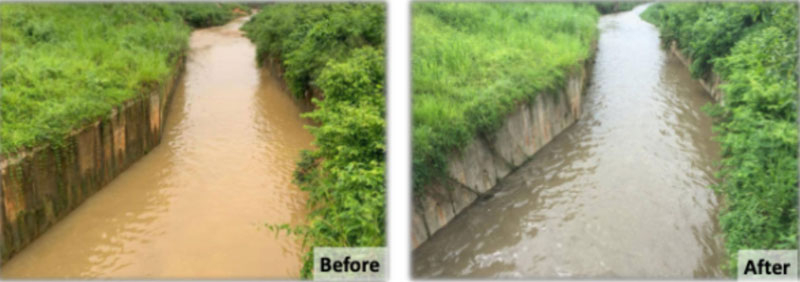
A striking example comes from Malaysia’s Sungai Gong river, a water body heavily impacted by effluents from the country’s palm oil industry. The river spans an immense 260 MLD, presenting a significant environmental challenge. Yet, our intervention successfully treated the river.
The results were remarkable. According to the Malaysia Pollution Control Board, the river’s water quality improved from Class 5 to Class 2A. This transformation marked a major environmental achievement, demonstrating both the effectiveness and scalability of our approach.
Q: What’s the technological process involved in manufacturing these environmentally friendly microbes for water treatment?
A: We do not produce diatoms themselves; instead, we manufacture a specialized nutrient media. These media are formulated with silica-fused minerals, which diatoms naturally absorb more efficiently than other nutrients present in the water. This targeted approach ensures that our nutrients are taken up preferentially by diatoms, enhancing their growth and effectiveness.
It is important to note that every eutrophic pond or water body already contains abundant nutrients, which often fuel the growth of blue-green algae, commonly known as algal blooms. One might ask: why add more nutrients? The answer lies in the composition. Our nutrients are silica-fused and specifically designed to support diatoms, unlike the generic nutrients already present. This distinction is critical for promoting healthy aquatic ecosystems.
Regarding Biuretin, we produce it in powdered form in a lysophilic state, meaning the bacteria are temporarily inactivated. Before application, we dilute the powder in 20 liters of water. Within 20 minutes, the bacteria become active, ready for deployment. Using a high-power, high-pressure spray, we can directly dose the water body, ensuring precise and effective treatment.
Q: Where do you envision your company positioning itself over the next 5 to 10 years in terms of technological innovation and market expansion?
A: Our approach to wastewater treatment is entirely unique. It is highly cost-effective and scalable. Given this innovation, I envision both myself and my organization as pioneering leaders in water rejuvenation—not just in India, but on a global scale.