

FederUnacoma, the Italian Agricultural Machinery Manufacturers Federation, drives the powerhouse at the core of Italy’s agricultural-machinery sector. It does more than represent the industry; it actively shapes its trajectory. By uniting the nation’s leading manufacturers in tractors, implements, components, irrigation, gardening equipment, and agri-tech, FederUnacoma serves as both guardian and catalyst of true “Made in Italy” excellence.
Although formally established in 2012, the federation builds on a legacy that reaches back to 1945. Today, it commands the majority of Italy’s production and export activity in the agricultural-machinery domain. Beyond advocacy, it delivers research, regulatory direction, and global market intelligence that keep its members competitive, forward-thinking, and relentlessly innovative.
Moreover, FederUnacoma stands behind several of the world’s most influential machinery showcases—including EIMA International, Agrilevante, and EIMA Agrimach. These events ignite dialogue, foster strategic partnerships, and propel emerging technologies onto the global stage. As a result, FederUnacoma operates not merely as an association but as the engine accelerating the evolution of modern mechanized agriculture.
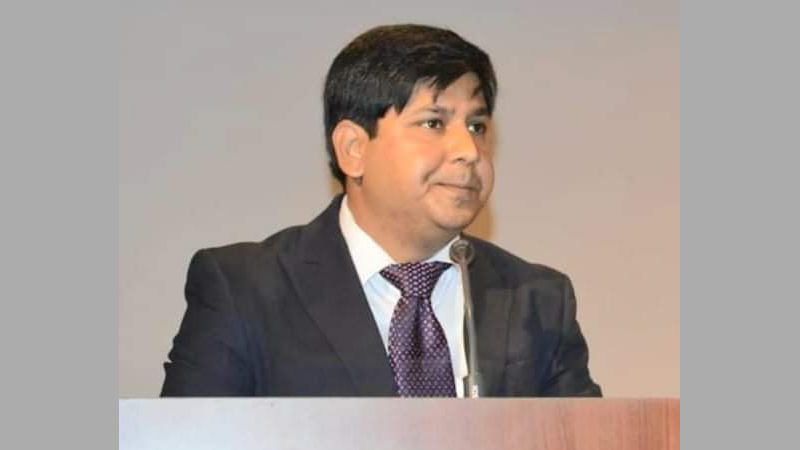
In an exclusive conversation with The Interview World at Agrimach India 2025, Davide Gallarate, Executive in the Events Department at FederUnacoma, outlines the federation’s pivotal role in supporting Italy’s agricultural sector. He shares insights into the scale of Italy’s agricultural-machinery industry and highlights growing opportunities in India. Additionally, he underscores ongoing technology transfer between the two countries, recommends targeted agricultural technologies for India, and emphasizes FederUnacoma’s contributions to post-harvest innovation.
The following are the key takeaways from his compelling discussion.
Q: Could you elaborate on the role of FederUnacoma (the Italian Agricultural Machinery Manufacturers Federation) and explain how it supports Italy’s agricultural sector?
A: As a federation, we bring together more than 360 companies that manufacture every category of agricultural machinery, from equipment for field operations to components, parts, and roofing systems, as well as advanced gardening machines.
Q: Could you give an overview of the size and scale of this industry in your country?
A: According to the latest data, the industry is valued at €14 billion, and exports account for 70% of that total. The Italian agricultural machinery sector is, in fact, strongly export-oriented: we ship 70% of our production to 187 countries worldwide. Europe remains our primary market, representing roughly 69% of our exports. North America follows, contributing between 15% and 19%, while Asia accounts for about 6%, with Africa and Oceania completing the global spread. Italian agricultural machinery is present virtually everywhere—perhaps with the sole exception of Antarctica.
Q: How do you view the opportunities within the Indian market?
A: The Indian market is thriving, and it stands among the most dynamic and compelling markets in the world. Consider the figure everyone cites: nine lakh tractors sold annually. This scale is remarkable, especially in a country with such diverse climatic and soil conditions. India has 18 identified agro-climatic zones, according to the Ministry, and each presents unique challenges and opportunities.
As a result, the market is not only vast but also rich in untapped potential—particularly in areas such as harvesting and crop protection. While India already demonstrates strong adoption of tractors and soil-working equipment, and uses a range of other technologies, many advanced solutions developed by the Italian industry have yet to enter the Indian market.
However, one prerequisite is clear. Indian tractors typically fall in the 50–70 HP range, and Italian manufacturers produce machinery perfectly compatible with these power levels. Yet the cost factor must be considered. Imported technologies inevitably cost more than those manufactured locally—except, of course, for specialized technologies not currently available in India. Even so, the return on investment often offsets the initial expense, as farmers gain efficiency, reduce input use, and improve overall productivity.
There is another issue I always highlight: biomass management. We are in Delhi today, and the air quality is poor, to say the least. We all know why—farmers in Punjab, Haryana, Uttar Pradesh, and nearby regions continue to burn crop residue. Despite some progress, stubble burning remains a persistent reality. Yet this biomass is not waste; it is a resource. When managed properly, it can be transformed into fuel, fertilizer, and numerous other valuable products. The key lies in adopting the technologies and practices needed to harness this potential rather than letting it go up in smoke.
Q: Is Italy planning to share or transfer its latest technologies with India?
A: Several companies have already established their presence in India, and many more will follow, bringing an expanding range of advanced technologies. In agriculture, every resource is valuable; nothing can be overlooked. Today, opportunities in Agriculture 4.0— including sensor-based systems, GPS-guided machinery, and data-driven technologies—are abundant and fully accessible. The Indian farming community stands to gain significantly from these innovations.
However, effective adoption requires strong partnerships with local stakeholders—whether manufacturers, importers, or distributors. Such collaboration is essential, and building these alliances will ensure that advanced technologies reach farmers efficiently and sustainably.
Q: Is there any technology you would strongly recommend for India to pursue at this stage?
A: There isn’t a single technology I would single out. Instead, I would emphasize that India already has a massive agricultural output—one that can grow even further. If I had to highlight an area with significant potential, it would be horticulture. Applying the latest machinery in horticultural operations can deliver substantial benefits, particularly in vegetable and fruit cultivation. These are high–value crops, and modern equipment can greatly enhance their productivity, quality, and profitability.
Q: What types of post-harvesting technologies does FederUnacoma offer?
A: As FederUnacoma, our mandate extends up to the stage of agricultural transportation. Beyond that point, numerous Italian associations and companies specialize in food processing, packaging, and cold-chain management. This next step is critical, especially considering that food and agricultural wastage in India remains high.
Advanced technologies do exist, and they perform even better when agricultural products are grown using scientific, modern, and appropriate methods. While post-harvest processing falls outside our direct scope, the machinery and practices we promote form a necessary foundation for everything that follows.