

The Biological Agri Solutions Association of India (BASAI) is a not-for-profit organization incorporated on June 13, 2019, under Section 8 of the Companies Act. It champions sustainable agriculture by advancing the adoption of biological agri-inputs, including biofertilizers, biopesticides, and biostimulants, to restore soil health, enhance crop productivity, and improve environmental outcomes. Through structured knowledge exchange, deep industry collaboration, and focused regulatory advocacy, BASAI strengthens India’s bio-agriculture ecosystem. It brings together corporates, domain experts, farmers, and allied stakeholders to accelerate the transition to eco-friendly farming while convening high-impact forums that spur innovation and broaden awareness across the sector.
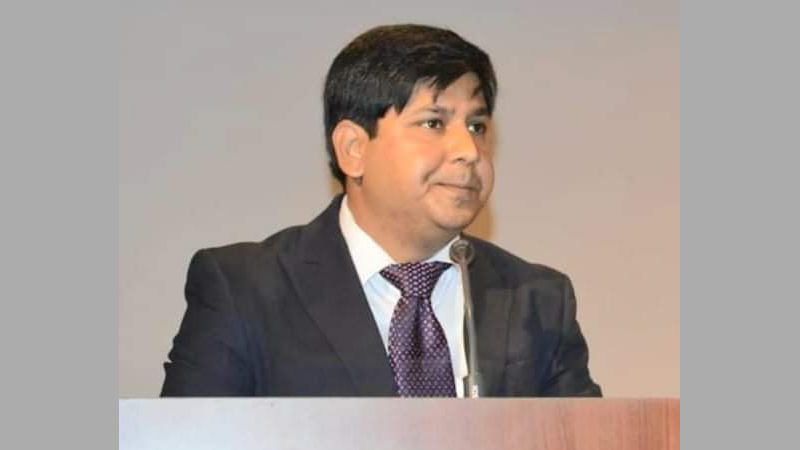
In an exclusive interaction with The Interview World at the 4th All India Progressive Farmers Convention, organized by the Agriculture Today Group, Vipin Saini, CEO of BASAI, details the organization’s strategic initiatives to scale sustainable agriculture. He explains how biological inputs drive farm efficiency and productivity, evaluates adoption levels among Indian farmers, particularly in rural and village-level communities, and benchmarks India’s biological agri-inputs against global standards. He also outlines the pragmatic approach of BASAI to addressing farmers’ most pressing challenges.
The following are the key takeaways from a substantive and insightful conversation.
Q: Could you outline the key initiatives undertaken by BASAI to promote sustainable agriculture, with particular emphasis on the adoption and impact of biological inputs?
A: BASAI is an industry association that brings together member companies engaged in the manufacturing and import of biological agri-inputs, with a primary focus on domestic manufacturing. Its members produce a wide spectrum of solutions, including biofertilizers, biopesticides, biostimulants, plant growth regulators, and pheromones, thereby representing the core of India’s biological agriculture ecosystem.
For years, a persistent misconception has suggested that the biological sector lacks momentum and remains confined to legacy products such as BD, BDK, Trichoderma, or Pseudomonas. That perception is no longer valid. Over the past fifteen years, the sector has undergone a fundamental transformation. Innovation has accelerated. Product sophistication has increased. Importantly, a growing pipeline of patented technologies has emerged. The Department of Biotechnology has played a catalytic role in this shift by actively promoting the sector and funding high-potential startups.
Several examples illustrate this progress. Sea6 Energy is advancing seaweed-based solutions. BioPrime and String Bio are driving innovation in microbial technologies. In parallel, multiple companies have developed strong capabilities in humic and fulvic acids, while others specialize in botanical-based biopesticides. Above all, the most significant momentum lies in microbial biofertilizers and biopesticides, where sustained research, innovation, and commercialization are rapidly reshaping the biological agri-input landscape in India.
Q: In comparison with conventional agrochemical products, how do biological inputs perform in terms of improving farm efficiency, productivity, and overall agricultural outcomes?
A: India has achieved food security. The national priority has therefore shifted decisively toward nutritional security.
This transition has sharpened scrutiny of the intensive and prolonged use of chemical fertilizers and pesticides since the 1960s. Decades of chemical dependency have degraded soil health, strained ecosystems, and compromised environmental balance. Consequently, the concern is no longer confined to agriculture alone; human and animal health have also been adversely affected. In response, India, like the rest of the world, is increasingly turning to biological solutions to mitigate the cumulative damage caused by conventional agri-inputs.
Biologicals offer a dual advantage. On one hand, they help reverse environmental degradation linked to chemical-intensive farming. On the other, they provide farmers with resilient tools to address emerging agricultural challenges, particularly those driven by climate change. In this context, biological agri-inputs are no longer viewed as optional alternatives; they are fast becoming essential instruments for sustainable farming, both nationally and globally.
That said, biologicals demand a realistic understanding of how they work. They act gradually. They do not deliver instant, knockdown effects. Results do not appear overnight simply by application. Instead, effectiveness depends on discipline, sequencing, and adherence to well-defined protocols.
This is where integrated approaches become critical. Biologicals perform best when deployed within Integrated Pest Management (IPM) or Integrated Crop Management (ICM) frameworks. These systems harmonize inputs used for crop production with those used for crop protection. When applied methodically and in the right combinations, biologicals deliver sustained outcomes: restoring soil vitality, strengthening crop resilience, and enabling long-term agricultural productivity.
Q: How would you assess the level of adoption of biological inputs among Indian farmers, particularly in rural and village-level agricultural communities?
A: In rural India, it is important to clarify a fundamental point: many farmers are already practicing forms of natural or ecological agriculture. This inclination is not ideological; it is practical. Most rural farmers are smallholders with limited land and constrained financial capacity. As a result, they cannot afford heavy investments in external agri-inputs. Instead, they rely on indigenous practices, locally available resources, and time-tested methods.
At the same time, these farmers remain highly receptive to innovation. They closely observe practices adopted by farmers with larger landholdings. When they see successful demonstration plots or witness peers using biological inputs with visible results, their willingness to adopt such technologies increases significantly. Proof on the field drives confidence.
In essence, rural India already operates within a semi-natural agricultural framework. Farmers routinely use locally produced inputs derived from their immediate environment. Biologicals, therefore, do not represent a disruptive shift for them. Rather, they align naturally with existing practices and gain traction when supported by credible demonstrations and measurable outcomes.
Q: How do Indian biological agricultural inputs compare with global offerings, and what is their current positioning in the international market?
A: The European Union has developed a strong and mature biologicals sector. India has done so as well. However, an important structural reality must be acknowledged: a significant number of European companies have acquired or taken controlling stakes in Indian biological agri-input firms.
From a quality perspective, European players operate under far higher stakes. Their products are often deployed across thousands of acres in a single application. As a result, they cannot afford inconsistencies or compromises. Stringent quality control is non-negotiable. In contrast, a segment of India’s smaller manufacturers remains constrained by short-term, profit-driven thinking. In pursuit of immediate results or faster market acceptance, some resort to product manipulation, which undermines consistency and credibility.
This behavior raises serious quality concerns. The implications extend beyond domestic markets. When such compromised biological products enter export channels, especially those adulterated with chemical substances, residue detection becomes inevitable. That, in turn, damages India’s reputation in international markets and weakens trust in the country’s biological agri-input ecosystem.
That said, it would be inaccurate to generalize this shortcoming across the industry. India remains home to some of the highest-quality biological manufacturers globally. The issue is confined to a limited segment driven by narrow profit motives rather than long-term value creation.
Europe’s rapid advancement, therefore, is not solely a function of superior products. Visibility plays a decisive role. European manufacturers benefit from stronger global exposure, established branding, and integrated market access. Indian manufacturers, by contrast, receive far less international visibility. As a result, despite having competitive and often superior capabilities, they remain underrepresented and underrecognized in global biologicals markets.
Q: How does BASAI approach addressing the key challenges faced by farmers in India?
A: First and foremost, it is important to understand the core mandate of an industry association. Our primary responsibility is to engage with the government on policy advocacy at a strategic level. This involves systematically identifying, articulating, and escalating the concerns of both the farming community and the agri-input industry.
When the government drafts new policies, amends existing frameworks, or introduces fresh legislation, it is our duty to present accurate, ground-level realities. We do not offer abstractions or assumptions. We provide facts. We translate field challenges into policy-relevant insights so that decision-making reflects on-the-ground conditions.
However, our role extends well beyond representing industry interests alone. Engagement with farmers remains central to our work. Forums such as the 4th All India Progressive Farmers Convention 2025, organized by Agriculture Today, serve precisely this purpose. They allow direct interaction with farmers and provide an unfiltered understanding of their experiences, constraints, and expectations.
What follows is critical. We carry these perspectives back to policymakers and raise them with the same urgency and seriousness that farmers themselves would expect. Often, farmers may not realize that their concerns are being taken forward. Likewise, policymakers may not see the individuals behind those issues. In this process, the association remains largely invisible. Yet, it is this quiet, continuous bridge between farmers and government that ensures their voices influence policy outcomes.