
Folkartopedia is a digital initiative of the Folkartopedia Foundation and FoCarts India OPC Pvt. Ltd. dedicated to documenting, preserving and promoting India’s folk, traditional and tribal arts. Founded in Patna in 2021, the initiative works at the intersection of cultural research, art education and heritage conservation. Its digital archive brings together artworks, artist profiles, photographs, videos, craft traditions and cultural narratives. Through online exhibitions, webinars, publications and research initiatives, Folkartopedia connects artists, researchers, institutions and audiences to safeguard indigenous artistic traditions and make India’s diverse cultural heritage accessible to future generations.
In an exclusive conversation with The Interview World, Sunil Kumar, Director of the Folkartopedia Foundation, reflects on the initiative’s evolution, the urgent need to document Bihar’s endangered folk art traditions, and the relationship between cultural preservation and artists’ livelihoods. He also examines the opportunities and challenges that artificial intelligence presents for traditional art, questions conventional approaches to commercialization, and argues that artists must retain the freedom to evolve without bearing the entire responsibility for preserving their cultural heritage. Here are the key takeaways from the discussion.
Q: Folkartopedia is recognised for its D-P-P model: Documentation, Preservation and Promotion. When you started, what gaps did you identify in the way institutions approached Bihar’s folk arts?
A: Folkartopedia is known for its work in documenting and preserving folk, traditional and tribal arts. Although the Foundation was established on 9 September 2021, the experiences that inspired its formation began several years earlier.
In 2014–15, I received a research grant from the Sangeet Natak Akademi, Ministry of Culture, Government of India, under a UNESCO programme on intangible cultural heritage. My research focused on the folk ballad of Raja Salhesh. During this period, I travelled extensively across the Mithilanchal and Ang regions of Bihar. These journeys subsequently took me to several art villages in Gaya and Patna, where I witnessed the richness of our artistic traditions and began to recognise the extent of our cultural losses.
The absence of systematic documentation had left many traditions vulnerable to disappearance. The COVID-19 pandemic brought this reality into sharper focus. We lost several important practitioners and custodians of traditional knowledge. Their passing underscored an urgent imperative: we must document our cultural heritage and preserve the knowledge held by our living libraries before it disappears.
Folkartopedia emerged from this realisation. We began by pursuing two complementary objectives. First, we prioritised the documentation of artists, particularly those above the age of 60, whose knowledge and experience represent invaluable cultural resources. Second, we sought to bring folk arts into national and international cultural discourse. We conducted online interviews with artists and organised discussions that allowed them to share their experiences, practices and perspectives.
In 2024, we expanded our work into physical exhibitions. Despite severely limited resources, we organised an exhibition of Bihar’s folk painting traditions at Arpana Fine Arts Gallery, New Delhi, on World Craft Day. The exhibition proved highly successful and encouraged us to expand our efforts.
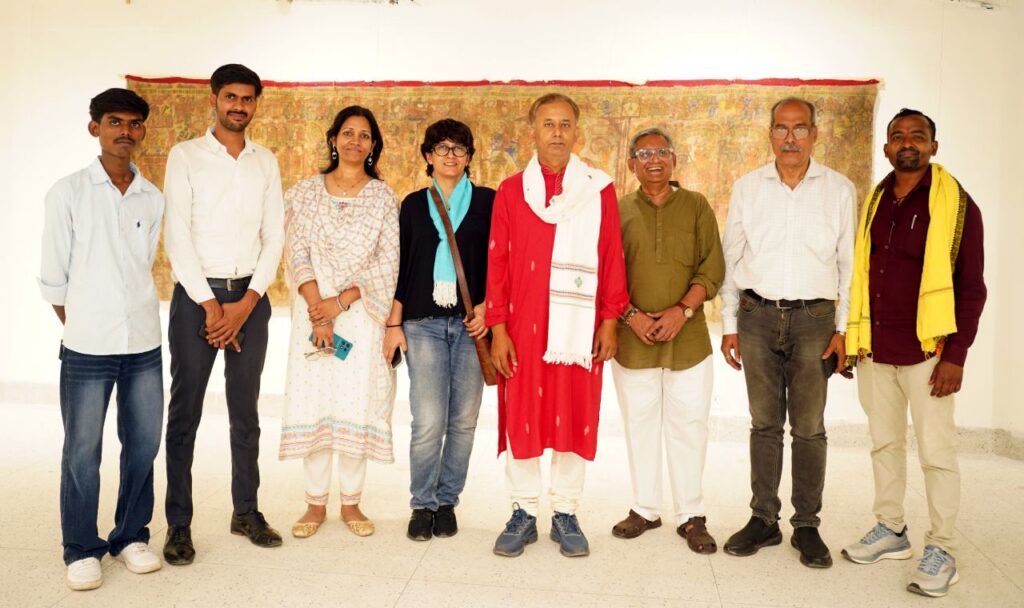
In 2025, we organised the first National Exhibition of Folk Arts at the College of Arts and Crafts, Patna, on World Heritage Day. That year, we also held an all-India exhibition of folk arts in Ranchi, Jharkhand. In 2026, we organised the second edition of the National Exhibition of Folk Arts at Bihar Lalit Kala Akademi, Patna, again on World Heritage Day.
These exhibitions share a common purpose: to integrate folk arts into Bihar’s and India’s creative economies. However, economic participation must begin with the social and financial advancement of artists and artisans. Unless they receive the recognition, resources and opportunities they deserve, preservation will remain an incomplete exercise. That is the challenge our team continues to address.
Q: Bihar is home to numerous traditions beyond Madhubani painting, including Manjusha, Sohrai, Kohbar, Tikuli, Sikki and several tribal art forms. Which traditions face the greatest risk of extinction and require urgent intervention?
A: I would add Godna painting to that list. Today, practitioners of this tradition are concentrated primarily in Paswan Tola, Jitwarpur village, in Madhubani district. Unfortunately, Godna painting faces an existential threat as practitioners increasingly migrate towards Mithila painting.
The pioneering generation of Godna artists has almost disappeared. The next generation, now middle-aged or approaching middle age, increasingly gravitates towards Mithila painting because its expanding market offers greater economic prospects. As a result, many artists feel compelled to abandon their own tradition. This shift also influences younger practitioners, weakening the transmission of Godna painting from one generation to the next. I have no hesitation in saying that Godna painting stands on the verge of extinction.
Manjusha painting and Bhojpuri painting also warrant serious attention. In the absence of coherent art policies, informed criticism and committed art administration, the apparent visibility of a tradition can conceal its underlying vulnerabilities. Exhibition numbers or market activity alone cannot establish whether an art form remains culturally sustainable.
The fundamental problem is our reluctance to acknowledge the exploitative dynamics of the art market. When artists enter commercial markets without adequate institutional support, critical engagement or opportunities to develop their traditions, commercial participation can accelerate cultural decline rather than prevent it. We must therefore look beyond market visibility and ask whether an art form retains its practitioners, knowledge systems and capacity for intergenerational transmission.
Q: Documentation often amounts to little more than photography and cataloguing. How does Folkartopedia document an artist, the rituals, materials, techniques and narratives associated with a folk-art tradition?
A: Our documentation process unfolds in several stages. We begin by researching the artist and the artistic tradition. We then establish contact with the artist and conduct a series of interviews, some on camera and others off camera, depending on the circumstances and the nature of the inquiry.
However, our research extends far beyond the individual practitioner. We examine the artist’s social, economic and political environment, alongside the cultural practices and everyday realities of the community to which they belong. We also investigate the stories, ballads, narratives, rituals and inherited knowledge associated with the art form.
This broader approach allows us to understand how artistic traditions emerge, survive and evolve within particular communities. It also helps us document the relationship between artistic expression and the conditions that shape it.
My team and I firmly believe that we cannot genuinely understand an artist or their work without understanding the society in which they live. Documentation must therefore capture not merely the finished artwork but also the knowledge, experiences and cultural contexts that give it meaning.
Q: Preservation and livelihood often appear to be competing priorities. How does Folkartopedia ensure that documentation translates into better incomes and greater dignity for grassroots artists rather than merely enriching its archive?
A: The relationship between cultural preservation and artists’ livelihoods has long generated debate. In Bihar, however, the immediate concern is often economic survival. Neither government institutions nor sections of the art community have demonstrated sufficient awareness of the urgency of preserving these traditions. In this environment, Folkartopedia has taken responsibility for documenting them.
I believe our work has indirectly helped a section of artists gain recognition and respect, although the impact remains modest. Our platform gives artists a space to express themselves, articulate their concerns and share their perspectives with wider audiences.
We have not directly increased their incomes. Nevertheless, our documentation and outreach initiatives have helped create an environment in which artists can better understand how the art market operates. This awareness has benefited several practitioners in different ways.
We recognise, however, that documentation alone cannot guarantee economic security. Preserving an art form requires a wider ecosystem that values its practitioners, supports their development and creates meaningful opportunities for them to participate in cultural and commercial life.
Q: What logistical and curatorial challenges arise when you bring folk artists from remote villages into formal exhibition spaces?
A: Logistics have not been my principal concern. Folk artists from Bihar and other states are increasingly finding opportunities to exhibit their work in formal spaces. The greater challenge is curatorial, and it rests primarily with organisers and institutions rather than artists.
Artists possess extraordinary creative capacities when they receive the opportunity to express themselves. The real question is whether institutions understand what providing that opportunity actually entails.
Opportunity cannot mean simply inviting artists to exhibit their work. It must also account for the financial resources required to support their participation and sustain their creative practice. Folk artists depend on their work for their livelihoods and must meet basic economic needs. If institutions cannot address these realities, they should exercise considerable caution before imposing external preferences on artistic expression.
Responsible curation, therefore, requires more than selecting artworks and arranging exhibitions. It demands an understanding of artists’ circumstances, respect for their creative autonomy and a willingness to acknowledge the material conditions that shape their work.
Q: As AI-generated art, digital archives and short-form videos transform the cultural landscape, what represents the greatest threat and the greatest opportunity for traditional folk arts?
A: There is room in the art world, and in society more broadly, for AI-generated art, video content, audio content and traditional artistic practices. Digital platforms have already expanded the potential market for folk and traditional arts. The internet enables artists in remote villages to reach audiences that were previously beyond their immediate geographical and economic reach. Young practitioners, in particular, are learning to use these platforms to expand the visibility of their work.
However, artificial intelligence may pose a substantial challenge in the coming years, particularly in relation to originality and authenticity. As AI-generated images become increasingly sophisticated, distinguishing original artworks from copies or imitations may become more difficult through visual inspection alone.
Authentication methods already exist, but their effectiveness could diminish if AI systems learn to manipulate apparent chronology, provenance and other indicators of authenticity. This development should also prompt us to examine the reliability of existing authentication practices rather than assume that conventional systems are infallible.
Digital archives serve a different purpose. We should not evaluate them merely in terms of the opportunities or threats they create for artists. Their fundamental role is to preserve and communicate cultural knowledge.
Folkartopedia is building a digital archive of folk, traditional and tribal arts that we hope will serve as an authoritative resource for present and future generations. By documenting artists’ own explanations of their creative practices, ideas, techniques and materials, we seek to preserve knowledge that photographs of finished artworks alone cannot convey.
Ultimately, the archive aims to create an enduring repository of artistic traditions and cultural knowledge. Its value lies not only in preserving objects but also in recording the voices, experiences and interpretations of the communities that sustain them.
Q: Many young artists modify traditional motifs to create market-friendly work. Does this represent artistic evolution or cultural dilution? Where should we draw the line between promotion and commercialization?
A: This question goes to the heart of cultural preservation, artistic originality and economic survival.
Promoting folk art and enabling artists to earn from their work are both essential. If we reject commercial success in the name of preservation, what message do we send to the communities entrusted with sustaining these traditions? Are we asking artists to remain frozen in a particular historical moment, denying them the freedom to respond to changing circumstances? Such an expectation is neither realistic nor fair.
Change is inevitable. The more important question is who has the authority to determine its limits. I believe artistic communities themselves must play the decisive role in shaping the evolution of their traditions.
When artists find viable markets for their work, they are more likely to sustain their practices. They may experiment with colour, form, composition and presentation to reach new audiences. Such experimentation is not inherently a dilution of tradition. Artists have always adapted their practices to changing circumstances, and contemporary innovations can become part of a tradition’s continuing evolution.
The distinction between promotion and commercialization cannot rest on a rigid formula. Instead, we must examine whether market-driven changes undermine the knowledge, identity and creative agency of the communities that sustain an art form. More importantly, we must recognise artists’ right to make informed decisions about their own work.
Why should artists alone bear the responsibility for preserving cultural traditions in the name of society? Governments, cultural institutions and audiences must also assume that responsibility. If we want folk arts to survive, we must support the people who practise them, invest in their cultural ecosystems and create conditions in which tradition and innovation can coexist.
The central lesson is clear: preserving folk art does not mean freezing it in time. It means protecting the knowledge, agency and livelihoods of the communities that keep it alive.