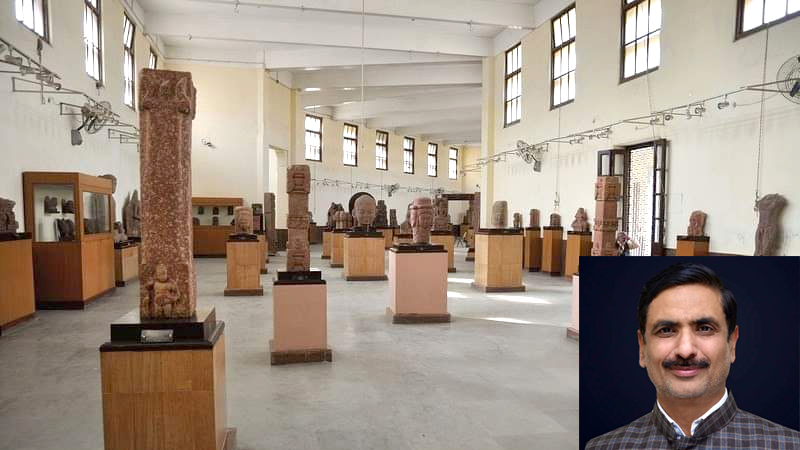

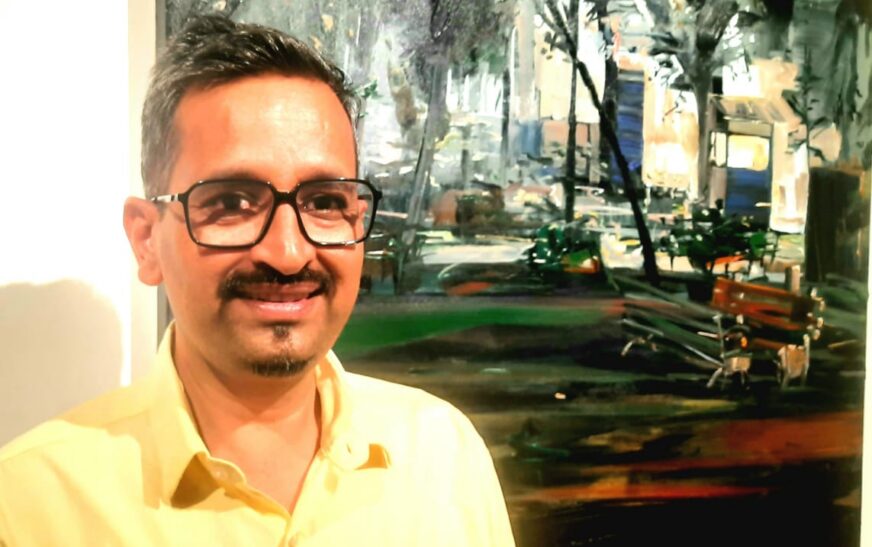
“Location/s: Between Here and Somewhere” investigates how the idea of “location” has shifted beyond geography to become a psychological, digital, and cultural construct shaped by contemporary technology, memory, and imagination. Presented at Triveni Kala Sangam’s Shridharani Gallery and curated by Johny ML, the exhibition interrogates the widening distance between imagined spaces and lived realities. At the same time, it reveals how perception continually reshapes landscapes into layered terrains of memory, recognition, longing, anticipation, light, space, and human existence.
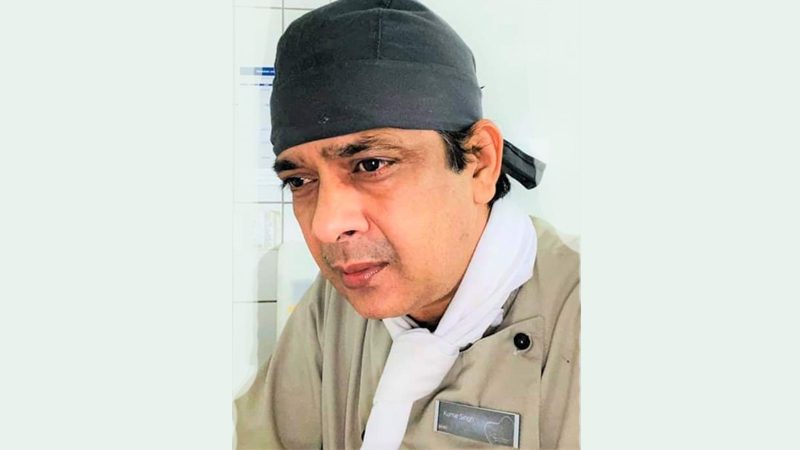
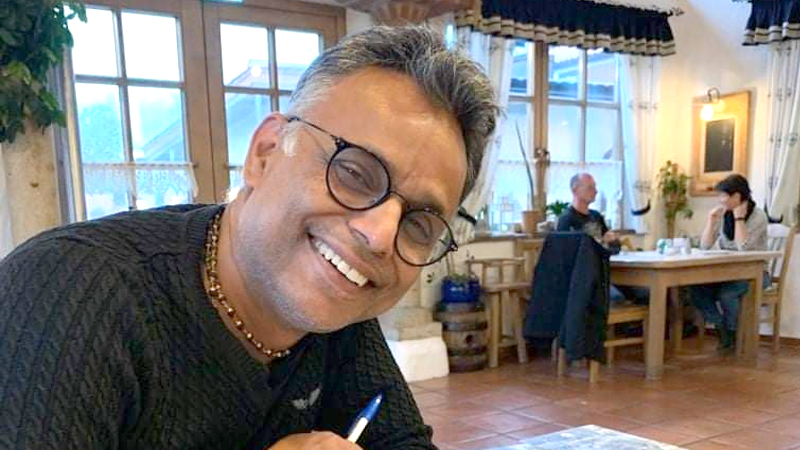
In an exclusive conversation with The Interview World during “Location/s: Between Here and Somewhere,” Pavan Kumar D reflects on the ideas, emotions, and philosophical undercurrents driving his paintings. He discusses the central message the exhibition seeks to communicate, examines how his works capture his evolving perspective on humanity and the shifting condition of human life, and shares the audience response the exhibition has generated. Furthermore, he explains how viewers are engaging with the deeper thematic concerns embedded within his art. Here are the key insights from this compelling conversation.
Q: What themes, ideas, or emotions are you exploring through your current paintings and artwork, and how would you describe your creative process behind them?
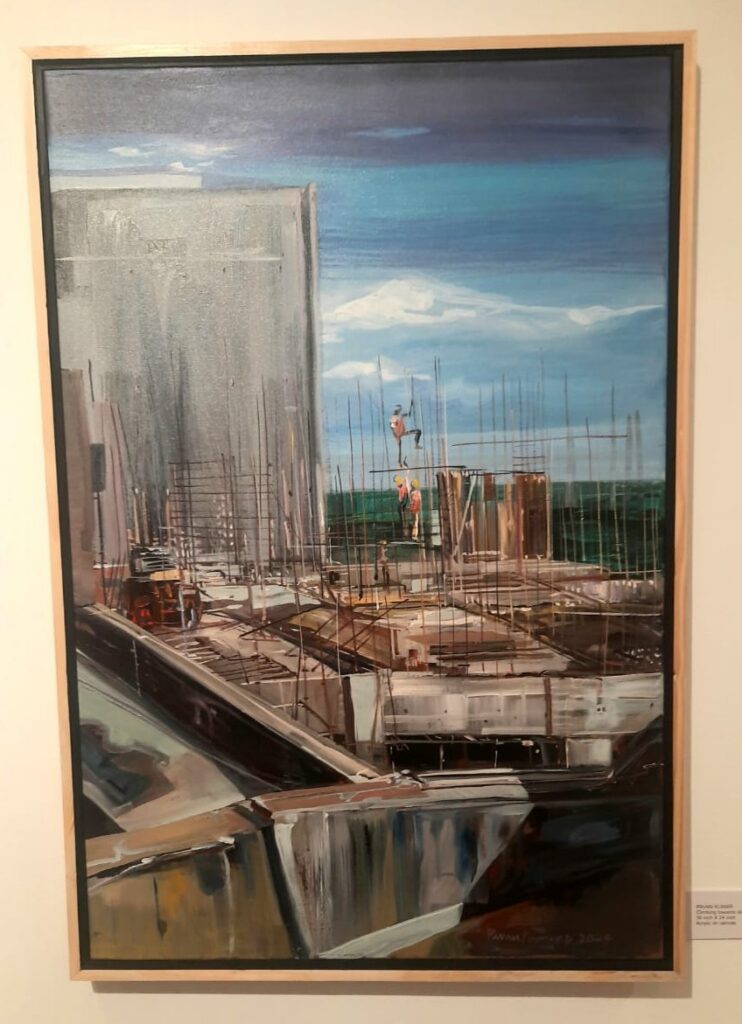
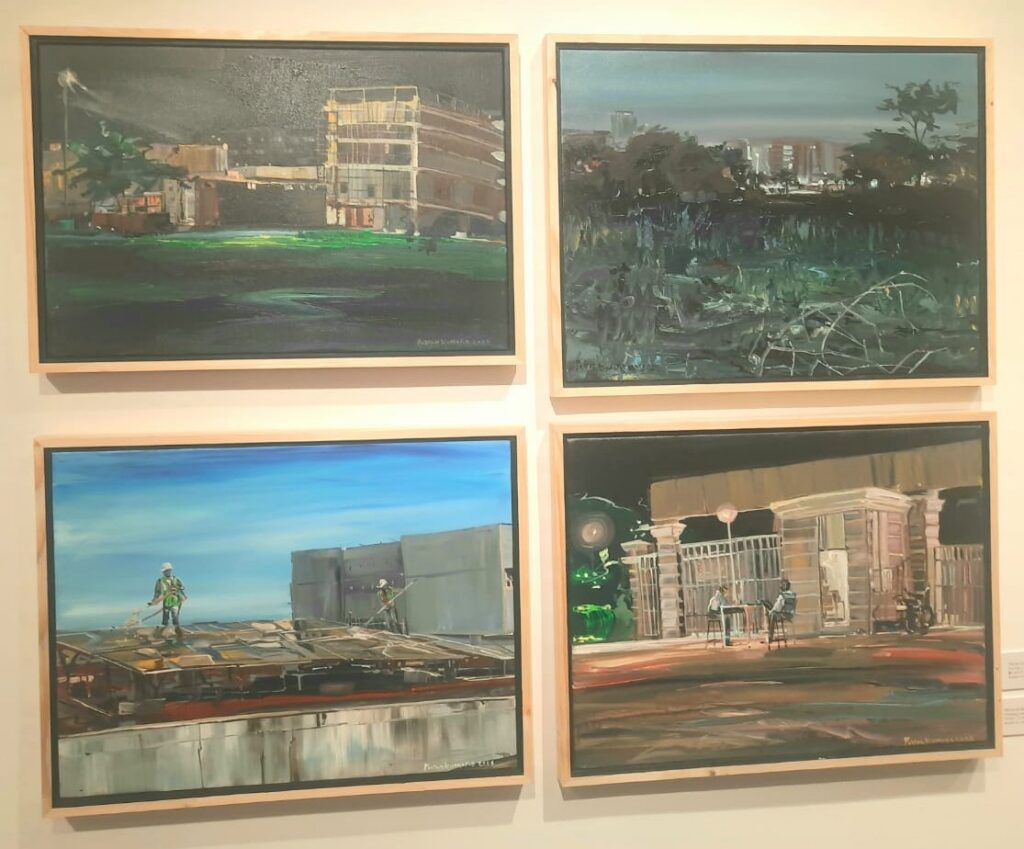
A: I have been practicing art for over two decades, working primarily with acrylics and watercolours. This particular series, however, features acrylic on canvas and reflects a deeply personal exploration of space, light, and perception. Originally from Hyderabad, I moved to New Delhi in 2022 and was allotted a studio at Garhi. That transition became a turning point in my artistic journey, inspiring me to paint the Garhi studio spaces as living, breathing environments.
My central artistic pursuit lies in capturing the transition of light within a space, particularly during the evening hours, when natural light gradually gives way to artificial illumination. It is within this fleeting intersection that something almost magical unfolds. You can still perceive the blue of the sky, yet certain details begin to dissolve into shadow. That moment carries an inherent incompleteness, a quiet mystery that deeply fascinates me. Much of my work emerges from this tension between visibility and obscurity, presence and absence.
Most of my paintings are rooted in direct observation and are created on-site. I travel extensively, to places such as Sonipat, Garhi, and Hyderabad, carrying my materials with me and immersing myself fully in each environment before I begin to paint. I rely heavily on intuition throughout the process, allowing the work to unfold spontaneously. As a result, my application of colour remains immediate and instinctive. My paintings are marked by directness, strong contrasts, and a vibrant energy that seeks to translate not only what I see, but also what I feel in those transient, luminous moments.
Q: What message or impact do you hope this exhibition conveys to the audience, particularly in relation to the locations or spaces where it is being presented?
A: At its core, my work speaks about the beauty of life and the need to experience that beauty in moments of silence, reflection, and stillness. At the same time, I also explore humanity’s relentless desire to transcend limits. Several of my works depict human beings climbing toward the sky, symbolizing our constant urge to achieve the impossible and push beyond the boundaries imposed by nature and reality. That aspiration, in many ways, defines the human condition.
However, my work also questions the consequences of this pursuit. Human life today increasingly operates against the natural rhythm of existence. For instance, human beings are biologically meant to rest at night and remain active during the day. Yet modern life has inverted that balance. People now work through the night and sleep during daylight hours, distancing themselves from the fundamental order of nature. Through my paintings, I attempt to address these contradictions: our ambition, our disconnection from natural cycles, and the evolving relationship between human beings and the world they inhabit.
Q: How do your paintings reflect your perspective on humanity and the changing nature of human life, particularly within modern metropolitan societies?
A: In several of my paintings, human figures do not appear directly. Yet their presence remains deeply embedded within the work through light, through traces of activity, and through the marks they leave behind in space. Even in absence, human existence continues to resonate.
At the same time, my work reflects humanity’s relentless pursuit of the impossible. We constantly strive to conquer, transcend, and redefine our limits. However, I also believe that much of this ambition exists within an illusion of control and superiority. Human beings may attempt to challenge nature, but they can never rise above it. Ultimately, we remain small within the larger order of existence. Nature, to me, is absolute and supreme, and my paintings seek to remind viewers of that enduring truth.
Q: Do your paintings aim to inspire a deeper awareness about restoring and reconnecting with nature?
A: No, I do not intend to impose a specific message through my work. Rather, the paintings emerge from my personal experiences and encounters with nature. They reflect moments I have observed, felt, and absorbed emotionally. More than conveying a fixed statement, the work seeks to evoke an experience, one shaped by atmosphere, perception, and an intimate connection with the natural world.
Q: What kind of responses or reactions have you been receiving from audiences toward your paintings and artworks?
A: From a commercial standpoint, reaching audiences through deeply experiential work remains challenging. Nevertheless, I have encountered a few visitors who genuinely connected with the emotions and sensations I experienced while creating these paintings. Although that number may be small, I find immense satisfaction in it. For me, even a limited yet meaningful connection matters far more than broad commercial validation. I feel encouraged knowing that I have been able to translate my experiences into visual form and, in turn, allow others to experience those emotions through the work itself.
Q: Your artworks seem to reflect changing locations and their evolving relationship with nature and the surrounding environment. Do audiences connect with these deeper themes, or are they primarily drawn to the visual appeal of your work?
A: My locations continue to change, yet, in essence, they remain remarkably the same. The air may feel different, the water may carry another character, and the visual landscape may shift from one region to another. I have travelled extensively, from South India to North India and now to Delhi. However, despite these geographical transitions, I have come to realize that space itself does not fundamentally change as much as we imagine it does.
What truly changes is our perception. We often live under the illusion that we inhabit entirely different worlds simply because the surroundings appear unfamiliar. Yet beneath those surface differences, everything remains deeply connected and strikingly similar.
I remember a conversation with a senior artist shortly after I arrived in New Delhi. I told him that the sky here looked different: bluer somehow. He responded simply, “No, the sky is the same everywhere.” That remark stayed with me. I began observing the sky more carefully, more consciously. Eventually, I understood what he meant. The sky had never changed. Only my perception of it had.