


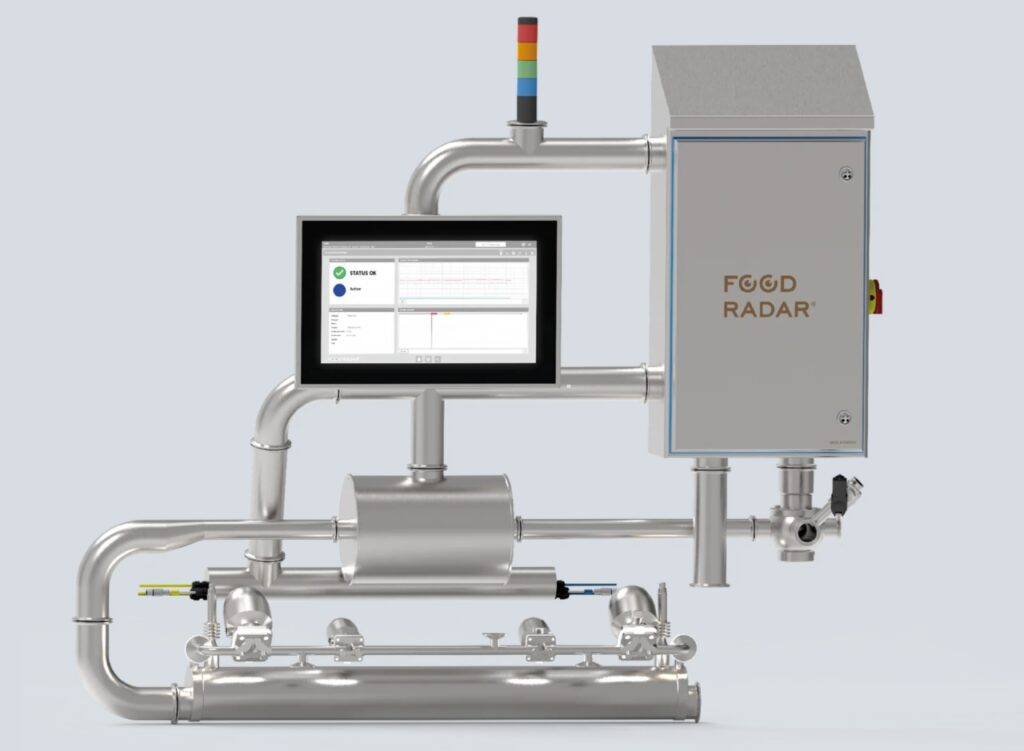
Food Radar Systems stands at the forefront of food safety innovation, focusing on the precise detection and removal of foreign contaminants in pumpable food products. The company has engineered its patented Food Radar® system to leverage advanced microwave technology. As a result, it identifies both dense and low-density contaminants, including soft plastics, wood, rubber, and fruit stones, that conventional inspection systems routinely overlook.
Built on rigorous, industry-driven research collaborations, the system operates by measuring dielectric variations in real time. Consequently, it enables immediate and accurate contaminant rejection, thereby strengthening quality assurance protocols. Moreover, its design supports seamless integration into existing production lines, ensuring minimal operational disruption. The technology already serves a wide range of applications, from baby food and sauces to fruit processing. In doing so, it establishes new benchmarks for safety, efficiency, and reliability across modern food manufacturing.
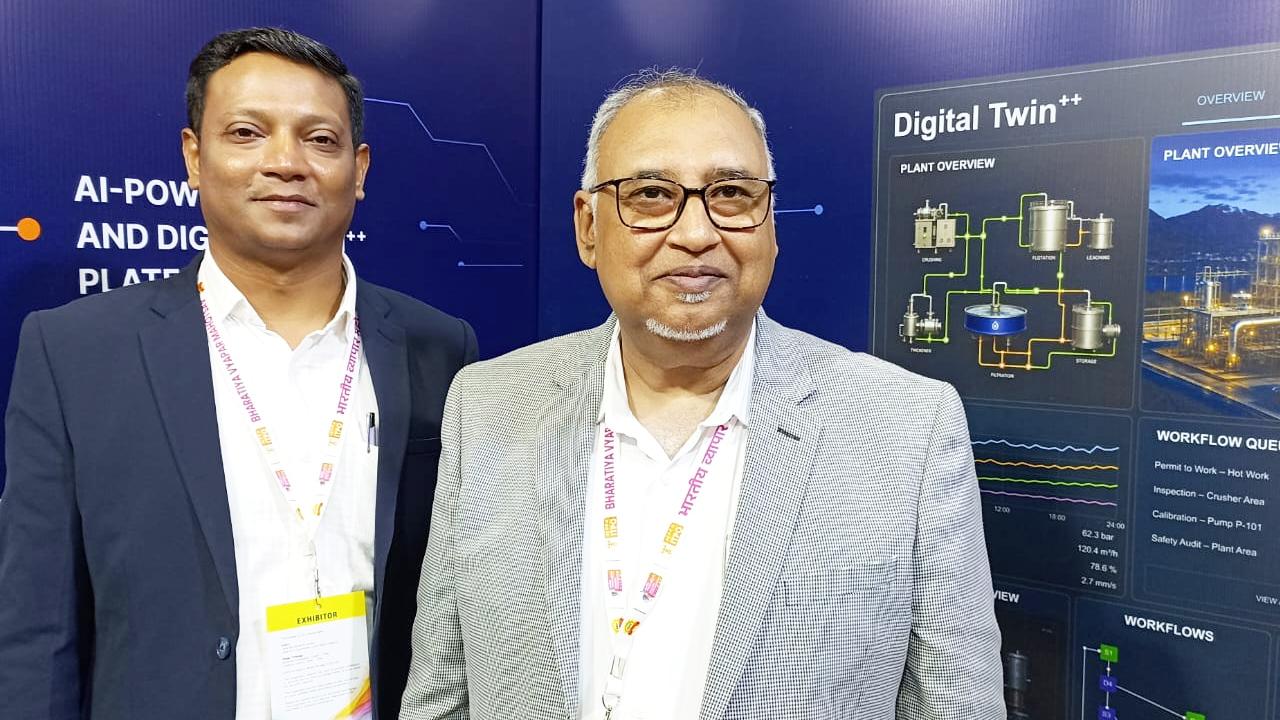
In an exclusive interaction with The Interview World during Anuga FoodTec India Dairy 2026, Andreas Lood, Application Engineer and Business Developer at Food Radar Systems, articulates the company’s strategic vision and technological advancements. He explains the core scientific principles underpinning the solutions, outlines key application areas, and evaluates the evolving market landscape for such technologies. Furthermore, he highlights the tangible benefits that the Food Radar solution delivers to end users. The following are the key insights from this in-depth and thought-provoking discussion.
Q: What specific innovations has Food Radar introduced to transform the food ecosystem?
A: Fundamentally, the Food Radar® system is the only machine of its kind that reliably detects low-density contaminants in food products. Specifically, it identifies materials such as plastic, rubber, wood, and fruit stones, substances that conventional inspection systems consistently fail to capture.
By contrast, traditional technologies like X-ray inspection systems and metal detectors operate on density-based principles. Consequently, they detect high-density contaminants such as metal or glass with relative ease. However, they struggle, or fail entirely, when confronted with low-density materials. For example, an X-ray system cannot reliably detect a piece of plastic passing through a production line.
The Food Radar® system overcomes this limitation decisively. Therefore, it introduces a critical capability that existing technologies lack. This distinct advantage defines its uniqueness and positions it as a transformative solution in food safety inspection.
Q: What core principles and mechanisms drive the functioning of your platform?
A: The Food Radar® system operates on advanced microwave technology. Specifically, it analyses the dielectric properties of the product in real time and compares them with those of any foreign material. Because contaminants exhibit markedly different dielectric signatures, the system detects even subtle deviations with high precision.
For instance, if a piece of plastic enters a batch of jam or curry, the sensor immediately identifies the anomaly. It then triggers an automated response. Consequently, the system activates its reject valve, removes the contaminated portion, and prevents it from progressing further along the production line.
Q: Which types of food systems is this technology applicable to?
A: The Food Radar® system is engineered for pumpable products. Accordingly, manufacturers can run any such product through the system with minimal modification.
In contrast, highly homogeneous liquids, such as water or Coca-Cola, can often undergo fine filtration. In these cases, producers may deploy ultra-fine filters to remove contaminants effectively. However, this approach breaks down as soon as the product contains inclusions. For example, complex foods like curries or multi-ingredient sauces include solids that are integral to the product itself. Consequently, filtration becomes impractical, as it would remove not only contaminants but also essential ingredients.
Here, the Food Radar® system demonstrates its distinct advantage. It penetrates complex matrices and analyses the entire product stream without disrupting its composition. Take pasta sauce as a case in point: despite the presence of tomatoes, onions, and other ingredients, the system accurately detects contaminants embedded within the mixture. Therefore, it ensures product integrity while maintaining uncompromised safety.
Q: What is the market outlook for this category of products in India and globally?
A: Globally, the market opportunity for the Food Radar® system is both substantial and expanding. To date, the company has built a strong operational presence across Europe, the United States, and South America, where it has deployed the technology over an extended period.
Now, it is accelerating its expansion into Asia. It has already introduced the solution in South Korea and India, while simultaneously establishing a foothold in Australia and New Zealand. Moreover, Safe Automations Group has partnered with Food Radar to deliver this technology across India and the Gulf region. Consequently, this geographic diversification unlocks a significant growth runway and positions the technology to capture a large, underserved market.
Q: What advantages does this solution offer to both consumers and food manufacturers?
A: At its core, the Food Radar® system advances food safety and strengthens quality assurance. It systematically detects product imperfections and identifies foreign objects that current inspection technologies fail to capture. Consequently, it closes a critical gap in existing safety protocols and elevates overall product integrity. This capability defines the system’s fundamental value proposition.






1 Comment
Thanks for sharing this useful information.
Comments are closed.