
India’s aluminium industry has reached a decisive inflection point, driven by structural cost inefficiencies, shifting global trade regimes, and mounting geopolitical volatility. At its core, the sector grapples with persistently high raw material costs and intensifying import-led competitive pressures, both of which undermine domestic manufacturing strength and constrain export competitiveness. At the same time, global conflicts continue to disrupt energy markets and supply chains, compounding existing vulnerabilities. However, targeted policy interventions and industry-led strategies are beginning to build resilience, deepen value addition, and sharpen India’s competitive positioning in the global aluminium value chain. Looking ahead, sustained progress will depend on coherent trade policy, clear investment signals, and, crucially, close alignment between government and industry stakeholders.
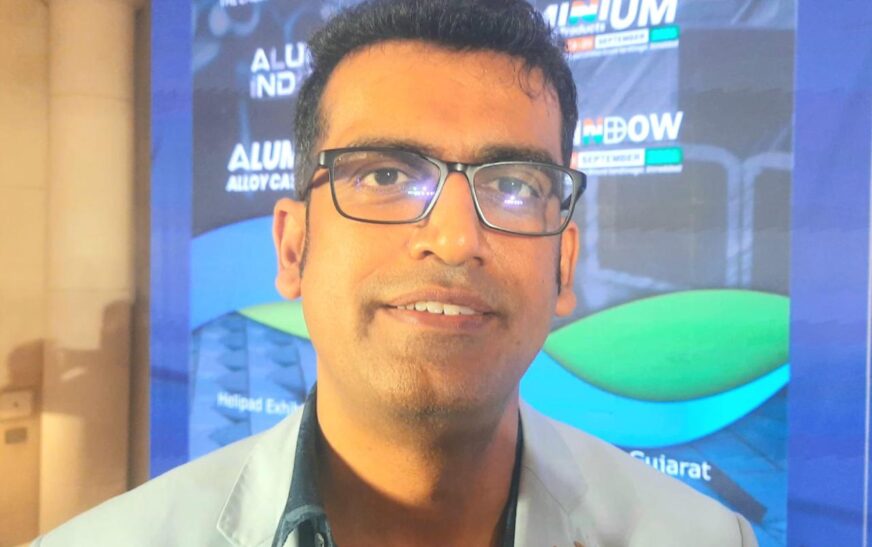
In an exclusive interaction with The Interview World, CA Ankur Aggarwal, Hon. Secretary, Aluminium Extrusion Manufacturers Association of India (ALEMAI), outlines the sector’s most pressing challenges, assesses the impact of Middle East conflicts on cost structures and supply continuity, and evaluates the government’s policy response to strengthen competitiveness. He also articulates the strategic vision underpinning Aluminium Bharat 2026. The following are the key insights from this incisive discussion.
Q: What are the key challenges currently impacting the Indian aluminium industry?
A: The most critical challenge facing the industry today is the cost of raw materials. Indian manufacturers, particularly in the aluminium and downstream segments, are paying among the highest input costs in the developing world. This is fundamentally misaligned with our economic position. As a developing economy, India should be exporting value-added, downstream products. However, sustained competitiveness, both domestically and globally, demands access to raw materials at globally competitive prices.
Instead, the opposite is occurring. Raw material costs remain elevated, and as a direct consequence, zero-duty imports under free trade agreements are distorting the market. Downstream aluminium products are increasingly entering India from ASEAN nations, and this trend will soon extend to the UAE. The cost structures in these regions are structurally lower energy, electricity, land, and overall operating costs are significantly cheaper. Labour may be an exception, but it does not offset the broader cost advantage.
Therefore, Indian industry must secure raw materials at price parity with counterparts in ASEAN, China, and the UAE. This is not optional; it is foundational. If achieved, the impact would be immediate and measurable. For instance, India currently imports approximately 1.3 million tonnes of downstream aluminium products. Competitive input costs could substantially reduce, if not eliminate, this dependency.
Moreover, the global opportunity is significant. The export market for these products is valued at approximately $45 billion. India, however, captures only $2.2–3 billion of this. In contrast, China commands nearly 50% of the global share. With global supply chains actively pursuing a “China-plus-one” strategy, India is well-positioned to emerge as a viable alternative. Yet, high raw material costs are eroding this opportunity and enabling ASEAN countries to advance instead.
The disparity is stark. Even smaller ASEAN economies, such as Cambodia, which lack a domestic aluminium base, are exporting more than India. This underscores a structural competitiveness gap that must be addressed urgently, starting with raw material pricing.
Q: How are current geopolitical tensions, particularly conflicts in the Middle East, likely to impact the Indian aluminium industry?
A: Geopolitical tensions in the Middle East have materially increased our energy costs and disrupted supply chains. As a result, both energy and raw material costs have risen sharply, creating immediate operational pressure.
However, the global market presents a more nuanced picture. While demand has softened, it has not collapsed. Activity levels remain at approximately 70–80% of normal volumes, rather than declining to more severe lows. Consequently, the market retains a degree of resilience, even amid uncertainty.
At the same time, India is steadily strengthening its position as an export-competitive manufacturing base. Ongoing and upcoming free trade agreements will further enhance market access and improve trade flows. Therefore, despite near-term headwinds, the fundamentals support recovery, and the sector is well-positioned to rebound.
Q: What policy interventions should the government prioritize to strengthen the competitiveness and resilience of the aluminium industry?
A: We are asking the government to abolish import duties on raw materials. This is essential. Most countries either impose no such duties or, in some cases, levy export duties to protect domestic value addition. India stands as an outlier among developing economies by taxing the import of critical raw materials.
This policy must change. Eliminating import duties will align domestic input costs with those in competing markets. As a result, Indian manufacturers will gain access to raw materials at globally competitive prices.
Consequently, value addition within the country will increase. This will strengthen domestic manufacturing, enhance export competitiveness, and directly advance the objectives of Make in India and Atmanirbhar Bharat.
Q: How does the Aluminium Bharat 2026 vision aim to strengthen the entire aluminium value chain?
A: Aluminium Bharat will take place from September 26–29, 2026, in Ahmedabad. This event builds directly on the momentum of Alumex India, which we successfully hosted from September 10–13, 2025, at Bharat Mandapam. That edition set a high benchmark; it was both large in scale and highly impactful.
Importantly, we received strong encouragement from the Ministry of Commerce and Industry, as well as from Lok Sabha Speaker Om Birla, to broaden the scope of the platform. Acting on this guidance, we are expanding the exhibition to cover the entire aluminium value chain.
Accordingly, Aluminium Bharat will showcase a comprehensive range of products, including rolled products, castings, wire rods, and other downstream segments. In doing so, we aim to position the event alongside leading global exhibitions such as Aluminium China and Aluminium USA.
Looking ahead, this is our flagship platform. Over the next two to three years, we intend to scale Aluminium Bharat significantly, surpassing global counterparts in both size and strategic relevance.