
Vinita Dasgupta stands at the forefront of contemporary Indian art, forging a distinctive visual language through densely layered mixed-media compositions. She orchestrates fragments of pop culture, vernacular iconography, and lived memory into charged pictorial fields. As a result, her canvases pulse with emotional intensity and narrative multiplicity. Rather than merely juxtaposing disparate references, she fuses them. Consequently, familiar motifs destabilize and reassemble, acquiring new symbolic weight.
Dasgupta completed her BFA in 2005 and her MFA in 2008 at the College of Art, New Delhi, where she consolidated her formal rigor and conceptual clarity. Since then, she has exhibited extensively across India and internationally, mounting solo exhibitions in New York and Lisbon, and presenting her work at the India Art Fair. These platforms have amplified her voice within the global contemporary discourse. At the same time, they have reinforced her rootedness in local visual cultures.
Her practice compels viewers to enter fractured, introspective terrains. Within these constructed spaces, memory operates as both archive and intervention. She destabilizes linear storytelling. Instead, she constructs layered visual narratives that unfold through association, rupture, and reconfiguration. The result is a sustained dialogue between the intimate and the collective, the ephemeral and the archival.
Her contributions have earned significant recognition, including the UNFPA Art for Social Change Award and the National Scholarship in Painting, distinctions that affirm both the social resonance and formal sophistication of her work.
In an exclusive conversation with The Interview World, Dasgupta articulates the conceptual frameworks that animate her paintings. She delineates the formal strategies that distinguish her aesthetic. She examines how her visual vocabulary engages contemporary audiences. Furthermore, she details her material processes, reflects on the role of sustainability within her practice, and identifies the work she considers most personally significant. What follows are the central insights drawn from this incisive exchange.
Q: What themes and underlying concepts inform your paintings?
A: I work primarily with new media and mixed media. At my core, I am an experimental artist. Consequently, each body of work evolves through inquiry, risk, and reinvention. I resist repetition. Instead, I pursue formal and conceptual departures, ensuring that every new series introduces a distinct visual proposition.
In this instance, I present a Pop Art series. However, I do not merely appropriate iconic imagery. Rather, I reinterpret cultural figures through a reconfigured mode of portraiture. I fragment, layer, and recontextualize them. As a result, each portrait transcends representation and begins to perform. The character does not simply appear within the frame; it radiates outward, asserting presence and psychological depth.
Through this approach, I transform the icon into a reflective surface, one that refracts identity, memory, and cultural resonance.
Q: Since when have you been creating this kind of art?
A: I have sustained a rigorous artistic practice for over twenty-five years. Over the past fifteen, however, I have consolidated a signature visual language that defines my oeuvre. This distinct idiom has matured through sustained experimentation and critical refinement. As a result, it has achieved wide international recognition.
My exhibitions travel extensively, both across India and abroad. Wherever the work is presented, it resonates with diverse audiences and critical platforms alike. Consequently, this body of work has not only expanded my global presence but also affirmed the conceptual and aesthetic strength of my practice.
Q: What key characteristics distinguish this form of art?
A: Each work demands an intensive, time-bound engagement. I invest four to five months in a single canvas. Consequently, I complete no more than eight or nine works annually. This deliberate pace compels discernment. Therefore, I remain highly selective about exhibitions, whether in India or abroad. I respond to the curatorial framework. In turn, I develop works that align conceptually while preserving the integrity of my practice.
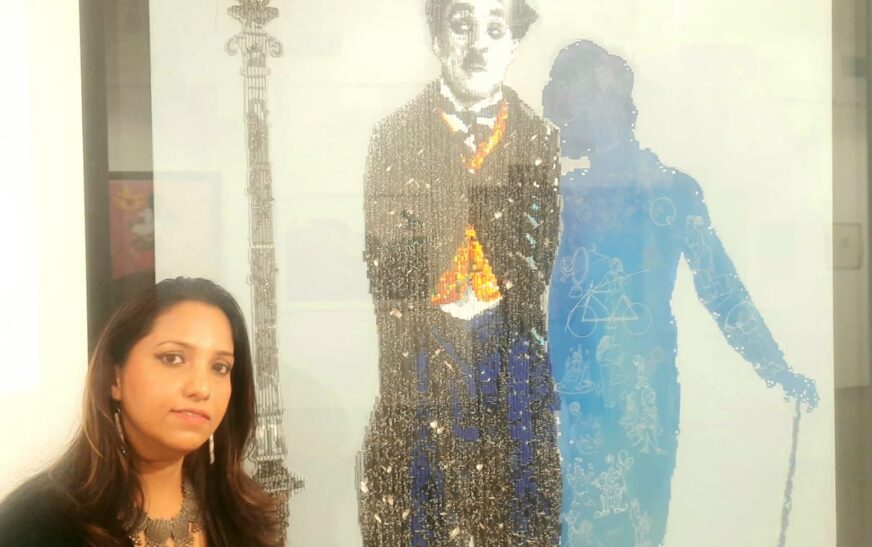
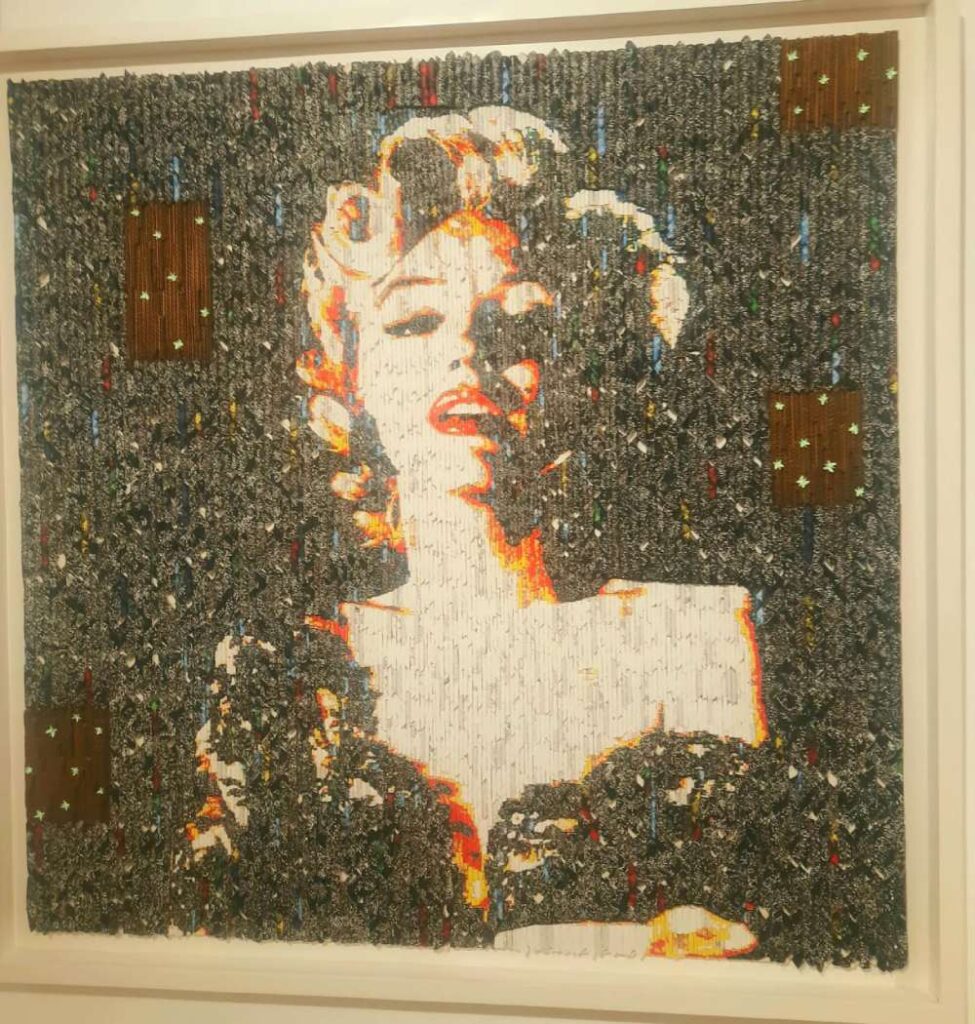
Within this series, I revisit figures from popular culture, Mickey Mouse, Marilyn Monroe, Charlie Chaplin, among others. However, I do not merely reproduce their likenesses. Instead, I construct layered narratives through portraiture. Each image carries a psychological subtext.
For instance, in my portrayal of Charlie Chaplin, his shadow refuses to follow him. This visual rupture functions as metaphor. At times, the mind resists the self; identity fractures; consciousness withdraws. Similarly, Marilyn Monroe appears as the consummate icon, radiant, seductive, and globally celebrated. Yet beneath the glamour, I foreground solitude and vulnerability. Her public image projected desire and power. Her private life, however, bore isolation and despair. The portrait therefore interrogates the dissonance between spectacle and suffering.
Through each composition, I excavate struggle, agency, fragility, and resilience. I distil biography into gesture and expression. In my rendering of Mother Teresa, the face alone carries the discourse. Her countenance embodies compassion, conviction, and sacrifice. I do not annotate her legacy; I allow physiognomy to speak. Thus, in every work, the portrait becomes both image and message, an arena where history, psyche, and cultural memory converge.
Q: In the context of contemporary art, how do you see your work resonating with broader viewers?
A: I paint first and foremost for myself. I do not chase trends. Nor do I position my practice in competition with other artists or galleries. Instead, I commit to an internal compass. I pursue what compels me formally and conceptually. As a result, the work evolves from conviction rather than market pressure.
This autonomy has cultivated a distinct visual language. Galleries and collectors respond to the singularity of the style and to the clarity of its representation. Moreover, broader audiences engage with the work because it departs from the expected. It offers a visual experience that feels unfamiliar yet accessible. Consequently, viewers connect with it on both aesthetic and emotional levels.
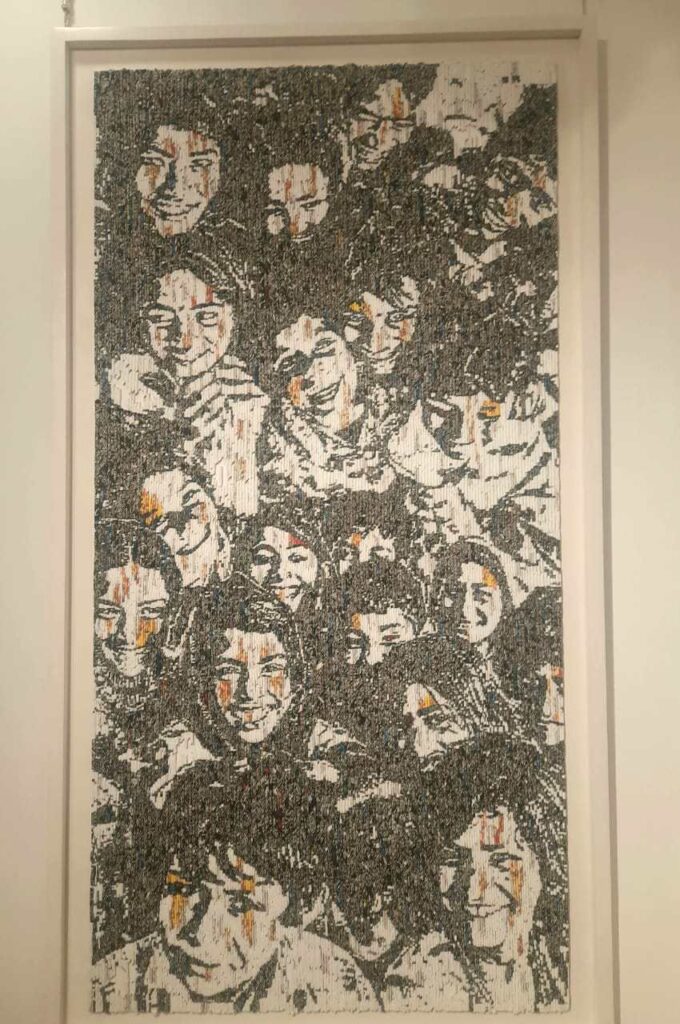
Although these are paintings on canvas, I deploy an unconventional technique. I manipulate surface, layering, and materiality in ways that disrupt traditional painterly assumptions. This technical divergence generates curiosity. Viewers frequently seek to understand the process that underpins the final image. The method becomes part of the discourse.
In parallel, galleries have provided strong institutional support. Their engagement affirms the work’s resonance within both curatorial and commercial frameworks.
Q: What techniques do you usually use in your art forms?
A: I work across a wide range of media. I employ acrylic, oil, pencil, and other mixed-media processes, selecting each material in response to conceptual intent. However, in this particular body of work, I concentrate primarily on acrylic on canvas. At the same time, I extend the surface beyond conventional painterly limits.
I incorporate discarded Coke cans, corrugated sheets, and other reclaimed industrial fragments. These materials do not function as embellishments; they operate as structural and symbolic elements within the composition. By integrating recycled matter, I disrupt the flatness of the canvas and introduce texture, relief, and material tension.
Moreover, I consciously foreground sustainability. I repurpose found objects and industrial waste, transforming them into aesthetic and narrative components. Through this strategy, I collapse the boundary between the disposable and the enduring. The artwork thus becomes both image and intervention—an act of material reclamation as well as visual expression.
Q: Sustainability appears to be a significant theme in your work. Could you elaborate on this?
A: I also reincorporate what I once discarded. For instance, I retrieve surplus or rejected canvases from earlier works and reintroduce them into new compositions. I roll, layer, and embed them within the surface. In doing so, I convert residue into structure.
Similarly, I integrate corrugated sheets and crushed Coke cans, materials typically perceived as waste. However, I do not present them as debris. Instead, I orchestrate them with precision. I position, compress, and align them so that they participate formally in the composition.
As a result, the viewer no longer reads these elements as discarded objects. They dissolve into the visual field. They generate texture, rhythm, and dimensionality. Ultimately, what was once thrown away assumes aesthetic agency and enriches the pictorial whole.
Q: Do you have a favourite among your artworks?
A: My most compelling work in this series is the portrait of Charlie Chaplin. In this composition, his shadow refuses to follow him. Instead, it veers away, asserting its own trajectory. This deliberate disjunction anchors the entire piece.
Through this visual rupture, I explore psychological conflict. At times, we advance along paths prescribed by circumstance, expectation, or social structure. Yet internally, resistance surfaces. The mind hesitates. It questions. It diverges from the role it is compelled to perform. Consequently, a fissure emerges between action and intention, between obligation and desire.
I distill this tension into the relationship between figure and shadow. The body moves forward; the shadow withdraws. In that separation, the work locates its meaning. I value this painting most because it articulates an inner dissonance with clarity and restraint. It transforms a simple visual metaphor into a meditation on autonomy, conformity, and the fractured self.