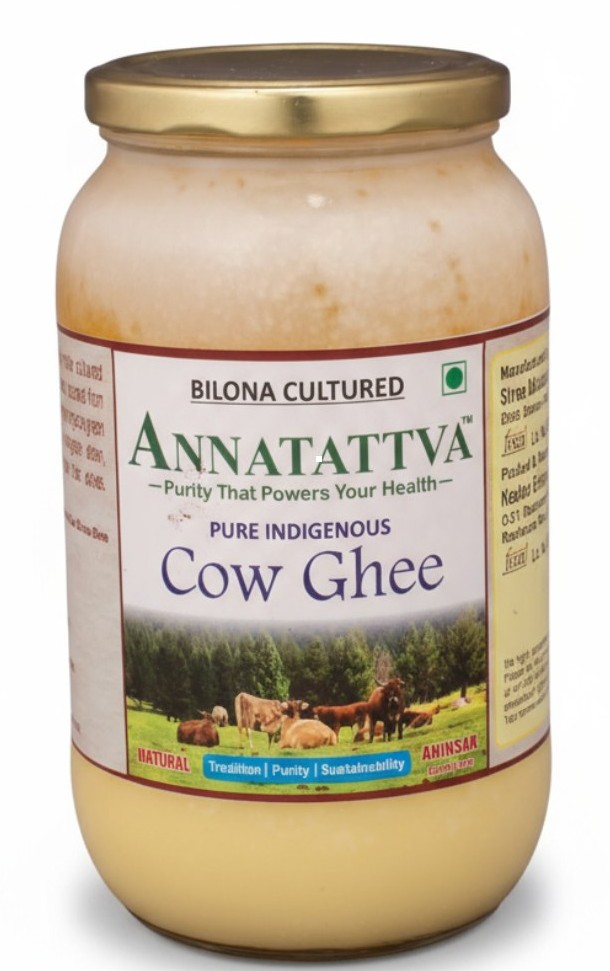

Annatattva stands as a health-centric dairy brand with a clear, uncompromising mandate: deliver purity, authenticity, and nutritional integrity. It produces organic cow ghee from indigenous breeds such as Gir and Sahiwal, and it follows the traditional Bilona method to retain natural nutrients, aroma, and taste. Moreover, the brand enforces a strict chemical-free and pesticide-free production ecosystem. It sources milk exclusively from free-grazing cows raised in clean, humane conditions, thereby ensuring both ethical and quality standards. As a result, its products deliver essential vitamins and beneficial fats that actively support cardiovascular health, digestion, and overall well-being. By integrating time-honored practices with sustainable packaging and disciplined small-batch production, Annatattva consistently guarantees purity, traceability, and product excellence.
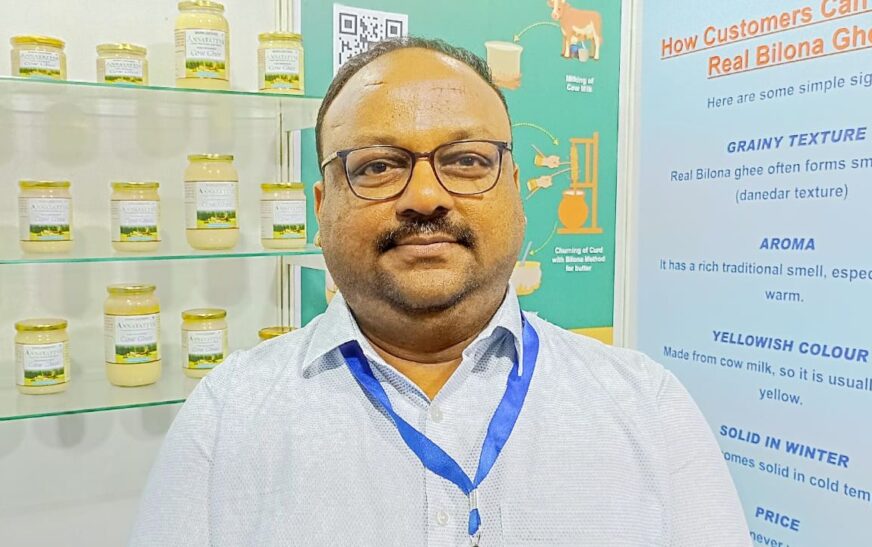
In an exclusive interaction with The Interview World at Organic Expo 2026, Manish Aggarwal, Director of Annatattva, articulates the distinctiveness of his pure cow ghee offerings and sharply differentiates them from competing products in the market. He further explains how the brand strategically positions premium-quality products within a highly price-sensitive landscape. In addition, he outlines a forward-looking roadmap, detailing upcoming product innovations and expansion plans. The following are the key insights from this incisive conversation.
Q: What products does Annatattva manufacture, and how do they differentiate from other organic products available in today’s competitive market?
A: At present, we operate with a singular focus: we produce and market only cow ghee. This deliberate specialization allows us to maintain uncompromising control over quality. However, the real distinction lies in how our product compares with what is widely available in the market.
To begin with, market prices for cow ghee typically range between ₹600 and ₹1,000 per kilogram. Yet, such pricing fundamentally contradicts the economics of producing genuinely pure ghee. In reality, manufacturing one kilogram of authentic cow ghee requires approximately 25–30 kilograms of milk. Even at a conservative procurement cost of ₹50 per kilogram of milk, the raw material cost alone rises to ₹1,500–₹1,600 per kilogram. Therefore, any significantly lower price point inevitably raises questions about purity and production integrity. This is the first principle consumers must clearly understand.
Beyond pricing, we differentiate ourselves through rigorous control over input quality. Specifically, we ensure that the cows’ diet meets the highest standards. We do not allow random or unmanaged grazing. Instead, we cultivate high-quality fodder on our own farms, using nutrient-rich slurry derived from cow dung. Consequently, we create a closed-loop, self-sustaining agricultural system. This approach gives us complete visibility into what the cows consume. As a result, the milk they produce consistently meets superior quality benchmarks.
Since milk is the primary input in ghee production, its quality directly determines the final output. Because our cows consume only premium, well-managed fodder, we secure high-quality milk—and, in turn, produce superior ghee. This end-to-end control instills confidence in the purity and consistency of our product.
Equally important is our production methodology. Unlike many commercial producers, we do not extract ghee from cream. Instead, we follow the traditional Bilona process. First, we convert milk into curd. Then, we churn the curd using the time-honored Bilona method, widely practiced in Rajasthan. This process yields butter, which we then heat gradually over a low flame for a controlled duration. By carefully regulating temperature, we preserve the ghee’s natural aroma and prevent the degradation of its nutritional components.
As a result, the final product exhibits a rich aroma, high purity, and enhanced shelf stability. Moreover, it supports better digestion due to its traditional processing and natural composition. This integrated approach, from fodder management to processing technique, clearly defines how our ghee stands apart from conventional alternatives.
Q: How do you assess the Indian market for your products, given its price sensitivity, and how are consumers responding to their positioning as organic and pure?
A: First and foremost, we are working to reset consumer mindset. Over the past two to three decades, consumption patterns have shifted decisively, from traditional staples such as cow ghee, buffalo ghee, and mustard oil to highly processed, refined alternatives. Consequently, dietary quality has declined. Today, a growing body of evidence clearly highlights the adverse health implications of refined products. Therefore, we are actively redirecting attention back to original, locally sourced, and traditionally prepared foods.
At the same time, we fully recognize that this is a price-sensitive market. However, the economics of purity are non-negotiable. If consumers demand authentic, high-quality products, they must be willing to bear the true cost of ingredients and production. Put simply, quality cannot exist without corresponding input costs. As the principle goes, we are what we eat; therefore, the integrity of what we consume directly shapes our health outcomes.
In this context, informed consumption becomes critical. Consumers must understand not just the end product, but also its provenance, how it is produced, which ingredients are used, and what costs underpin its quality. Accordingly, I make it a priority to educate every customer. I clearly explain our production processes, sourcing standards, and cost structures. By doing so, I establish transparency, build trust, and ultimately justify the price of our product on the basis of demonstrable value.
Q: Are you currently exporting your products, or do you have plans to expand into international markets in the near future?
A: At present, we do not export, primarily because we operate within a constrained production capacity. Currently, we produce approximately 200 to 300 kilograms per week, which limits our ability to serve international markets without compromising supply consistency.
However, we are actively working to scale our operations. As we expand capacity and achieve greater production stability, we will strategically enter export markets. In fact, once we reach the required scale, we fully intend to pursue international expansion.
Q: What are your long-term plans over the next five to ten years regarding product expansion and the launch of new offerings?
A: Clearly, ghee is not the only product we can develop. We have the capability to expand into milk and other dairy categories, including butter and curd. However, we are taking a disciplined, phased approach. First, we will consolidate our position with our core product and ensure it achieves strong acceptance in the Indian market.
Market validation remains critical. Unless consumers align with our value proposition and trust what we deliver, expansion would be premature. Therefore, we are prioritizing depth over breadth at this stage.
Once we establish that foundation and secure consumer confidence, we will progressively diversify into additional dairy products. Importantly, we will apply the same uncompromising standards of quality, purity, and process integrity across every new offering. Our broader objective is not merely product expansion; rather, it is to help restore traditional dietary habits, where people consumed wholesome, natural foods and, as a result, lived healthier and more fulfilling lives.