
SenSen is a global AI technology company that pioneers Live Awareness solutions, enabling cities and enterprises to interpret and act on real-time data from camera networks, sensors, and connected digital systems. Founded in 2007 and headquartered in Australia, the company integrates advanced computer vision, machine learning, and multi-source data fusion into a unified platform. As a result, it automates parking management, strengthens regulatory compliance, enhances public safety, and optimizes urban infrastructure operations with measurable precision.
Today, SenSen serves municipalities, law enforcement agencies, and commercial enterprises across global markets. By converting raw data into actionable intelligence, it drives operational efficiency, reduces congestion, and reinforces public safety outcomes. At the same time, the company anchors its innovation strategy in ethical AI governance, rigorous privacy safeguards, and sustainable urban impact.
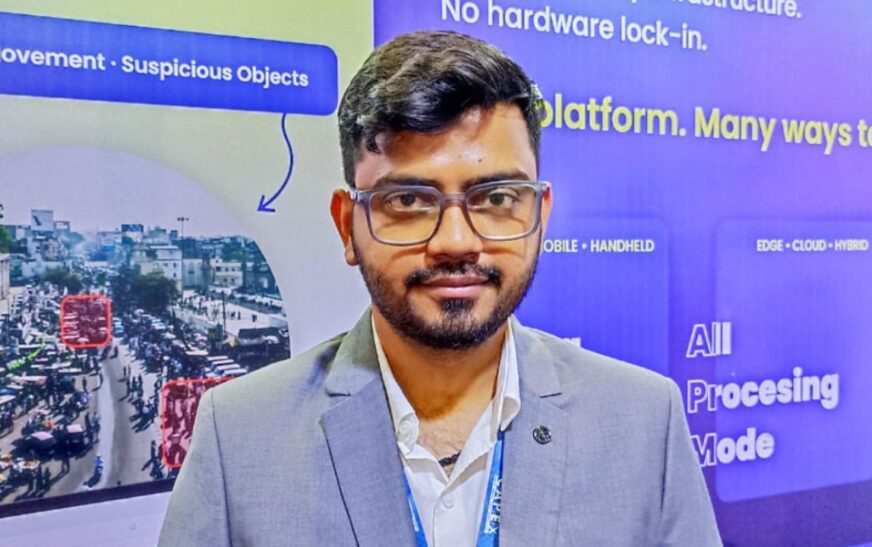
In an exclusive conversation with The Interview World at Municipalika 2026, Prateek Goyan, Vice President – Marketing at SenSen, details how the company transforms conventional camera networks into context-aware, intelligent monitoring systems powered by AI. He further quantifies the predictive accuracy of its solutions, outlines the innovation roadmap for the next five years, and articulates SenSen’s export growth strategy. The following are the key insights from this substantive and forward-looking discussion.
Q: Could you elaborate on urban challenges you are addressing through your AI and CV-based solutions?
A: We are an AI technology company that delivers a comprehensive city intelligence platform. Through our work in India, we have identified a critical structural gap. Cities have invested heavily in camera infrastructure over the past decade. However, most deployments operate in isolation and address only single, narrowly defined objectives. Consequently, the broader strategic value of these assets remains underutilized.
For example, some cameras monitor illegal dumping. Others, such as Intelligent Traffic Management Systems (ITMS) installations, focus exclusively on traffic violations. Each system functions within its own silo. As a result, cities manage multiple disconnected platforms, duplicative workflows, and fragmented data streams.
We eliminate this fragmentation. Instead of limiting each camera to a single-purpose application, we unify capabilities through a single AI layer. The same camera that detects a traffic violation can also identify illegal dumping, monitor crowd density, detect potholes, or flag unsafe behaviour. Therefore, cities no longer need parallel systems for each use case. They can leverage existing infrastructure to address multiple operational challenges through one integrated platform.
Our platform enforces traffic regulations comprehensively. It detects illegal parking, illegal U-turns, triple riding, and violations across more than 52 Motor Vehicle Act provisions. Moreover, it operates consistently across locations without requiring specialized hardware for each enforcement category.
Beyond traffic management, we enable sanitation and civic monitoring. The system identifies illegal dumping, garbage accumulation, and open manholes. In parallel, it supports infrastructure assessment by detecting road cracks and potholes in real time.
We also deliver advanced situational awareness capabilities. These include vehicle tracking and person tracking to identify repeat offenders across different locations. In addition, the platform provides fire and smoke detection, rapid incident alerts, crowd density analysis, queue management, and detection of suspicious objects or individuals. Each module integrates seamlessly within the same operational environment.
Importantly, these examples represent only a fraction of our deployment portfolio. We currently support more than 100 distinct urban use cases across over 60 cities worldwide, including Singapore, Las Vegas, and Brisbane. This scale demonstrates both the maturity and adaptability of our technology.
Our architecture remains entirely hardware-agnostic. We integrate with existing city camera networks and digital infrastructure without requiring wholesale replacement. At the same time, we offer proprietary solutions where needed. These include vehicle-mounted camera systems for police and municipal fleets, as well as pole-installable, solar-powered units designed to support sustainability objectives.
Furthermore, our platform operates on handheld devices, expanding accessibility to field personnel. In essence, wherever a camera exists, our AI can operate. We impose no hardware constraints. Instead, we transform existing infrastructure into a unified, intelligent urban command system.
Q: As you are leveraging AI and computer vision to deliver insights, how do you ensure accuracy in prediction and data security?
A: We are an 18-year-old company with deep domain expertise in urban intelligence, powered by AI and computer vision. Over nearly two decades, we have refined our technology through sustained research, iterative deployment, and operational learning. Moreover, our founder is Indian and understands the country’s regulatory landscape, traffic behaviour, environmental conditions, and infrastructure complexities. As a result, we have trained our models extensively on Indian datasets to ensure contextual precision rather than generic global adaptation.
Consequently, our AI solutions deliver accuracy levels exceeding 99 percent across active deployments. We do not rely on theoretical benchmarks; instead, we validate performance in real-world environments characterized by dense traffic, heterogeneous vehicle types, variable lighting, and unpredictable urban patterns.
At the same time, we treat privacy and data security as foundational principles, not afterthoughts. We design our architecture to ensure secure data storage, robust encryption protocols, and strict access controls. Furthermore, we implement end-to-end safeguards to prevent unauthorized access or misuse.
To reinforce compliance and accountability, we maintain a dedicated team in India that oversees data governance, monitors regulatory adherence, and ensures that no privacy violations occur. This localized oversight strengthens trust while aligning with national data protection standards.
Technically, our platform supports both edge and cloud deployments. Cities can process data at the edge for low-latency response and enhanced control, or leverage cloud infrastructure for scalability and centralized analytics. Ultimately, we adapt to the city’s policy framework, operational preferences, and security requirements without compromising performance or compliance.
Q: What are the new innovations you’re planning to build up in the next five years?
A: The Government of India has placed strong emphasis on Vision Zero, with the explicit objective of eliminating road fatalities. Consequently, substantial investments are flowing into ITMS to improve enforcement and monitoring at key intersections.
However, ITMS deployments primarily provide visibility at junctions. They capture violations, signal behaviour, and traffic density at specific nodes. Yet a critical gap remains: what happens between two intersections? Most accidents occur along road stretches, not directly under traffic lights. Therefore, focusing solely on junction-based intelligence limits the overall safety impact.
We address this gap by integrating seamlessly with existing ITMS infrastructure and extending visibility across entire road corridors. Our platform ingests real-time data, analyses traffic flow between intersections, and transmits actionable insights instantly. For example, if congestion builds upstream of a junction, the system detects it immediately. It can then recommend or automatically trigger adaptive signal adjustments. Instead of operating on fixed 30- or 40-second cycles, traffic lights can respond dynamically to live road conditions.
This shift from static to adaptive control reduces bottlenecks, improves throughput, and lowers the probability of collision risks caused by sudden congestion waves. Moreover, safety remains central to our architecture. We continuously analyse behavioural patterns, traffic density fluctuations, speeding trends, and repeat violation zones.
Using predictive analytics, we identify high-risk road stretches before severe accidents occur. We determine where incidents are most likely, assess contributing factors, and enable authorities to implement targeted interventions, whether through enforcement intensification, infrastructure redesign, or signal recalibration.
This work is already underway. By combining real-time monitoring, adaptive control, and predictive safety analytics, we extend ITMS from reactive enforcement to proactive accident prevention. In doing so, we position ourselves as a strategic technology partner capable of materially advancing the government’s Vision Zero objective.
Q: Do you have any plan to export these products to international markets?
A: Our solutions are already deployed in more than 60 cities worldwide, including Singapore, the United States, and Australia. This global footprint demonstrates both scalability and operational resilience across diverse regulatory, climatic, and traffic environments.
When we evaluate new markets, we do not impose arbitrary geographic limitations. Instead, we assess each country’s specific regulatory framework, infrastructure maturity, and urban priorities. Our expansion strategy remains demand-driven and context-sensitive.
Importantly, our platform does not depend on proprietary ecosystems or constrained hardware environments. Advances in artificial intelligence have strengthened our adaptability. Moreover, we have operated in this domain for over 18 years, well before AI became a mainstream narrative. During that time, we built foundational capabilities in computer vision, data fusion, and large-scale deployment. Consequently, our architecture reflects maturity rather than experimentation.
The same core solution can be deployed across jurisdictions with minimal structural modification. In fact, our experience in India provides a rigorous benchmark. Indian urban environments present high traffic density, heterogeneous vehicle types, inconsistent lane discipline, and complex enforcement conditions. If a system performs reliably in that setting, it can perform effectively anywhere.
Over the years, we have consolidated insights from global deployments and integrated them into a refined operating framework. We then localized and optimized the model for Indian conditions, ensuring contextual intelligence and high precision. Now, having validated its performance at scale, we can confidently export this evolved model to international markets.
In short, our strategy moves in both directions: we absorb global learnings, adapt them to demanding environments, and then redeploy the enhanced solution worldwide.