EcoPath is an Indian sustainable infrastructure and construction technology company dedicated to decarbonizing roads and external development projects. It leads the transition away from cement by engineering high-performance, eco-concrete solutions that dramatically reduce carbon emissions, conserve water, and repurpose industrial waste. By stabilizing existing soil and deploying proprietary binders blended with GGBS and recycled aggregates, EcoPath delivers durable roads, pavers, kerbs, drains, and precast elements without conventional cement or steel reinforcement. As a result, the company matches, often exceeds, traditional benchmarks for quality and lifespan while lowering costs and environmental impact. Its mission is clear: make green construction the industry standard, not the exception.
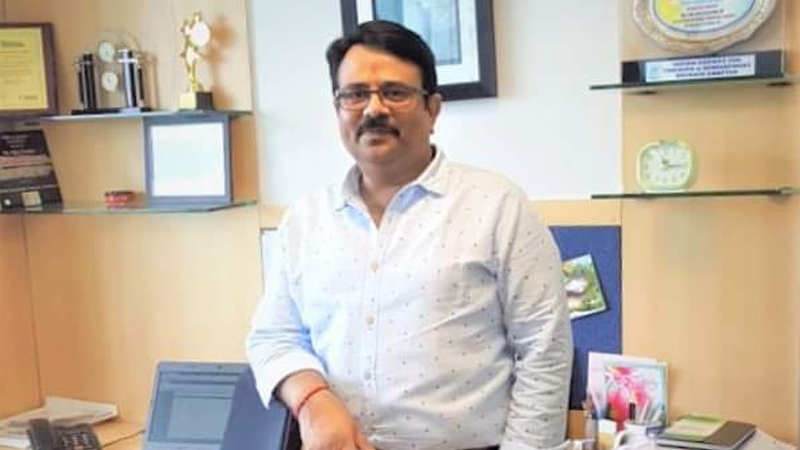
In an exclusive conversation with The Interview World, Sourabh Kumar, Founder and CEO of EcoPath, details how the company is building scalable, cement-free infrastructure aligned with global sustainability goals. He explains the core technologies and materials driving deep carbon reduction, outlines the supply-chain and partnership ecosystem that enables affordability, and identifies the policy and industry shifts required to accelerate adoption. He also shares his vision for global expansion and describes how they plan to extend cement-free technologies beyond infrastructure into adjacent sectors. The following are the key takeaways from this insightful discussion.
Q: Can you describe the core philosophy behind EcoPath’s approach to cement-free infrastructure, and how it aligns with global sustainability goals?
A: EcoPath was founded with a singular conviction: every cubic metre of infrastructure we build must actively reduce harm to the planet.
Cement alone accounts for nearly 8 percent of global CO₂ emissions, even as worldwide demand for infrastructure continues to accelerate. EcoPath exists to resolve this contradiction. Rather than building less, the company builds smarter, by removing cement from the core of infrastructure systems and reengineering performance from the ground up.
As a result, EcoPath’s solutions consistently achieve 70–90 percent lower embodied carbon, directly advancing global priorities such as SDG 9 on resilient infrastructure and SDG 13 on climate action. Sustainability, therefore, is not a peripheral commitment. It is structurally embedded in every road, every asset, and every project EcoPath delivers.
Q: What are the key technologies and materials that enable EcoPath’s products to reduce carbon emissions so significantly compared to traditional concrete?
A: In conventional concrete, cement accounts for as much as 90 percent of embodied carbon. EcoPath eliminates this burden by replacing cement entirely with advanced, cement-free binder systems and engineered low-carbon material technologies.
Consequently, EcoPath infrastructure delivers 60–90 percent lower CO₂ emissions per cubic metre, depending on the application. Each road the company builds, therefore, represents more than a functional asset, it constitutes a quantifiable, climate-positive intervention.
The focus remains uncompromisingly clear: deliver long-lasting performance while dramatically reducing carbon impact.
Q: How does EcoPath’s use of existing soil stabilization and alternative reinforcements contribute to long-term infrastructure durability and reduced lifecycle environmental impact?
A: Most roads fail not because of traffic loads, but because of flawed engineering at the design stage. In fact, more than 40 percent of failures originate in the subgrade and base layers well before the surface shows visible distress.
EcoPath, therefore, treats road construction as an engineering challenge first, not a materials problem. The company designs pavements to resist failure from the outset. By strengthening in-situ soil, optimizing layer performance, and deploying structural systems that minimize stress concentration, EcoPath delivers roads built to endure.
As a result, projects require 50–70 percent less excavation, significantly reduce fuel-intensive material transport, and extend pavement life by 1.5 to 2 times. Maintenance cycles shrink, lifecycle emissions fall, and overall costs decline. Put simply, roads that last longer inevitably pollute less.
Q: Industrial waste reuse is central to your products. How are supply chains and partnerships structured to source, process, and repurpose these materials in a cost-effective, environmentally responsible way?
A: India generates more than 200 million tonnes of industrial by-products each year, including slag and ash, much of which remains severely underutilized. EcoPath recognizes this inefficiency not as waste, but as a significant climate opportunity.
Accordingly, the company applies rigorous quality validation and responsible sourcing frameworks to convert these by-products into high-performance infrastructure materials. This approach diverts waste from landfills, eliminates the need for virgin resource extraction, and materially reduces the carbon footprint of construction—without increasing project costs.
As a result, every EcoPath project advances two outcomes simultaneously: deep carbon reduction and a functioning circular economy.
Q: In your view, what policy or industry changes are necessary to accelerate adoption of sustainable infrastructure materials in markets that are still heavily reliant on traditional cement and concrete?
A: The most significant constraint today is that infrastructure standards remain largely material-prescriptive rather than impact-driven. When regulations dictate what materials to use instead of how systems must perform, they inevitably suppress innovation.
A decisive shift toward performance-based standards, anchored in durability, lifecycle cost, and carbon impact, could cut infrastructure emissions by 20–30 percent within the next decade, without increasing public spending.
The solutions already exist. What the sector now requires is faster technical validation, procurement frameworks that enable innovation, and a policy mindset that rewards long-term planetary outcomes over short-term convention.
Q: Looking ahead five to ten years, how do you envision EcoPath’s role in the global transition to greener construction across continents and climatic contexts?
A: The coming decade will decisively shape the planet’s built environment for generations to come. Infrastructure growth will concentrate in emerging markets, and if executed using conventional methods, it will lock in emissions for decades.
EcoPath exists to prevent that outcome. The company enables infrastructure expansion without carbon lock-in by delivering durable, low-carbon roads and systems engineered to perform across geographies and climates—and at scale.
The long-term ambition is deliberately clear: ensure that every cubic metre of EcoPath infrastructure represents a climate-positive choice, collectively avoiding millions of tonnes of CO₂ as sustainable construction moves from the margins to the mainstream.
Q: Beyond road infrastructure, are there plans to expand the application of your cement-free technology into other sectors, and what innovations are on the horizon?
A: Yes. Roads are only the starting point.
EcoPath is now extending its cement-free technologies into full-scale building construction, ready-mix concrete alternatives, and advanced applications such as 3D-printed infrastructure. Together, buildings and concrete contribute nearly 40 percent of global emissions, making this expansion both urgent and high impact.
The vision is unequivocal: whether delivering a road, a building, or an entire city, choosing EcoPath means choosing infrastructure that actively reduces environmental harm—project by project, and cubic metre by cubic metre.