
Affordable urban housing has moved from the margins to the center of India’s social and economic agenda. Just as the Green Revolution, championed by visionaries like Lal Bahadur Shastri, transformed the nation’s food security over half a century ago, India now faces an urgent mandate: a Housing Revolution. Despite Mumbai’s status as the country’s wealthiest metropolis, half its population still resides in slums, exposing critical gaps in urban planning and policy execution.
Recognizing this, Maharashtra’s leadership has pledged to redevelop slums over the next decade. They plan to leverage available land, fiscal incentives, and innovative construction models to make housing accessible to all. However, ownership alone cannot suffice. Scalable rental solutions and equitable taxation frameworks are equally vital to serve the evolving needs of a mobile workforce.
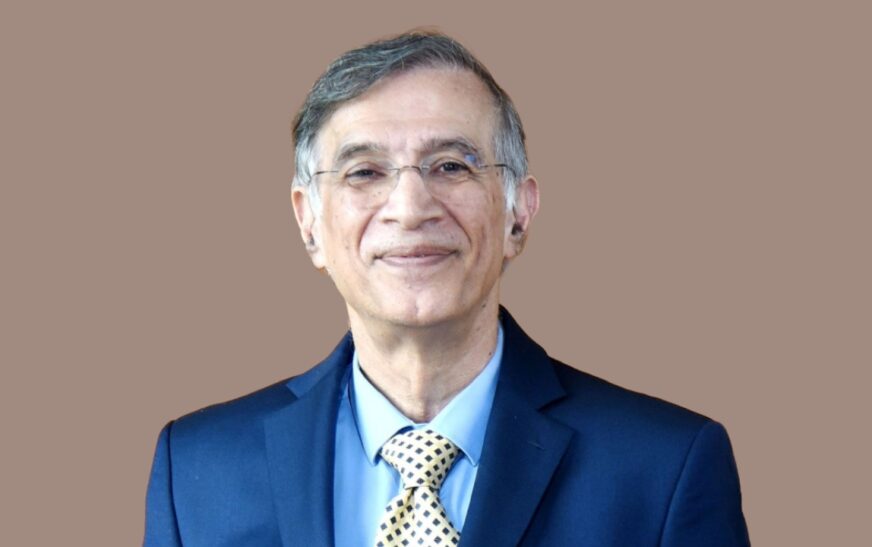
In an exclusive conversation with The Interview World at the Press Meet on “Real Estate Industry Expectations from the Upcoming Union Budget 2026,” Dr. Niranjan Hiranandani, Chairman of NAREDCO, defined affordable urban housing and outlined actionable strategies to achieve it in metropolitan areas. He discussed the potential for scalable rental housing, offered recommendations on stamp duty and dividend taxation, and highlighted his top three expectations from this year’s budget. Below are the key insights from his compelling discussion.
Q: From your perspective, what does affordable urban housing mean?
A: The message is clear: decades ago, Lal Bahadur Shastri resolved that India would never face food shortages. That vision led to the Green Revolution, transforming the nation over half a century ago. Today, we face a similar imperative, we must launch a Housing Revolution.
Every citizen deserves a home. Take Mumbai, India’s wealthiest city: yet, even now, half of its population lives in slums. This is unacceptable, and we must act.
Maharashtra Chief Minister Devendra Fadnavis has committed to redeveloping all slums within the next 5 to 10 years. With a thousand acres of salt-pans available for development, the opportunity is immense. The time has come to declare a Housing Revolution and turn this vision into reality.
Achieving this requires a coordinated approach. By adjusting budget policies, strengthening the affordable housing segment, and providing interest benefits to homeowners in this sector, we can accelerate progress. Coupled with proactive state government support, such as the tax reductions, development charge waivers, and stamp duty relief implemented during COVID, we can replicate the transformative impact witnessed during that period.
If we align these measures, fiscal incentives, policy tweaks, and state collaboration, we can realize the Housing Revolution sooner than imagined.
Q: Given current market conditions, would housing priced at ₹30–60 lakh in Tier-2 cities and ₹60 lakh–₹1 crore in metro cities be considered affordable for millennials, assuming comparable amenities?
A: That’s only a ceiling, not a fixed price. I can buy a shirt for 300 rupees, or I can buy one for 15,000 rupees. Similarly, setting a cap does not mean it has to be the maximum possible price. The actual price can be much lower than 60 lakh rupees.
Here’s the logic: if land is provided at no cost, compensated through the affordable housing segment combined with other land, the total construction cost can drop to just 3,500 rupees per square foot. This means a house can be built at that rate today. At the same time, the remaining land can be sold at market rates, generating substantial revenue. The cross-subsidy makes the model not only feasible but highly efficient.
Q: How can a scalable rental housing model be developed in India through collaboration among real estate developers, and what would this mean for consumers?
A: Today, you may be working in Delhi. Tomorrow, you might be transferred to Mumbai, Bangalore, Hyderabad, or elsewhere. You cannot buy a house every time you move; you have to rent. To address this, we must create strong incentives for rental housing.
Consider this: why does FDI flow primarily into commercial buildings? Because the returns are higher and the benefits are greater. Residential housing often offers lower returns, so we need to compensate with targeted incentives. Implementing these is entirely feasible.
Look at the current tax structure: companies pay 25% tax, while individuals pay 40%. This differential can be leveraged for rental housing. By offering tax benefits, PLI schemes, and other incentives, we can make rental housing attractive and profitable. There is no reason not to do this—this is exactly what policy intervention should achieve.
Q: Mumbai is often compared to Manhattan on real estate prices; how can affordable housing be integrated into the Dharavi redevelopment, and why has rehabilitation progress lagged despite seven-year commitments of authorities?
A: We have completed 300 kilometers of metro and implemented the Dharavi redevelopment scheme, which is now becoming operational. We have introduced a new policy on cluster development, a policy on redevelopment, and a policy on CESS development. For the first time, we provided benefits such as stamp duty reductions.
However, these initiatives have not yet translated into tangible impact at the grassroots level. Recently, we acquired salt-pan lands, which will now be utilized for housing, including rental housing. The combined effect of these measures will drive meaningful change.
Additionally, we have launched Mumbai 3.0, a program designed to further transform the city. The framework for the next five years is now clear, and the paradigm for action is well-defined.
Much remains to be done. But I am equally certain that with these policies and initiatives in place, the transformation will happen.
Q: What are your recommendations on stamp duty and dividend taxation, especially regarding corporate taxation and disparities between NRIs and resident Indians?
A: The issue is straightforward. When a company, for example, Reliance, pays a dividend, a local resident may have to pay 30–40% tax. Yet, a Non-Resident Indian (NRI) pays only 10%. This is clearly unfair.
Originally, a dividend distribution tax (DDT) existed. Once that tax was paid, both NRIs and Indian residents should have been treated equally. The tax on dividend income should not exceed what an NRI pays.
Under the current system, an NRI investing in stocks pays less tax on dividends, while a resident like me pays significantly more. This disparity remains unjust and needs correction.
Q: Drawing on past budgets’ impact on real estate, what are your top three expectations from this year’s budget, and which reform do you most want implemented?
A: The first priority is rationalizing taxes. The GST reform provides a strong example: the government successfully reduced rates, 28% became 18%, 18% became 5%, and 12% was brought down to 5%. These were bold and effective steps.
A similar approach can now be applied to income tax. Growth in several sectors is robust, and lowering taxes will stimulate even more activity. History shows that reducing taxes increases business, boosts income, expands distribution, and raises the nation’s overall wealth.
Specifically, reducing individual income tax to 25% could generate significantly higher revenues in the coming years. At the same time, it will enhance consumption and expenditure, particularly among the middle class, fuelling sustained economic growth.