

Air pollution has evolved from a distant environmental issue into an acute public health emergency with profound and immediate consequences. It no longer resides in academic papers or long-term forecasts. Instead, it confronts us daily in clinics, hospitals, and communities nationwide. Clinical evidence, epidemiological trends, and lived experience converge to reveal a stark reality: pollution damages the human body, accelerates disease progression, exacerbates social inequities, and places mounting strain on already burdened health systems. Addressing this crisis demands more than awareness. It requires confronting systemic drivers, dismantling persistent myths, and mobilizing coordinated action across policy, industry, and society to tackle one of the most serious and consistently underestimated health threats of our time.
Against this backdrop, The Interview World engaged with Padma Shri Dr. Harsh Mahajan, Founder and Chairman of Mahajan Imaging & Labs, at the Conference on Impact of Air Pollution on Health and Preventive Measures, organized by the Illness to Wellness Foundation (ITWF) in collaboration with FICCI.
In a wide-ranging discussion, Dr. Mahajan detailed the spectrum of diseases caused or aggravated by pollution and outlined its critical impacts on human health. He emphasized the necessity of a holistic, systems-based response that integrates government action, industry responsibility, and community participation. He also addressed prevailing misconceptions surrounding pollution, underscored the limitations of technology as a standalone solution, and made a compelling case for robust policy frameworks and sustained behavioural change. What follows are the key takeaways from this incisive and thought-provoking conversation.
Q: What types of diseases are caused or exacerbated by pollution in the human body, and what are the key impacts on human health?
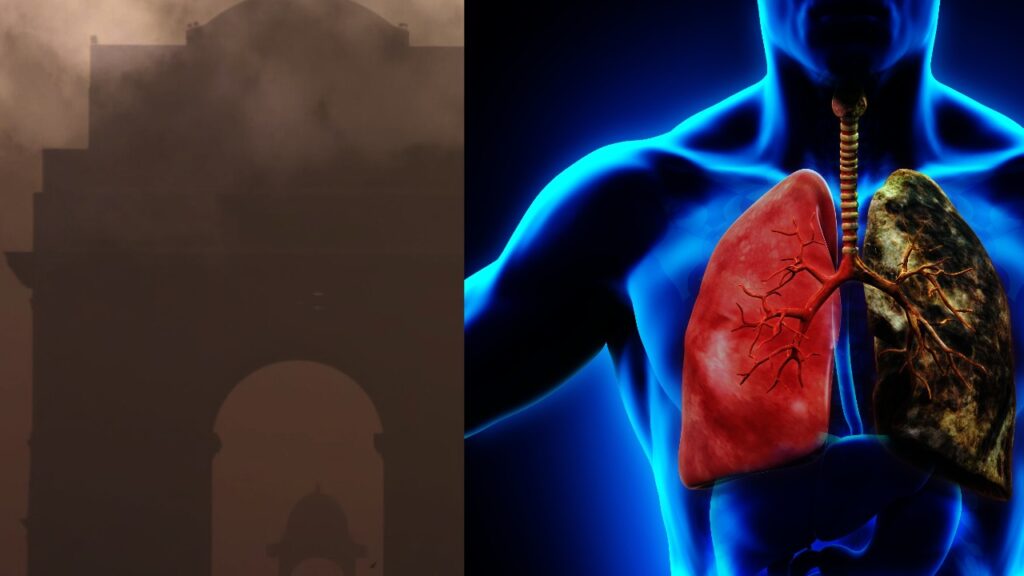
A: We see this unfolding all around us: in our friends, in our families, and unmistakably in our patients. As clinicians, we are witnessing a steady rise in chest and lung disorders. Breathlessness is becoming commonplace. Lung capacity is declining. Pulmonary function tests are increasingly abnormal. Exercise tolerance has fallen sharply. What once appeared episodic has now become chronic: persistent cough, recurrent breathlessness, and a measurable erosion of respiratory reserve. These changes weaken immunity, leaving patients more vulnerable to chest infections. More alarmingly, inhaled pollutants do not remain confined to the lungs. They pass directly into the bloodstream and reach every organ system. As a result, the risks of stroke and heart disease rise substantially. Even unborn children are affected, with pregnant women facing higher rates of complications. Over time, this exposure culminates in chronic obstructive pulmonary disease, malignancies, and irreversible long-term damage. These consequences demand urgent emphasis.
Across Delhi, large parts of North India, and increasingly across the country, the air we breathe has quietly become one of the most dangerous substances we encounter each day. Unlike contaminated water or unsafe food, polluted air offers no choice and no escape. We inhale it involuntarily. It harms us before we can react, and often before we are even aware. For the many doctors present, the outcomes are painfully familiar. We are seeing rising rates of asthma, chronic obstructive lung disease, heart attacks, strokes, lung cancer, pregnancy-related complications, and impaired child development. These are no longer abstract statistics or distant projections. They are real people, faces we recognize in our clinics, wards, and emergency rooms. Air pollution has emerged as a silent but pervasive risk factor, aggravating nearly every chronic disease we manage.
At Mahajan Imaging & Labs, we reviewed 5,000 chest CT scans performed last year for indications unrelated to pollution. The findings were deeply concerning. Structural lung changes that we traditionally associate with old age are now appearing in individuals in their twenties and thirties. This is not a future threat; it is a present reality. The danger is already upon us. What it means for the younger generation is sobering, and the trajectory, if left unaddressed, is one we can scarcely afford to imagine.
Q: How can pollution be addressed through a holistic, systems-based approach involving government, industry, and communities?
A: For policymakers, the challenge is unambiguous. Air pollution cuts across sectors: transport, energy, agriculture, urban planning, public health, and finance. It ignores administrative boundaries and defies political timelines. Consequently, it demands coordinated action, a long-term perspective, and the political courage to make decisions whose benefits may not be immediately visible, but whose absence will prove catastrophic.
For activists and civil society, this is fundamentally a fight for accountability, transparency, and equity. The harsh truth is inescapable: the poorest communities breathe the dirtiest air. Children walking to government schools, construction workers, traffic police, street vendors, and residents of informal settlements shoulder a disproportionate burden, despite contributing the least to the problem. Air pollution, therefore, is not merely an environmental issue; it is a profound social injustice.
For the general public, the issue is deeply personal. It shapes how long we live, how well our children grow, how productive we remain through our working years, and how dignified our old age will be.
Although pollution operates as an invisible driver of disease, its consequences are no longer abstract. They are already unfolding around us. We have lived in this environment long enough to see the damage accumulate. The moment for action is not approaching, it is here. We cannot expect governments alone to resolve this crisis. Each of us contributes, directly or indirectly, to the problem. Therefore, responsibility must also begin with introspection and extend to participation. Reducing pollution in our cities and across our country is not only a policy imperative; it is a collective obligation.
Q: What misconceptions and myths exist about pollution and its effects?
A: One of the most dangerous myths surrounding air pollution is the belief that it is seasonal; it appears in winter and vanishes in summer. This assumption is fundamentally flawed. In reality, air pollution persists throughout the year, with different sources dominating at different times. Vehicular emissions, industrial discharge, construction dust, waste burning, household fuels, and agricultural practices all contribute continuously. Crop residue burning may intensify the crisis during certain months, but it is neither the only cause nor the primary driver. When we fixate on a single factor, we obscure the systemic nature of the problem and risk overlooking the broader, more enduring sources of harm.
Q: Is technology sufficient on its own to address this challenge, or are policy and behavioural interventions also required?
A: Another persistent myth is that technology alone will deliver the solution through air purifiers, taller chimneys, or marginally cleaner fuels. Technology certainly matters, but it is not sufficient. Air pollution is, at its core, a failure of governance and collective behaviour. Without enforcement, thoughtful urban redesign, robust public transport, a decisive transition to clean energy, and active citizen participation, no technological intervention will save us.
This session has highlighted an important and encouraging truth: we already know enough to act. We know that cleaner transport reduces pollution and saves lives. We know that strong public transport systems outperform car-centric urban models. We know that renewable energy simultaneously improves air quality and strengthens energy security. We know that better waste management and effective dust control are achievable with tools already at our disposal. And we know that early health warnings and surveillance systems can prevent thousands, if not hundreds of thousands, of premature deaths.
What we lack is not knowledge, but urgency. Air pollution kills silently. It does not trigger the immediate outrage of a sudden disaster, yet it claims more lives than many visible crises combined, COVID-19 included. Because its effects unfold gradually, we have normalized breathlessness, chronic cough, watery eyes, and declining stamina as inevitable features of urban life. They are not. This is not normal. It is not inevitable. And it is certainly not acceptable.