
TÜV SÜD is a global force driving safety, quality, and a cleaner energy future. With deep expertise across solar, wind, hydrogen, and advanced storage technologies, the company moves industries from sustainability ambition to tangible action. Its commitment runs inward as well. TÜV SÜD has aligned with the Science Based Targets initiative, embraces the 1.5°C pathway, and is rapidly transforming its own operational footprint. The company is not merely advising on the transition, it is modelling it with unmistakable clarity, rigor, and purpose.
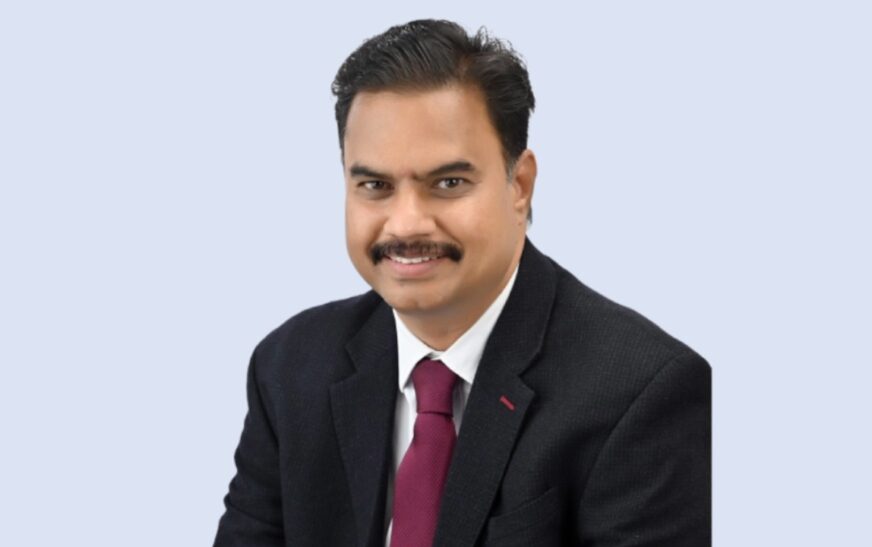
In an exclusive conversation with The Interview World, Deepak Zade, Vice President – Green Energy & Sustainability at TÜV SÜD, explains why wind, utility-scale solar, and hybrid solutions are poised to propel India’s green energy expansion. He details how the company is helping organizations across India design and execute credible carbon-neutral pathways, shares recent India-based case studies that demonstrate significant sustainability progress, and offers insights into emerging technologies that will reshape the future of energy.
He also highlights how TÜV SÜD is enabling Indian businesses to shift from linear to circular economic models, articulates his vision for 2030 and beyond, and outlines TÜV SÜD’s evolving role in India’s energy and sustainability landscape.
The following are the key takeaways from this compelling conversation.
Q: TÜV SÜD’s green energy initiatives support solar, wind, hydrogen, storage and bio-energy. Which of these segments do you see as having the highest growth potential in India, and why?
A: Wind and utility-scale solar, strengthened further by hybrid solutions, continue to be India’s fastest near-term growth engines. Strong policy support, a sharply declining LCOE, a robust project pipeline backed by public and private players, and bold national decarbonization targets collectively accelerate this momentum. Meanwhile, green hydrogen, the new green crude, along with e-fuels, offers game-changing potential. These technologies enable deep decarbonization, enhance energy independence, unlock hard-to-abate sectors such as steel, shipping, and fertilizers, and generate fresh demand for large-scale renewables, storage solutions, and electrolyser manufacturing.
Equally important, pumped energy storage systems now operate as India’s “water batteries,” delivering grid stability and enabling true round-the-clock renewable power. For more than 17 years, TÜV SÜD has been deeply embedded in India’s green energy landscape, helping stakeholders design and implement safe, high-quality, and fully compliant initiatives across the sector.
Q: How is TÜV SÜD helping organisations in India to design and deliver credible net-zero or carbon-neutral journeys?
A: As a committed partner in the sustainability transition, TÜV SÜD supports organizations across every stage of their net-zero or carbon-neutral journey. We deliver end-to-end expertise, from advisory and inspection to owner’s and lender’s engineering services in the renewable energy domain.
In addition, we offer environmental impact assessments, GHG inventory and assurance, pathway modelling, validation and verification audits, net-positive water impact assessments, and comprehensive ISO/SEC compliance support (including ISO 14064 and ISO 50001). Our capabilities also span ISO 14067 product carbon footprint, life-cycle assessment, airport carbon accreditation, CBAM readiness, and energy audits.
Together, these services help organizations convert strategy into measurable, verifiable outcomes, with clarity, credibility, and rigor.
Q: In India you identify seven key sustainability initiatives including Carbon Management, Green Energy and Energy Efficiency. Could you share a recent case-study from India where TÜV SÜD helped a company significantly advance one of these initiatives?
A: While several examples illustrate this momentum, two recent cases stand out. TÜV SÜD in India awarded its first International Sustainability and Carbon Certification (ISCC) Plus certificate to Epsilon Carbon India Pvt. Ltd., marking a significant milestone in the company’s voluntary commitment to sustainable operations. The certification affirms that Epsilon Carbon’s production practices remain environmentally responsible, socially accountable, and economically sustainable.
Likewise, Dr. Reddy’s Laboratories achieved TÜV SÜD’s Zero Waste to Landfill and Net Positive Water Impact (NPWI) certifications, two of the most rigorous frameworks for measuring genuine progress in waste reduction and water stewardship. Together, these achievements reflect how leading Indian enterprises are converting sustainability ambition into verified, high-impact action.
Q: Which emerging technologies do you believe will become game-changers for sustainability in the energy sector, and how is TÜV SÜD preparing to support them?
A: We believe floating solar, energy storage, pumped energy storage, green hydrogen and offshore wind will change energy sector landscape in India. TÜV SÜD has extensive experience and expertise in working on these technologies within India & Globally. TÜV SÜD is building multidisciplinary teams for electrolyser related services, battery safety, data-driven performance assurance, and verification / certification framework.
Q: As supply chains become more global and complex, how is TÜV SÜD helping Indian businesses move from linear to circular economy models — especially in energy-intensive industries?
A: TÜV SÜD is helping businesses to accelerate their transition to a circular economy by strengthening closed-loop material flows, transparent traceability, and resource-efficient production across increasingly complex global supply chains. Through CBAM readiness support, we enable low-carbon pathways that align with circularity goals, while GRS / RCS certification and ISCC PLUS ensure verified recycled content and robust chain-of-custody systems.
Our EN 15343 audits enhance plastics traceability from collection through reprocessing, and our plastic verification and validation services add credibility to recycling processes and mass-balance models. Complemented by recyclability assessments and energy / water audits that drive resource efficiency and waste minimization, TÜV SÜD equips organizations to design out waste, extend material life cycles, and demonstrate globally aligned, credible, and future-ready circular economy performance.
Q: Looking ahead to 2030 and beyond, what is your vision for TÜV SÜD’s role in India’s energy and sustainability landscape? What major shifts do you anticipate, and how are you positioning the organisation accordingly?
A: TÜV SÜD stands among the most trusted and long-established organizations in the green energy ecosystem. We are fully equipped to support the sector’s accelerated growth through 2023 and well beyond. At the same time, we continue to strengthen our capabilities by building cross-disciplinary teams and developing standardized assurance solutions that speed project development and deepen market confidence. At TÜV SÜD, we take pride in partnering with stakeholders to shape this transformation, safeguarding safety, reliability, and quality as India advances toward a truly sustainable energy future.


3 Comments
I wasn’t expecting to learn so much from this post!
I agree with your point of view and found this very insightful.
Such a simple yet powerful message. Thanks for this.
Comments are closed.