

BLS E-Services Ltd. is rewiring how India accesses essential digital services. Founded in 2016 and headquartered in Gurugram, the company fuses physical reach with digital intelligence to deliver banking, financial, e-governance, and citizen-focused solutions exactly where they’re needed. With every transaction and every doorstep interaction, BLS E-Services accelerates financial inclusion, strengthens public service delivery, and draws millions into a more connected and empowered India.
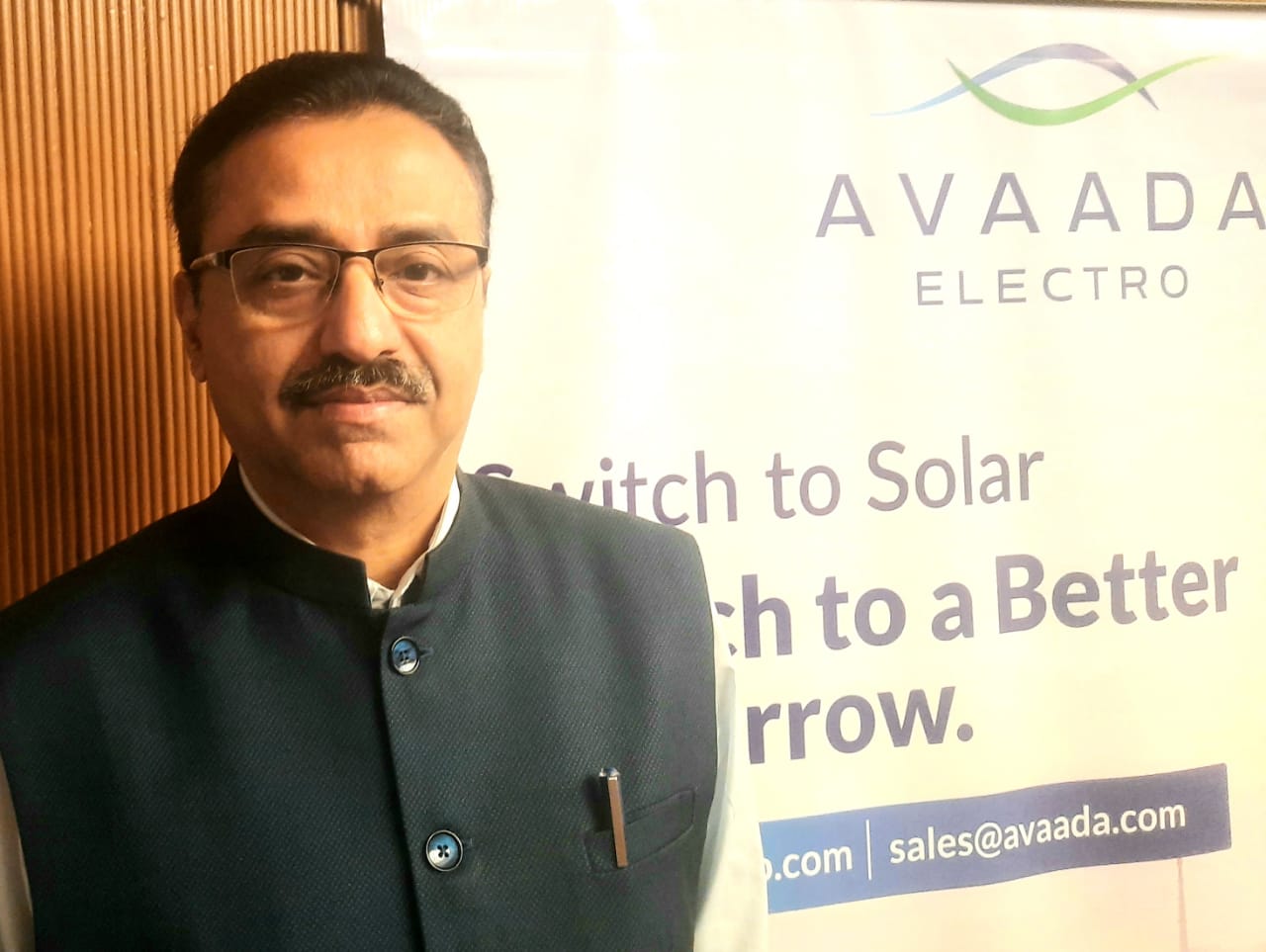
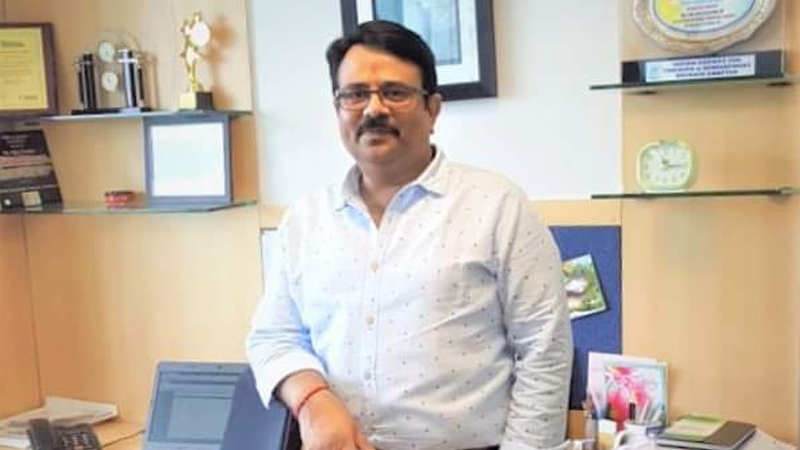
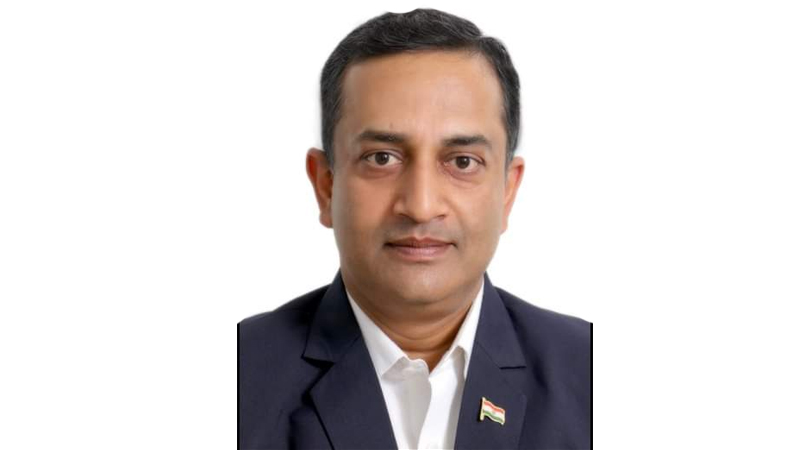
In an exclusive conversation with The Interview World, Shikhar Aggarwal, Chairman of BLS E-Services Ltd., outlines how the phygital model has evolved, and why it is uniquely engineered for India’s last-mile delivery challenges. He details how BLS is propelling the nation’s financial and welfare inclusion efforts, explains how the platform equips business correspondents to deliver reliable services in remote regions, and highlights how the company is empowering women at the grassroots with measurable outcomes. He also underscores how government schemes such as Jan Dhan, Ayushman Bharat, and digital public infrastructure now reach citizens more effectively through BLS centers, and finally, shares his long-term vision for the company.
Here are the key takeaways from his compelling conversation.
Q: BLS E-Services now operates one of India’s largest phygital networks with 1.4 lakh+ touchpoints. How has the phygital model evolved over the years and what makes it uniquely suited to India’s last-mile delivery challenges?
A: A dynamic, scalable platform strategy continues to position BLS E-Services at the forefront of India’s fast-accelerating digital services landscape. By deploying a robust phygital model, the organisation is steadily expanding its footprint in underserved regions. At the same time, focused investments in technology, infrastructure, and strategic partnerships are unlocking cross-sell opportunities and powering inclusive growth across its three core verticals.
The company’s phygital model, anchored by PoS-enabled multi-service delivery spanning banking, AEPS, utilities, ticketing, insurance, and more, integrates a wide physical network with advanced digital capabilities to deliver essential services across Tier 2–6 markets. This sharp focus on inclusive, technology-driven solutions in rural and semi-urban India has fuelled BLS E-Services’ strong financial performance in FY 2024–25. Its asset-light structure, supported by 1.47 lakh+ touchpoints, digital platforms such as the BLS Sewa portal, and partnerships with over 17 banks, has driven deeper penetration of critical financial, governance, and assisted e-services.
Building on this momentum, BLS E-Services continues to broaden its portfolio, now offering 300+ services across banking, insurance, bill payments, travel, and document facilitation through its extensive nationwide network. Strengthening its platform even further, the company has made a decisive push into loan distribution, facilitating disbursements of over ₹12,000 crore in FY 2024–25. This expansion has not only scaled rapidly but has also delivered meaningful credit access to underserved communities across rural and semi-urban India.
As more citizens embrace digital platforms, these phygital touchpoints remain essential, bridging gaps in digital literacy, enabling trust, and ensuring that no individual is left behind in India’s digital progress.
Q: With India’s social protection coverage rising from 19% in 2015 to over 64% today, how do you see BLS E-Services contributing to this national leap in financial and welfare inclusion?
A: BLS E-Services plays a decisive last-mile role in India’s sweeping expansion of social protection coverage and financial inclusion. It acts as a critical bridge connecting government welfare programmes and formal banking services to citizens in semi-urban, rural, and remote regions. This impact is anchored in its integrated triple-service model: Business Correspondent (BC) Services, Assisted E-Services, and E-Governance Services.
As a Business Correspondent for major banks, BLS E-Services mobilises an extensive network of agents and BLS Touchpoints (retailers and digital stores) to deliver core banking services such as account opening, vital for Direct Benefit Transfer schemes like Pradhan Mantri Jan Dhan Yojana, as well as cash deposits, withdrawals, and remittances.
Its “phygital” strategy, which blends physical presence with digital delivery, directly tackles low internet penetration and limited banking access. As a result, it brings the formal financial ecosystem within reach of the unbanked and financially excluded, including women entrepreneurs who often face structural barriers.
In addition, its E-Governance services streamline citizen access to state welfare schemes and essential public utilities, from securing Aadhaar and PAN cards to obtaining birth and death certificates. By enabling individuals to acquire the digital identity and documentation necessary for social protection benefits, BLS E-Services strengthens both access and entitlement.
The platform further enhances financial security by offering Micro Insurance and Micro Pension products tailored to vulnerable groups, complementing national initiatives such as the Pradhan Mantri Jeevan Jyoti Bima Yojana (PMJJBY) and the Pradhan Mantri Suraksha Bima Yojana (PMSBY).
By building a vast, trusted physical-digital network that ensures secure, transparent, and efficient service delivery, BLS E-Services converts the government’s inclusion agenda into concrete outcomes at the grassroots. In doing so, it supports India’s dramatic rise in social protection coverage, from 19% to more than 64%, and firmly positions itself as an indispensable catalyst of national welfare delivery.
Q: Your Business Correspondent (BC) network of 45,400+ agents have handled over 140 million transactions. What are the ground realities these agents face and how does your platform support them in delivering reliable services in remote regions?
A: The network of more than 45,400 Business Correspondents (BCs), who together have executed over 140 million transactions, operates at the frontline of last-mile service delivery in some of India’s most remote and underserved regions. Yet, these agents work under harsh ground realities. Their foremost challenge is inadequate infrastructure: poor internet connectivity, unreliable electricity, and frequent software or server outages. These constraints slow transactions, undermine reliability, trigger customer frustration, and cause repeated operational disruptions.
Financial sustainability presents an equally serious barrier. Many BCs earn low and inconsistent commissions tied solely to transaction volumes, earnings that seldom cover their operational costs, the time required for customer onboarding, or the effort needed to drive financial literacy. At the same time, they must overcome low awareness among rural customers, often spending considerable time explaining basic banking concepts. They also shoulder operational risks linked to cash handling, physical security, and long-distance travel to serve widely dispersed communities.
Our platform directly addresses these constraints and equips BCs to deliver dependable services. It is engineered for low-connectivity environments so transactions remain stable even with weak or intermittent internet, potentially through an offline-first architecture with secure data synchronisation. The platform enhances reliability by providing robust technology such as biometric authentication via the Aadhaar-enabled Payment System (AEPS) and modern, user-friendly micro-ATM devices. These tools simplify service delivery for both agents and customers, while ensuring secure, paperless access.
To strengthen financial viability, the platform enables BCs to diversify their service portfolio. Beyond deposits and withdrawals, they can open multiple account types, distribute insurance products, and facilitate assisted e-commerce, expanding both customer value and income streams.
Finally, the system ensures real-time monitoring and responsive support. This capability allows quick resolution of technical issues and provides BCs with the operational float and back-end assistance they need from the parent institution. As a result, BCs evolve from basic cash handlers into trusted, economically viable financial service providers embedded within their communities.
Q: With an additional ₹8,300 crore in annual transaction volume expected from Aadifidelis Solutions Pvt. Ltd and its subsidiaries acquisition, how is BLS preparing its technological and operational backbone to scale seamlessly?
A: BLS E-Services Ltd. is strengthening its technological and operational backbone to seamlessly scale its digital business, including the additional ₹8,300 crore in annual transaction volume expected from the Aadifidelis Solutions acquisition. It is doing so by intensifying its focus on technology-led service delivery and making targeted investments in advanced digital infrastructure.
The company is accelerating investments in Artificial Intelligence (AI), cloud computing, and next-generation cybersecurity frameworks to future-proof its operations. For example, it has deployed AI to automate and expedite retailer onboarding, replacing slow, manual verification processes. In addition, BLS has introduced digital solutions such as BLS Buddy, an AI-powered virtual assistant that delivers real-time support to last-mile agents while enabling cross-selling of products like insurance and loans across its extensive network. Through these initiatives, BLS aims to leverage high-tech public service platforms to drive scalable growth and strengthen its competitive position.
Operationally, the acquisition of Aadifidelis Solutions and its affiliates, significant players in loan distribution and processing, has been fully consolidated into BLS E-Services Ltd. The move strategically integrates specialised loan processing capabilities into BLS’s portfolio by leveraging its expansive Business Correspondent (BC) network. Aadifidelis’ business model and channel partner ecosystem align naturally with BLS’s citizen-centric banking services, enabling loan seekers to receive ready referrals and streamlined support through BLS’s widespread touchpoints.
By combining BLS’s extensive last-mile reach with Aadifidelis’ specialised expertise, the company can effortlessly absorb the increased transaction load while maximising the capacity of its existing network. This integrated approach positions BLS E-Services Ltd. to scale efficiently, diversify its service offerings, and reinforce its leadership in India’s rapidly evolving digital services landscape.
Q: Women-led entrepreneurship has quietly become a pillar of your rural service model. Can you share how BLS is empowering women at the grassroots and what outcomes you’ve witnessed so far?
A: Women-led entrepreneurship forms a core pillar of our rural service strategy, and we actively empower women at the grassroots by establishing them as BLS Touchpoint and BLS Store merchants. This approach transforms them into local digital service providers and influential economic agents within their communities.
Through this model, women, who are often underserved or excluded from formal economic opportunities, gain the resources to operate their own outlets. They deliver essential services such as Business Correspondent (BC) banking, assisted e-services, and e-governance support directly within their villages. This not only creates a stable source of income and financial independence for them but also positions them as trusted enablers of financial and digital inclusion. Crucially, they help other women who may be uncomfortable engaging with traditional institutions, thereby widening the circle of participation.
The outcomes are both measurable and meaningful. More than 20% of our service outlets are successfully managed by women, well above the national average for women’s entrepreneurship in this sector. These women-led centres have already processed over 130 million transactions, expanding access to essential services such as Direct Benefit Transfers and microloans. Their impact is particularly significant given that 55% of Jan Dhan account holders are women, many of whom rely on these centres for day-to-day financial services.
By entrusting women with this critical operational role, we are not merely supporting small businesses. We are cultivating self-reliance, strengthening community leadership, and advancing genuine economic empowerment. Ultimately, these entrepreneurs are driving verifiable progress in rural India’s digital and economic transformation.
Q: Given your massive rural footprint, how are government schemes like Jan Dhan, Ayushman Bharat, and digital public infrastructure being delivered more efficiently through your centers?
A: The extensive rural network of centres, comprising Common Service Points (CSPs) and our Village Level Entrepreneurs (VLEs), serves as a powerful engine for delivering key government schemes with unprecedented efficiency and reach.
For programmes like the Pradhan Mantri Jan Dhan Yojana (PMJDY), these centres operate as Customer Service Points or Banking Correspondents. They enable villagers to open bank accounts, make deposits, and withdraw cash within their own communities. By eliminating the physical and infrastructural barriers of traditional banking, they drive widespread financial inclusion and reinforce the foundation for the Direct Benefit Transfer (DBT) ecosystem.
Likewise, under Ayushman Bharat, these centres provide on-the-spot registration and instant issuance of Ayushman cards. As a result, poor and vulnerable rural families can access the ₹5 lakh health insurance cover without travelling long distances to district headquarters or incurring additional expenses.
This entire system is powered by India’s Digital Public Infrastructure (DPI), notably Aadhaar for identity authentication, mobile technology, and reliable internet connectivity facilitated through the centres. By integrating DPI at the last mile, these centres become critical service delivery hubs. They digitise public services, remove intermediaries, curb corruption, enhance transparency, and sharply reduce the time and cost for rural citizens to access essential government benefits.
Q: Looking ahead, you’ve spoken about becoming India’s unified digital backbone. What does this vision entail, and how will BLS E-Services integrate emerging technologies to reach the next 100 million consumers?
A: BLS E-Services aims to become India’s unified digital backbone by building a single, comprehensive platform that seamlessly integrates a wide spectrum of essential citizen services. This vision brings together our expansive physical network, including CSP centres, with a resilient digital infrastructure to bridge the digital divide. As a result, both urban users and underserved rural communities can access government-to-citizen (G2C), business-to-citizen (B2C), financial, and utility services through a single, reliable touchpoint.
Reaching the next 100 million consumers will require the strategic adoption of emerging technologies. To this end, we will deploy Artificial Intelligence (AI) and Machine Learning (ML) to personalise service recommendations, automate complex workflows for faster delivery, and strengthen fraud detection. In parallel, cloud computing will provide the scale and reliability necessary to manage soaring transaction volumes with uncompromised performance.
Moreover, deeper integration of Aadhaar-based authentication and cutting-edge FinTech solutions will simplify customer onboarding and secure financial transactions. Together, these advancements will make the ecosystem more accessible, efficient, and trustworthy, laying the foundation for the next wave of digital inclusion across the nation.