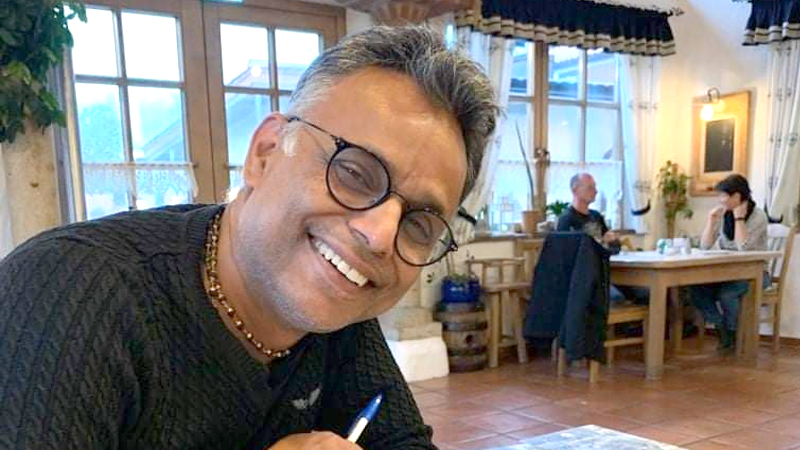


Babita Hembrom is an engineer by training, an educator by calling, and an artist by soul. Renowned for her evocative acrylic paintings, she fuses traditional motifs with contemporary tools, crafting visual narratives that resonate deeply. Each canvas tells a story—one painted in earthy tones and raw, unfiltered lines that echo ancestral rituals, myths, and superstitions. Her brush speaks in whispers, yet its voice thunders in the viewer’s subconscious. Recognized by The Haat of Art as a visionary in modern acrylic expression and a torchbearer of Jadopatia painting, Babita stands at the crossroads of heritage and innovation. Her art is bold, symbolic, and unflinchingly emotional. With every stroke, she channels cultural memory—rendering gods, spirits, and folklore in hues that feel ancient and immediate all at once.
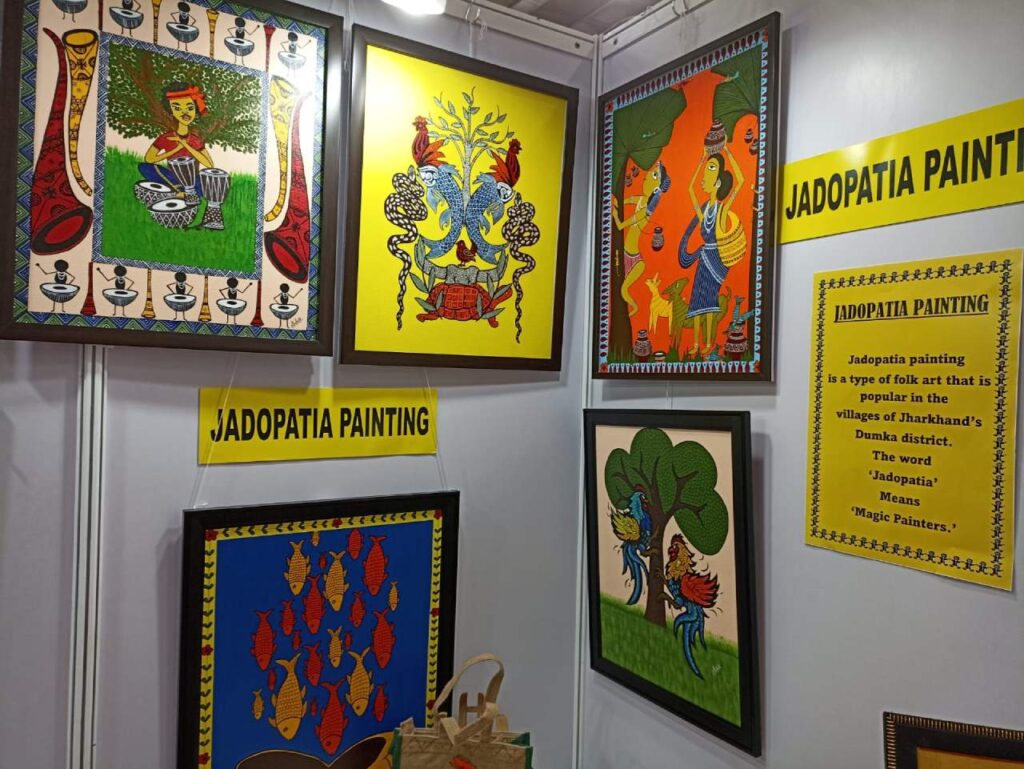
Jadopatia, in Babita’s hands, becomes more than an art form—it becomes a sacred ritual. These scrolls, alive with spiritual energy, breathe with a rhythm as primal as it is poetic. They summon the mystical through visual verse, where life, death, and divinity dance across handmade paper in spellbinding symmetry. Her imagery, though unschooled in convention, holds a wisdom that transcends refinement. It is art as invocation—primitive yet profound, haunting yet healing. Jadopatia is not just pigment on parchment; it is memory inscribed in mud and soul.
Beyond the canvas, Babita extends her impact as an educator and mentor through Ark of Art, a platform committed to nurturing emerging talent. She pairs her technical acumen with a deep dedication to creative engagement. Her anime-inspired vector illustrations and behind-the-scenes insights reveal both precision and play—offering a rare glimpse into the alchemy of her process. As her online following grows, so too does her influence in India’s contemporary art space.
Through every medium—whether brush or blackboard—Babita Hembrom continues to inspire, innovate, and instruct. Her work transcends aesthetics. It cultivates dialogue, builds community, and redefines the boundaries between art and education.
In an exclusive conversation with The Interview World at The Haat of Art, Babita reflects on her artistic evolution—from engineer to celebrated artist. She dives into the intricacies of Jadopatia, explores how audiences respond to her work, unpacks the hidden labor behind each creation, explains the logic of pricing, and offers a heartfelt message to aspiring artists.
Here are the most compelling takeaways from this illuminating dialogue.
Q: Could you elaborate on the type of artwork showcased here and how it connects with or evokes a response from the audience?
A: This piece is an embossed painting—emerging in vivid three-dimensional form. It bursts with color, radiating an energy that is bold, vibrant, and alive. The textures rise from the surface, inviting the eye to linger and explore.
Each of the four paintings in this series embraces abstraction. They speak in bright hues and fluid forms, unbound by realism yet grounded in emotional depth. Among them, I’ve introduced Jadopatia—a folk art form that holds deep personal and cultural meaning for me.
Jadopatia is a traditional scroll painting from the Dumka district of Jharkhand, my native state in eastern India. Rooted in ritual and storytelling, it once flourished as a visual language of myth, memory, and ancestral wisdom.
Today, sadly, only a few artists continue this practice. The art form teeters on the edge of extinction.
That’s why I feel an urgent responsibility to revive it. I carry it in my blood, in my spirit, and now—in my work. I want Jadopatia to rise again, to be seen and celebrated across the world.
This is more than just art for me. It’s a mission. A reclamation. A calling to give voice to a tradition that refuses to be forgotten.

Q: Coming from an engineering background, which is typically analytical and scientific, how did you navigate the transition into a more emotional and creative field?
A: This journey wasn’t a shift—it was a return. Art has always lived within me, not as a profession at first, but as a passion. From an early age, it existed as a quiet companion, a hobby that offered solace and creative joy.
Yet, like many, I followed a more conventional path. During my academic years, family expectations shaped my choices. Naturally, when it came time to decide on a career, engineering became the practical route—secure, respected, and aligned with what most parents deem a stable future.
After graduating, life moved quickly. I got married, embraced new responsibilities, and gradually transitioned into education. Teaching became a fulfilling bridge between my technical background and my evolving role as a mother and mentor.
But the artist in me never faded.
Eventually, when I stepped away from formal education, I allowed myself to rediscover that long-standing love for art. What began as a hobby slowly unfolded into a calling. I immersed myself in my creative world—one brushstroke, one canvas, one idea at a time.
Now, I stand not only as an artist but also as an entrepreneur—shaping my own narrative through color, form, and vision. This isn’t a detour. It’s the path I was always meant to walk.
Q: How many national and international events have you participated in so far?
A: I haven’t yet ventured onto the international stage. For now, my journey remains within national borders. In fact, this marks my sixth exhibition here in India.
Q: What has the audience response been like to your work showcased at The Haat of Art?
A: The audience response has been overwhelmingly positive. Their appreciation feels genuine—and deeply motivating for an artist. What’s even more encouraging is that my work often resonates to the point of generating commissions. Many of my paintings have found buyers through these exhibitions.
But what brings me particular joy in this exhibition is the response to my introduction of Jadopatia painting. Audiences were visibly surprised—almost startled—just by the name. Most had never even heard of it. They were familiar, perhaps, with Madhubani or Mithila art, but Jadopatia remained entirely unknown to them.
That’s precisely why I seized this moment. I couldn’t let this opportunity slip away. I wanted the world to see it, to recognize that Jadopatia exists—and that it hails from the culturally rich land of Jharkhand.
Q: Could you share some insights into the time and effort that go into creating these kinds of paintings?
A: Each of my paintings carries a layered complexity. Before I even touch the canvas, I engage in meticulous planning. I envision every detail—the subject, the composition, the palette, and the emotional impact I seek to evoke. Only when this vision crystallizes do I begin.
Naturally, the process demands time. Two factors influence the pace: the intricacy of the artwork and its scale. The more elaborate the concept or the larger the canvas, the longer it takes. That’s the nature of my craft—deliberate, thoughtful, and deeply immersive.
Q: What factors do you consider when setting the price for your artwork?
A: The pricing entirely depends on the nature of my work. If a piece is complex—demanding intricate detail and deeper conceptual depth—the price naturally reflects that. However, if the artwork is simpler or more immediately relatable, I adjust the price accordingly. I remain mindful of the effort involved and the emotional resonance it carries.
Q: What advice would you give to aspiring artists in India, and what traits do you think are crucial for thriving in this field?
A: First and foremost, an artist must master the craft. Skill is the foundation—without it, the vision remains unrealized. But beyond technique, resilience is equally vital. You must not lose heart. Every artist faces doubt, yet with time and perseverance, you will prove your worth to the world.
Pour your entire being into each creation. Let every brushstroke carry your emotion, your dedication, your truth. Because a painting is not just color on canvas—it is your soul made visible.
This is the message I want to pass on to the emerging generation of artisans. Hold onto your passion. Trust your process. And never stop creating.