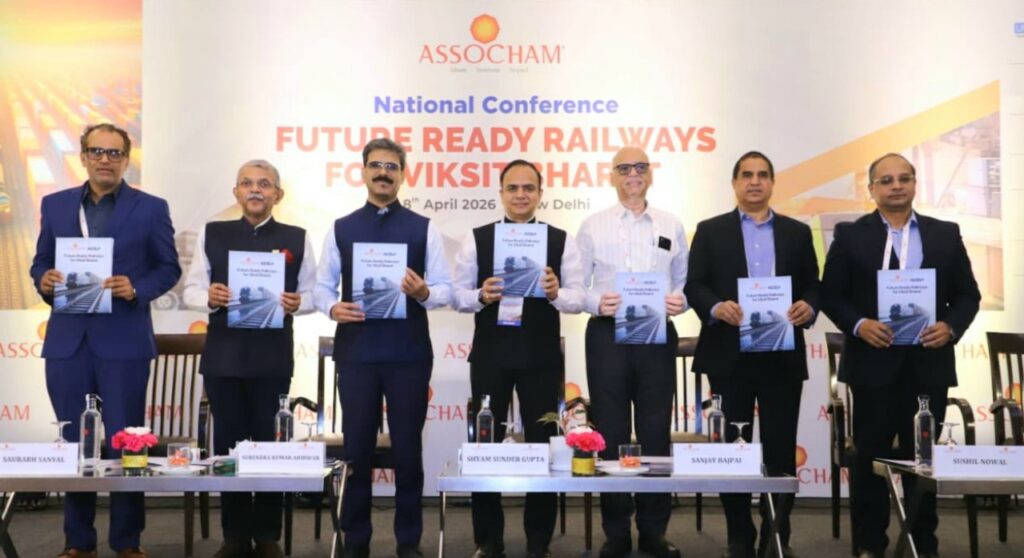

As India advances toward its Viksit Bharat 2047 vision, it must treat the transformation of its railway ecosystem as a strategic national priority, not merely a sectoral upgrade. The ASSOCHAM report, Future Ready Railways for Viksit Bharat, positions railways at the core of economic expansion, logistics efficiency, and sustainable mobility. It underscores the urgent need to arrest and reverse the decline in freight share, while simultaneously scaling passenger capacity and accelerating the adoption of high-speed, technology-driven systems. Moreover, the report calls for deep structural reforms. These include strengthening last-mile connectivity, rationalizing tariffs, enabling private sector participation, and advancing seamless multimodal integration.
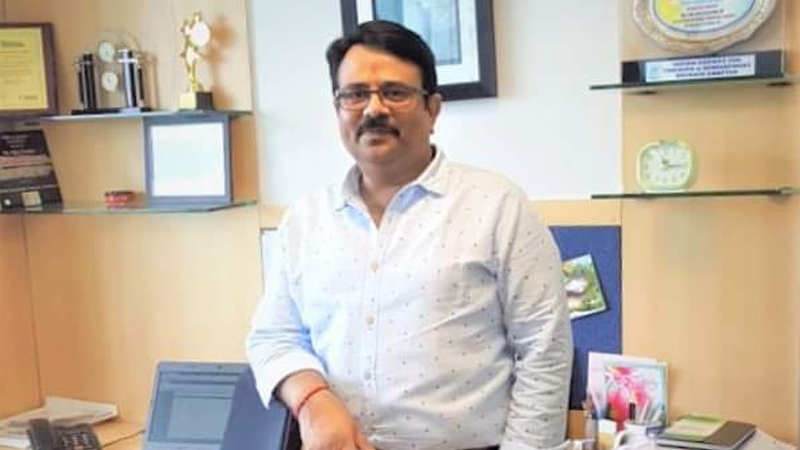
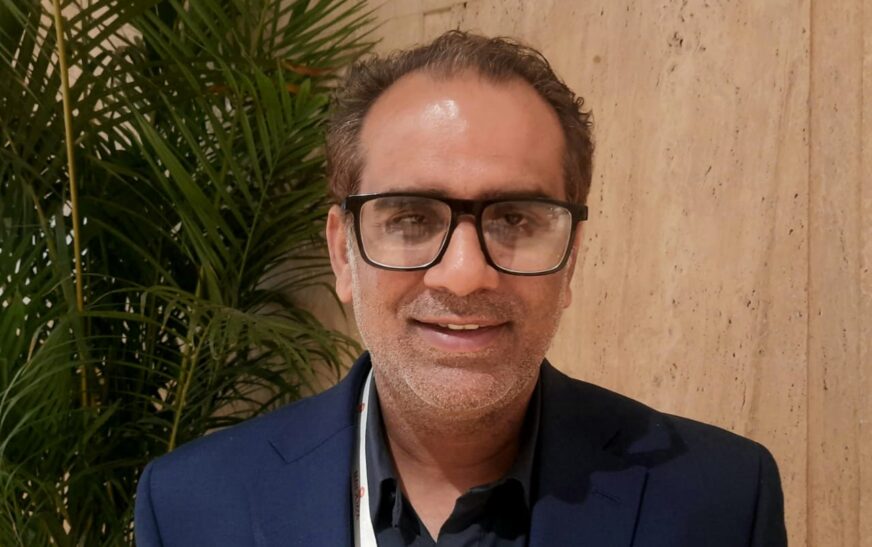
Against this backdrop, The Interview World during ASSOCHAM’s National Conference on “Future Ready Railways for Viksit Bharat,” had the privilege to interact with Nitin Srivastawa, Managing Director – Infrastructure & Sports Advisory at ASCELA. In a highly engaging discussion, Srivastawa unpacked the report’s key insights. He outlined strategic priorities to enhance global competitiveness, detailed integration frameworks to improve system-wide performance, and highlighted the transformative role of AI and emerging technologies. Furthermore, he emphasized critical policy interventions and governance reforms required to future-proof Indian Railways. Here are the key takeaways from this incisive conversation.
Q: What are the principal findings and takeaways from the report ‘Future Ready Railways for Viksit Bharat’ by ASSOCHAM?
A: India’s ambition to become a developed nation by 2047 under the Viksit Bharat vision is driving a large-scale transformation of its railway ecosystem. This transformation extends beyond conventional infrastructure expansion; it encompasses both freight optimization and passenger mobility enhancement.
A central priority is to reverse the long-term decline in railway freight share observed over the past two decades. Specifically, the objective is to increase freight contribution from approximately 6% to 40%. At the same time, the system must scale significantly to accommodate a projected passenger capacity of 20 million.
Meanwhile, policy and investment focus has begun to shift toward high-speed rail development. Consequently, this shift necessitates extensive track augmentation, new alignments, and the deployment of advanced infrastructure. These efforts require coordinated capital infusion from both public and private sectors, thereby reinforcing a hybrid investment model.
In this context, the paper we have presented provides a structured analysis of current progress and outlines a clear roadmap for future action. It examines critical interventions required at both the infrastructure development and policy levels. Furthermore, it evaluates the integration of sustainability frameworks and emerging technologies as key enablers.
Ultimately, these combined efforts will play a decisive role in shaping a resilient, efficient, and future-ready railway ecosystem, one that serves as a cornerstone in India’s journey toward achieving the Viksit Bharat 2047 vision.
Q: What strategic initiatives should be undertaken to make Indian Railways globally competitive across infrastructure modernization, network connectivity, and sustainable revenue growth?
A: We must take several decisive policy actions to unlock the full potential of the railway system. First and foremost, we need to address last-mile connectivity, which remains a critical bottleneck. At present, inadequate integration between rail networks and industrial hubs constrains efficiency. Therefore, we must develop a dense network of terminals located in close proximity to factories, with dedicated rail sidings directly connected to loading and unloading zones. This approach will streamline operations and eliminate avoidable handling inefficiencies.
Currently, these gaps force logistics providers to rely on road transport. After all, no operator prefers to load and unload cargo multiple times. As a result, road transport continues to dominate despite rail’s inherent advantages. To counter this, we must implement targeted policy reforms.
In particular, we need to establish a uniform and rationalized tariff structure. The existing pricing framework lacks consistency, as similar goods often attract different rates under varying conditions. We must critically examine these discrepancies and standardize tariffs to ensure transparency, predictability, and competitiveness.
At the same time, we should introduce structured incentives to encourage a modal shift from road to rail. Railways possess a clear advantage in terms of volume capacity; they can move significantly larger quantities of goods more efficiently than trucks or containerized road transport. However, capacity alone does not guarantee adoption. We must enhance the value proposition.
To achieve this, we should design and deploy value-added services that make rail logistics more attractive. These may include integrated logistics solutions, faster turnaround times, reliability guarantees, and customer-centric service models. In addition, well-designed incentive programs, such as benefits tied to modal migration, can further accelerate adoption.
In essence, we must combine infrastructure alignment, tariff rationalization, and service innovation with strategic incentives. Only then can we position railways as a competitive, efficient, and preferred mode of transport within the broader logistics ecosystem.
Q: Which end-to-end integration strategies can improve the overall performance of Indian Railways?
A: As one panellist noted, we increased parcel dimensions from 8 feet to 10 feet. This change reflects a deliberate design optimization that enhances carrying efficiency. At the same time, it contributes directly to capacity augmentation. Together, these interventions demonstrate how targeted design improvements can unlock measurable gains.
However, incremental adjustments alone will not suffice. We cannot continue to rely on legacy standards and expect transformative outcomes. Instead, we must identify every opportunity to create value, whether through design innovation, policy reform, or strategic investment, and act on it decisively. This integrated approach will enable us to accelerate growth and, more importantly, to strengthen freight movement across the network.
Meanwhile, passenger demand continues to rise steadily. We can manage this growth through systematic capacity expansion and operational improvements. In contrast, freight requires far more focused attention. Therefore, we must prioritize the development of dedicated freight corridors and supporting infrastructure. Only by doing so can we fully realize the railway system’s potential as a high-capacity, high-efficiency logistics backbone.
Q: What role will AI and emerging disruptive technologies play in driving digital transformation and long-term competitiveness of Indian Railways?
A: Building Information Modelling (BIM) is significantly reducing the time required to assess and implement changes. It enables real-time monitoring of design modifications and their impact on both project timelines and commercial outcomes. As a result, teams can identify risks earlier and respond faster. Consequently, shorter feedback cycles minimize the duration and magnitude of disruptions.
More broadly, technology will play a decisive role in transforming project delivery. However, current adoption levels remain limited. Based on observed trends, technology penetration stands at approximately 18–20%. We must increase this by at least 30–40% over the next five years. Such acceleration is essential to compress project timelines, improve execution efficiency, and reduce overall costs.
In this context, advanced technologies, including AI, will prove pivotal. They can streamline documentation, enhance real-time monitoring of freight movement, and strengthen maintenance systems. For instance, integrated digital platforms can track equipment usage and automatically generate maintenance alerts, ensuring timely repairs and minimizing downtime.
Therefore, we must embed technology across the entire lifecycle, from planning and execution to operations and maintenance. This integrated approach will not only improve efficiency but also create a more resilient, data-driven infrastructure ecosystem.
Q: Are there any key insights or critical takeaways from your study that warrant special attention?
A: One clear insight has emerged: demand for a modal shift toward rail is increasing. However, two critical pain points continue to constrain this transition. If we address these decisively, we can significantly accelerate freight adoption and strengthen the overall logistics ecosystem.
First, last-mile connectivity remains inadequate. Without seamless integration between rail terminals and end destinations, logistics providers face operational friction and added handling costs. Second, pricing lacks consistency. Unlike road transport, which operates with relatively uniform and predictable pricing, rail freight tariffs remain fragmented and variable.
Therefore, we must act on both fronts. We need to build robust last-mile connectivity infrastructure to ensure seamless cargo movement. At the same time, we must implement a uniform and transparent pricing policy. Such standardization will improve predictability, enhance competitiveness, and build user confidence.
If we execute these interventions effectively, we will unlock substantial gains. Freight volumes will increase, corridor utilization will improve, and, consequently, railway revenues will rise significantly.
Q: What types of policy interventions and governance reforms are required to strengthen Indian Railways?
A: We must accelerate the shift toward privatization, not only in financing and infrastructure, but also in operations. In this context, we should actively explore models such as Design-Build-Finance-Operate-Transfer (DBFOT), particularly at high-traffic and strategically critical junctions. These models can unlock efficiency, attract investment, and improve service delivery.
At the same time, we should draw practical lessons from successful metro systems. For instance, metro stations have evolved into monetizable, revenue-generating assets through commercial integration and efficient management. Therefore, the question is straightforward: if metro systems can achieve this, why can’t Indian Railways replicate similar outcomes?
We do not need to reinvent the wheel. Proven frameworks already exist, and they function effectively. Instead, we must analyse what works in metro systems, governance structures, revenue models, and operational efficiencies, and systematically adapt those elements to the railway ecosystem. This requires both policy alignment and institutional willingness to adopt change.
Moreover, as the transport sector moves toward multimodal integration, railways must position themselves as a core component of a larger, interconnected logistics network. Seamless integration with road, metro, and other transport systems will be critical to enhancing overall efficiency and user experience. In essence, the path forward is clear. We must adopt tested models, enable private participation at scale, and integrate railways into a broader multimodal framework. By doing so, we can resolve structural inefficiencies and unlock significant value across the system.