

Power Finance Corporation Ltd. (PFC), a Maharatna CPSE under the Ministry of Power, stands as the financial backbone of India’s energy ambitions. Established in 1986, PFC has grown into the nation’s foremost infrastructure NBFC, channelling capital with precision into the lifelines of power—generation, transmission, and distribution.
Its portfolio is expansive and decisive. From term loans and equipment leasing to refinancing and guarantees, PFC fuels every facet of the sector. Headquartered in New Delhi, the corporation commands trust through disciplined financial stewardship. It mobilizes resources through bonds, borrowings, and innovative instruments—ensuring India’s grid of tomorrow remains resilient and future-ready.
But PFC’s role extends far beyond financing. It acts as the architect of modernization—bridging policy with capital and vision with execution. The corporation is not simply funding projects; it is underwriting India’s transition to a reliable, efficient, and technology-driven power ecosystem. With unmatched scale, credibility, and foresight, PFC remains the indispensable partner in India’s power story.
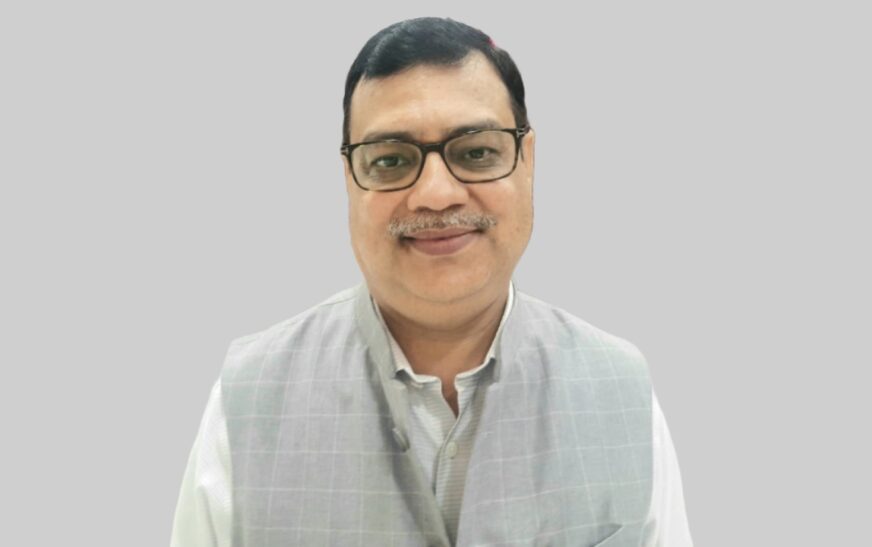
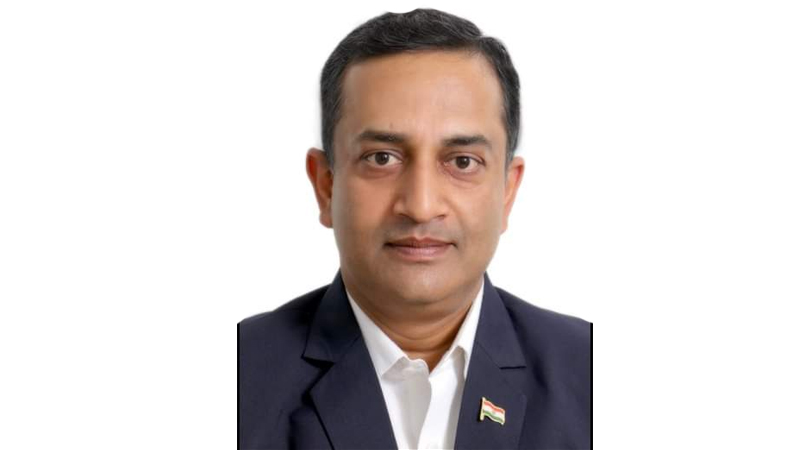
At ETES 2025, hosted by Electrical Mirror, The Interview World engaged in an exclusive conversation with R.K. Chaturvedi, Executive Director (Projects), PFC. He shed light on the corporation’s strategic role in shaping and financing the energy sector. He explained how automation is set to transform distribution, detailed the growing impact of AI and ML in optimizing grids, and dispelled consumer concerns around smart meters. Most importantly, he emphasized India’s national goal of ensuring the complete rollout of smart meters.
Here are the key takeaways from his compelling conversation.
Q: What is the strategic role of Power Finance Corporation (PFC) in shaping and financing India’s energy sector?
A: Our subsidiary, PFC Consulting Limited (PFCCL), has been entrusted by the Ministry of Power to serve as the bid coordinator for independent power transmission projects. In this framework, the Central Transmission Utility (CTU) designs the projects, while PFCCL, along with REC Power Distribution Company Ltd. (RECPDCL), manages the bidding process. Through a transparent and competitive mechanism, the bids are awarded to the most qualified participants.
Beyond coordination, PFC also plays a direct role in financing these projects. As the prime financer in the power sector, we ensure timely capital infusion, enabling developers to achieve financial closure at the earliest. In doing so, we not only strengthen project execution but also accelerate the pace of India’s power sector growth.
Q: How is automation poised to transform the power distribution system?
A: The installation of smart meters will mark a decisive shift. They will enable precise load forecasting, allowing utilities to anticipate demand patterns well in advance. This foresight will strengthen resource adequacy planning and ensure far greater efficiency across the system.
In distribution, digitalization will drive an equally profound transformation. Self-correcting and self-healing grids will emerge, capable of immediate fault detection, swift correction, and predictive maintenance. These advancements will not just improve reliability—they will redefine the resilience and intelligence of India’s power networks.
Q: In what ways can AI drive grid optimization and enhance the resilience of the power sector?
A: Artificial Intelligence holds immense potential in predicting demand—one of the greatest challenges confronting the power sector today. Too often, we plan for a certain load but face an entirely different reality.
AI can bridge this gap with remarkable accuracy. By forecasting demand more precisely, it will prevent costly short-term power purchases and ensure that operations unfold exactly as planned. In turn, this predictive capability will optimize grid management, enhance efficiency, and strengthen overall system reliability.
Q: How do you address consumer concerns around smart meters, and what advantages do they offer to the power sector?
A: As a technocrat, I strongly endorse the implementation of smart meters. Their value lies in technology, not perception. Naturally, I understand consumer apprehensions—every shift to something new brings hesitation. Yet smart meters are both proven and transparent.
Many of the doubts surrounding them are, in fact, unfounded. From a technocrat’s perspective, the evidence is clear: smart meters stand as a reliable and transformative solution for the future of power distribution.
Q: What is the national rollout target for smart meters, and by when can we expect full coverage across the country?
A: The RDSS program has a clear sunset year—2028. Its most significant component is the nationwide installation of smart meters, designed to cover nearly every consumer across the country.
That timeline defines our focus and sets the horizon we are working toward.
Q: What potential savings in electricity could be realized if smart meters were fully implemented nationwide?
A: I may not be able to provide exact figures on electricity savings, but the outcome is certain. As I mentioned earlier, grid optimization will be the direct result of this transition. And with optimization, savings are inevitable.





1 Comment
Your thoughts are always so well-organized and presented.
Comments are closed.