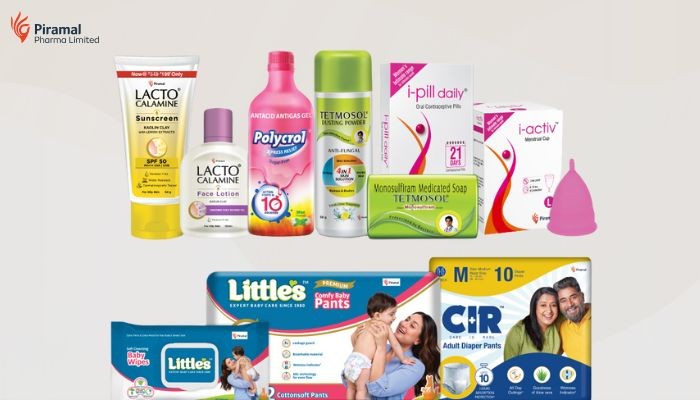

Piramal Consumer Healthcare (PCH), a dynamic division of Piramal Pharma Limited, stands among the fastest-growing players in India’s self-care sector. It commands trust with an iconic portfolio that includes Little’s, Lacto Calamine, i-pill, Tetmosol, Polycrol, and Tri-Activ.
The company caters not only to everyday disruptions but also to proactive wellness. Its wide-ranging portfolio spans critical OTC categories—Analgesics, Gastro-Intestinal, Hygiene, Skincare, Vitamins & Supplements, Women’s Care, Baby Care, and Kids’ Wellness. Today, PCH ranks 5th in the OTC segment and connects with nearly 70 million consumers every month. Many of its flagship brands dominate their categories, consistently holding the No. 1 or No. 2 position.
What fuels this momentum is a sharp focus on customer-centricity. PCH continues to invest strategically in its brands, innovate with consumer insights at the core, and engage directly with its end users. This relentless drive keeps the company at the forefront of India’s competitive healthcare landscape.
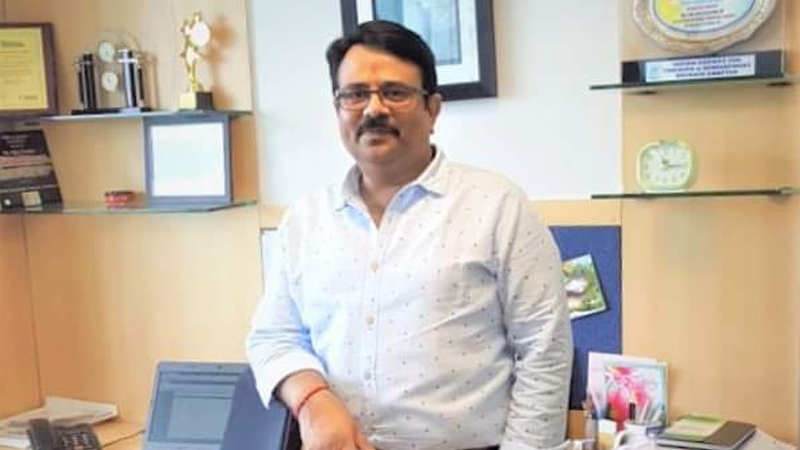
At FICCI Massmerize 2025, The Interview World engaged in an exclusive conversation with Sai Ramana Ponugoti, CEO of Piramal Consumer Healthcare. He outlined the decisive changes PCH is implementing to stay competitive, explained how the company delivers superior consumer experiences, and emphasized the transformative role of technology in e-commerce. He also shed light on PCH’s new product launches in the post-Covid era.
Here are the key takeaways from his compelling exchange.
Q: With rapid transformations in the e-commerce landscape, what key changes are you driving within your organization to remain competitive?
A: E-commerce today is one of the most exciting frontiers of business. The journey began with marketplaces like Amazon and Flipkart. Now, quick commerce players have redefined the game by shrinking delivery times and setting a new benchmark for convenience. This shift marks a powerful wave of innovation.
At present, quick commerce operates largely within metropolitan hubs. Yet, the model is steadily expanding into tier-2 and tier-3 towns. That growth is worth watching. However, the story doesn’t end with geographical spread. Consumer behaviour in small towns is vastly different from that in metropolitan cities. A brand that understands these nuances can unlock immense opportunities.
The key lies in decoding consumer use cases, anticipating their needs, and leveraging quick commerce capabilities to delight them. Take the example of Little’s. If ten diapers are sold but only one pack of wipes, the imbalance signals an opportunity. The brand can nudge consumers purchasing diapers to also experience the convenience of wipes. Interestingly, this ratio varies widely—what holds true in Delhi NCR looks very different in Berhampur or Kolkata.
When brands read these patterns, tailor their offerings, and consistently deliver quality, the outcome is clear. The consumer wins through better solutions. The brand wins through stronger loyalty and growth. And in the case of Little’s, every such interaction reinforces its promise of thoughtful care.
Q: In what ways are you aiming to disrupt the market to deliver a superior experience for consumers?
A: In healthcare marketing, one principle stands above all—it is not enough to build a brand; you must also educate. The two go hand in hand. As brand custodians, our responsibility is clear: we must inform consumers while simultaneously strengthening brand equity. Only then can we create lasting impact and trust.
Q: How is technology reshaping the e-commerce landscape today, and how do you see the industry evolving over the next 5 to 10 years?
A: Technology today opens vast possibilities across video, voice, and vernacular. The challenge lies in how effectively we harness them. Short- and long-form videos, for instance, can do more than inform—they can educate and immerse consumers in a brand experience.
Voice is another frontier. As we move deeper into Bharat, consumers increasingly prefer voice interfaces. Brands must adapt by leveraging voice technology to create intuitive, effortless, and delightful experiences.
Then comes vernacular. In a country as diverse and linguistically fragmented as India, language becomes the bridge to trust. Speaking to consumers in their own tongue is not just a courtesy—it is a necessity. The ability to connect in the language they understand ultimately defines how deeply a brand resonates.
Q: Post-COVID, what new products has Piramal Consumer Healthcare planned to launch, and how has the Indian market responded to these products?
A: Our portfolio spans multiple categories, each designed to serve distinct consumer needs. Little’s anchors our kids’ wellness range. Lacto Calamine represents a complete beauty care line. The iRange focuses on women’s wellness, while CIR addresses adult wellness. Across every category, consumers are not just adopting these products—they are embracing them as part of their daily lives and consistently deriving real wellness benefits.