
Immuneel Therapeutics Pvt. Ltd. is a Bengaluru-based clinical-stage biotechnology company at the forefront of advancing cell and gene therapies in India and beyond. Established by renowned healthcare visionaries, including Kiran Mazumdar-Shaw, Dr. Siddhartha Mukherjee, and Dr. Kush Parmar, the company is committed to making cutting-edge treatments both accessible and affordable. Immuneel specializes in cell-based immunotherapies, with a particular focus on CAR-T (Chimeric Antigen Receptor T-cell) therapies for cancer care. To support this mission, the company has built robust research, manufacturing, and clinical capabilities that enable the large-scale delivery of high-quality therapies. Anchored in a strong “Make in India” vision, Immuneel seeks to redefine cancer treatment through scientific innovation, strategic global partnerships, and patient-centric solutions. At the same time, it continues to strengthen India’s position as a key player in the global cell and gene therapy landscape.
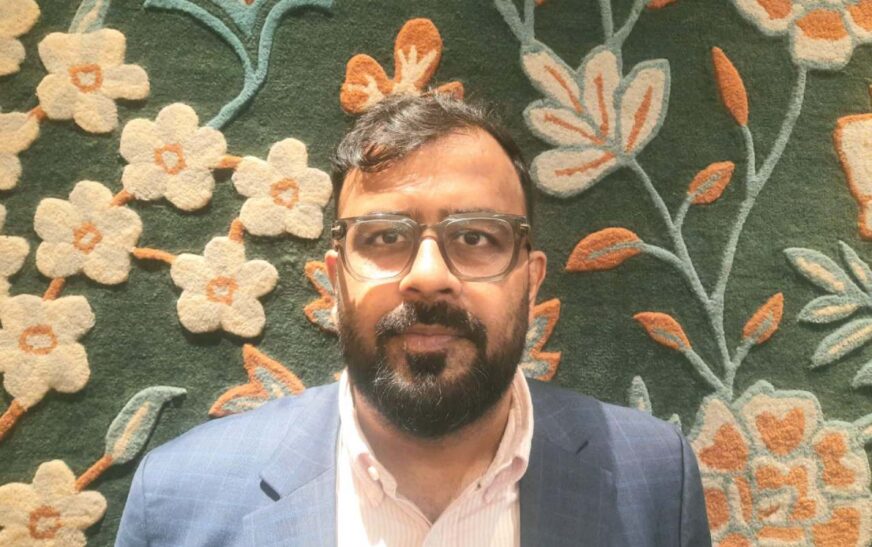
In an exclusive interaction with The Interview World during the ASSOCHAM Pharma Summit & Awards 2026, Akhil Agarwal, Head – Commercial and Market Access at Immuneel Therapeutics Pvt. Ltd., discusses the company’s breakthrough therapy for blood cancer and explains its clinical applications and transformative potential. He also shares insights into the Indian market’s response to this pioneering treatment, outlines the comprehensive support ecosystem that Immuneel provides to healthcare institutions and practitioners, and sheds light on the next generation of therapies currently under development. The following are the key insights from this thought-provoking conversation.
Q: Could you elaborate on the innovative blood cancer treatment or medical product that your company has introduced in India, and explain its applications and impact in the medical field?
A: In many cases of blood cancer, conventional treatment options eventually reach their limits. When patients stop responding to chemotherapy and other available interventions fail, their prognosis becomes extremely poor. Typically, they are placed on maintenance therapy and sent home with a life expectancy of only three to four months.
However, a revolutionary breakthrough has transformed this landscape. Over the past two decades, researchers in the United States and Europe have developed CAR-T (Chimeric Antigen Receptor T-cell) therapy, one of the most significant advances in cancer treatment. The therapy gained global attention after it was successfully administered to Emily Whitehead in 2011. More than a decade later, she continues to lead a healthy and fulfilling life, underscoring the therapy’s remarkable long-term potential.
CAR-T therapy is a highly personalized form of treatment. Physicians first collect a patient’s T cells, which are critical components of the immune system. They then genetically modify these cells using a specialized vector, expand them in a controlled environment, and reinfuse them into the patient. While the process resembles a transplant in principle, it employs far more sophisticated cellular engineering and precision medicine techniques.
Recognizing the transformative potential of this technology, Immuneel Therapeutics was established in 2019 by Kiran Mazumdar-Shaw, Executive Chairperson of Biocon, Dr. Siddhartha Mukherjee, one of the world’s most respected hematologists and oncologists, and Dr. Kush M. Parmar, Managing Partner at 5AM Ventures. The company subsequently partnered with Hospital Clínic de Barcelona, one of the world’s leading medical institutions, to bring this pioneering CAR-T technology to India.
Building on this foundation, Immuneel established a state-of-the-art manufacturing and treatment facility in Bengaluru. The company adopted proven European expertise in cell and gene therapy manufacturing while leveraging U.S. FDA-approved technology platforms. Notably, Immuneel remains the only organization in this region of the world to deploy these advanced platforms in a commercial setting.
More importantly, the company has dramatically improved affordability. While similar CAR-T treatments in the United States and Europe can cost between ₹5 crore and ₹6 crore, Immuneel offers the therapy in India at nearly one-tenth of that cost. As a result, patients no longer need to travel overseas, incur substantial accommodation expenses, or remain abroad for several months to access world-class treatment.
Over the past 12 months, Immuneel has successfully treated more than 110 patients. Encouragingly, the clinical outcomes have matched global benchmarks. The company has observed response rates comparable to those reported for U.S. FDA-approved CAR-T products, with progression-free survival rates of approximately 50–60 percent after one year.
Today, Indian patients can access a globally benchmarked CAR-T therapy within the country through a growing network of partnered hospitals. By combining cutting-edge science, world-class manufacturing standards, and significantly lower costs, Immuneel has fundamentally expanded access to advanced cancer care and brought a life-saving innovation closer to patients across India.
Q: How do you see the Indian market responding to this product?
A: The Indian healthcare market urgently needed a solution like this. The unmet clinical need was both significant and growing. Take lymphoma, for example, just one category of blood cancer. Every year, India records nearly 40,000 new lymphoma cases. Yet only a small fraction of these patients, approximately 200 to 400, become eligible for stem cell transplantation. In many ways, that represents only the tip of the iceberg.
The challenge becomes even more severe when a transplant fails. At that stage, treatment options are extremely limited, and for many patients, hope begins to fade. Until recently, those seeking advanced therapies often had no choice but to travel abroad. Patients routinely journeyed to Singapore, Israel, China, and other countries in search of potentially life-saving treatments, incurring substantial financial, logistical, and emotional burdens.
Against this backdrop, the introduction of CAR-T cell therapy in India marked a significant turning point. The medical community welcomed the innovation with remarkable enthusiasm. Leading oncologists embraced the therapy, while the broader healthcare ecosystem recognized its transformative potential. Premier institutions, including Tata Memorial Centre, All India Institute of Medical Sciences, Postgraduate Institute of Medical Education and Research, Apollo Hospitals, Fortis Healthcare, and Max Healthcare, began identifying eligible patients and integrating the therapy into their treatment pathways.
The response has been swift and encouraging. Within a relatively short period, the therapy has begun attracting a steady stream of patients every month, despite the complexity and cost associated with advanced cellular treatments. At the same time, efforts are underway to further optimize manufacturing and operational efficiencies. As these improvements take effect and patient volumes increase, the cost of treatment is expected to decline, making the therapy accessible to an even larger population.
Looking ahead, the market potential is substantial. Even within a single treatment indication, India could support as many as 1,000 eligible patients annually. Such demand would create significant treatment volumes while expanding access to cutting-edge cancer care across the country.
What is most encouraging, however, is that this journey has only just begun. As awareness grows, clinical adoption expands, and costs continue to decrease, CAR-T cell therapy is poised to redefine the treatment landscape for blood cancer in India and offer renewed hope to thousands of patients and their families.
Q: Do you provide end-to-end support, including training and implementation assistance, to ensure the effective adoption and use of your product?
A: From the outset, we committed to the Government of India and the broader medical community that we would not merely supply advanced therapies; we would also build the necessary clinical and operational capabilities to deliver them safely and effectively. Consequently, capacity building remains a core pillar of our approach.
Before onboarding any hospital, we conduct a comprehensive accreditation process to assess whether the institution meets the stringent requirements for administering CAR-T cell therapy. We do not compromise on these standards. In fact, approximately 7–8 percent of the sites we evaluate fail to meet the required benchmarks. In such cases, we decline to supply the therapy until the necessary gaps are addressed.
Once a site qualifies, we undertake an extensive training and capability-development program. We train physicians, clinical teams, nurses, and support staff to ensure they understand every aspect of the therapy, from patient selection and treatment administration to post-treatment monitoring. Moreover, recognizing that healthcare teams evolve over time, we conduct periodic refresher programs to maintain competency and ensure adherence to best practices.
Equally important is the establishment of a robust Chain of Identity (COI) and Chain of Custody (COC) framework. Given that CAR-T therapy is a highly personalized treatment, maintaining complete traceability of patient cells throughout the collection, manufacturing, transportation, and reinfusion process is absolutely critical. Therefore, before every treatment cycle, we rigorously validate these processes and ensure that every protocol is meticulously followed.
In parallel, we maintain exceptionally high documentation and quality-control standards. Because this technology originates in Europe, we operate in accordance with stringent European regulatory and manufacturing requirements. Furthermore, we provide comprehensive reports to our technology-originating partners in Europe and maintain full transparency throughout the process.
To ensure consistency, safety, and product integrity, we also conduct detailed comparability studies and quality assessments at every stage. As a result, patients and healthcare providers receive a therapy that meets globally recognized standards while remaining accessible within India. This unwavering commitment to quality, compliance, and capacity building distinguishes our approach and reinforces confidence across the healthcare ecosystem.
Q: Are there any new products or therapies that you plan to introduce in the future?
A: Our current portfolio focuses on advanced therapies for lymphoma and leukemia. While our CAR-T therapy has already received approval for lymphoma, clinical trials for leukemia are progressing steadily and yielding encouraging results.
At the same time, we are actively expanding our pipeline. One of our most significant upcoming developments targets multiple myeloma, another major hematological malignancy with a substantial unmet medical need and considerable market potential. We believe this therapy could further broaden access to innovative treatment options for patients with difficult-to-treat blood cancers.
Beyond hematological cancers, we are also advancing research in solid tumors, an area that presents both significant challenges and transformative opportunities for cell and gene therapies. Simultaneously, we are developing allogeneic CAR-T therapies, a next-generation approach that reduces dependence on a patient’s own T cells. Instead, these therapies utilize healthy donor-derived T cells, which could improve scalability, shorten treatment timelines, and expand patient access.
In addition, we are working on bispecific therapeutic platforms designed to enhance treatment efficacy and sustain remission for longer durations. These innovations have the potential to improve long-term clinical outcomes and further elevate the standard of care.
Looking ahead, our innovation roadmap remains robust and ambitious. We continue to invest in a diverse portfolio of next-generation cellular therapies and cutting-edge scientific platforms. Through these efforts, we aim not only to address current treatment gaps but also to shape the future of cancer care by delivering safer, more effective, and more accessible therapies to patients worldwide.