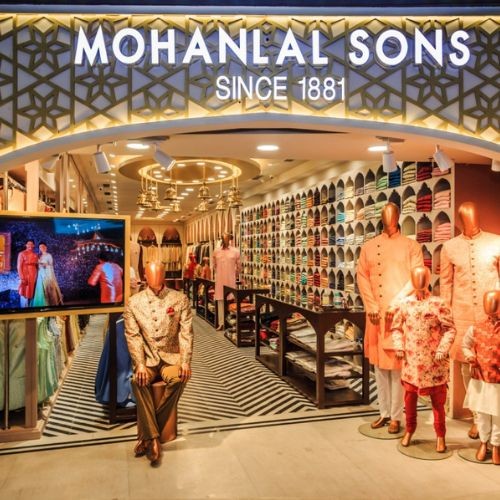

Mohanlal Sons, established in 1881, stands as India’s oldest retailer in bespoke tailoring and ethnic wear. For over 140 years, the brand has embodied elegance, craftsmanship, and tradition. It has mastered both traditional and Western attire, offering an expansive collection that includes sherwanis, bandhgalas, tuxedos, Nehru jackets, kurtas, and even kids’ ethnic wear. Trusted by Prime Ministers, Presidents, cricketers, film stars, and global dignitaries, Mohanlal Sons remains the preferred choice for weddings, festivals, and formal occasions.
The brand today operates more than 40 showrooms across 20 cities, anchored by its iconic flagship store in Connaught Place, New Delhi, alongside prominent outlets in leading malls nationwide. Its legacy of excellence has earned industry recognition, including the Best Tailor Award (1979) and Best Showroom Award (1996). Yet, the brand has not rested on heritage alone. With a robust digital presence, seamless delivery systems, and exclusive online offers, Mohanlal Sons continues to blend timeless tradition with modern retail innovation, capturing the loyalty of a new generation of discerning customers.
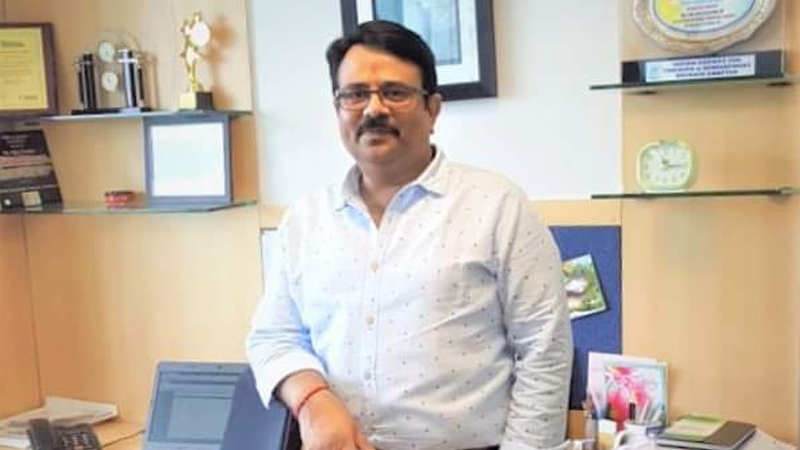
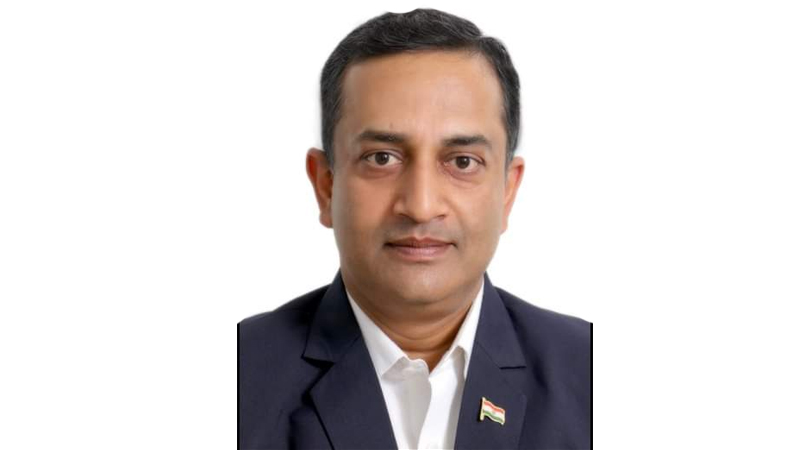
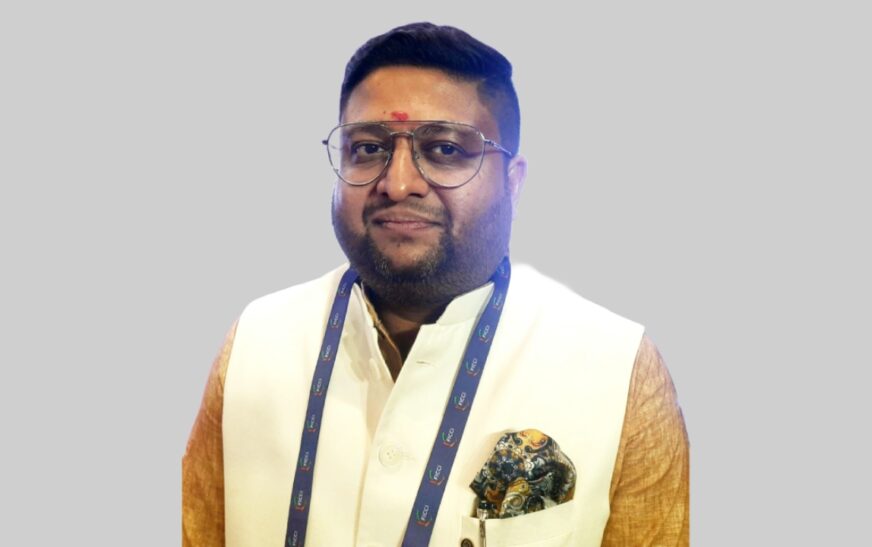
At FICCI Massmerize 2025, The Interview World engaged exclusively with Mayank Mohan, CEO and Partner of Mohanlal Sons. In a wide-ranging conversation, he shared his perspective on the growth trajectory of the Indian ethnic wear market. He emphasized the implications of Free Trade Agreements on the apparel sector, assessed the impact of government schemes such as the Pradhan Mantri Rojgar Yojana in supporting manufacturers, and traced the remarkable evolution of Mohanlal Sons over the decades. Most importantly, he highlighted the vast opportunities that e-commerce now offers to the apparel industry.
Here are the key insights from his conversation.
Q: How do you view the growth trajectory of the Indian ethnic wear market in recent years?
A: The Indian ethnic wear market holds immense potential. Yet, much of it remains fragmented and unorganized. In recent years, a wave of new entrants has crowded both the men’s and women’s segments, leading to a degree of oversaturation. However, the market is now entering a decisive phase. Over the next two to three years, we can expect significant consolidation, particularly among established branded players.
At a pan-India level, only a handful of businesses are truly profitable—and fortunately, we count ourselves among them. This reality makes consolidation inevitable. As weaker players exit and stronger brands expand, the survivors will capture a larger share of the market.
Once that shift takes hold, growth opportunities will be boundless. For the resilient brands that endure, quite literally, the sky will be the limit.
Q: As Free Trade Agreements aim to boost exports and simplify business operations, how do you foresee their impact on the Indian apparel market?
A: Free Trade Agreements will shape the future of India’s apparel industry. They hold the power to deliver the cost advantage that we currently lack, particularly against competitors such as Bangladesh, Vietnam, and Turkey.
These countries thrive not merely on efficiency, but on access. Their preferential trade arrangements with the European Union and the United States give them a decisive edge. That advantage translates directly into competitiveness and market dominance.
India has already secured an FTA with the United Kingdom. A similar agreement with the European Union would be a game-changer. And if we succeed in striking a deal with the United States, the impact would be transformative. We would not only gain parity in cost structures but also unlock preferential access to the world’s most lucrative markets.
Q: How do you view the effectiveness of government schemes like the Pradhan Mantri Rojgar Yojana in supporting and benefiting manufacturers?
A: That initiative is truly commendable. For an SME player like us, receiving ₹3,000 per month from the government for every new job created makes a tangible difference. It offsets nearly 15% of the average cost of hiring an employee, particularly in manufacturing roles.
This support directly eases the financial burden on businesses. More importantly, it enables us to bring more people into the workforce with confidence. In essence, it is not just an incentive—it is a catalyst for job creation and industrial growth.
Q: How has Mohanlal Sons evolved over the years, and where does the brand stand today in the Indian apparel market?
A: We proudly stand as India’s oldest retailer, with roots tracing back to 1881. The business began under a British couple, Prevalent & Clark, operating from Draping House and tailoring for Viceroys, Rajas, and Maharajas.
In 1945, my great-grandfather took the reins. Driven by the Swadeshi sentiment, he renamed the business Mohanlal Sons, anchoring it firmly in India’s identity. By the 1990s, we had evolved into a multi-brand retailer, becoming the largest seller of Madura Garments and Arvind Fabrics at the time.
The next transformation came in the 2010s, when we shifted focus to our own private label and returned to our core strength—bespoke tailoring. Each phase of this journey reflects a deliberate adaptation to changing markets and customer expectations.
Our survival for over 140 years rests on this very ability to evolve. Every generation has reinvented the business, keeping it relevant and resilient. Today, in our present form, Mohanlal Sons operates nearly 40 stores across 20 cities, continuing to blend tradition with modern retail.
Q: As e-commerce continues to expand, what kind of opportunities do you envision for your brand and the broader apparel market?
A: We drive our e-commerce primarily through our own website. In our category, an online presence is indispensable. It allows customers to discover us and engage with the brand.
However, ethnic and bespoke wear still thrive on experience. Most customers prefer to touch, feel, and try the product before making a purchase. That makes physical retail the natural point of conversion.
For us, e-commerce serves more as a discovery channel than a revenue driver. Online sales remain in the low single digits. Yet, the visibility it creates is invaluable. Customers often find us online, but they usually complete their purchase in our stores.