


Casilica leads the charge in air-treatment innovation, engineering precision-built, energy-efficient solutions that redefine how industries breathe, store, and thrive. Since 1982, this pioneering manufacturer has earned a formidable reputation for mastering humidity and climate control with unwavering quality and technical excellence.
Operating from its state-of-the-art facilities in Delhi NCR, Casilica designs and delivers bespoke dehumidifiers, air-handling units, and environmental systems tailored to the world’s most demanding sectors, including pharmaceuticals, food processing, and cold storage. Every Casilica system embodies deep-rooted R&D, meticulous craftsmanship, and a singular commitment: to deliver performance that doesn’t just meet expectations, but fundamentally transforms them.
At the Renewable Energy India Expo 2025, The Interview World engaged in an exclusive conversation with Vaibhav Gupta, Director at Casilica, who shed light on the company’s pioneering humidity and climate control technology solutions for the battery segment. He discussed the affordability and versatility of these innovations, unpacked the science behind silica gel rotor technology, and emphasized its critical role in modern cell manufacturing.
Here are the key insights from that illuminating conversation.
Q: What kind of technology solutions does Casilica provide in the battery segment?
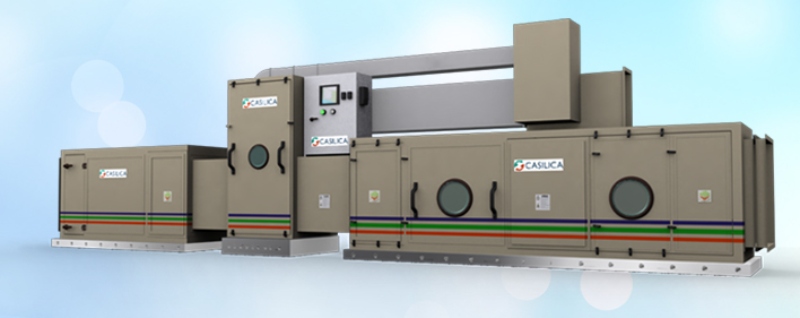
A: In the battery segment, we specialize in controlling humidity for dry rooms, an essential factor in ensuring flawless cell manufacturing. We design and manufacture high-performance dehumidifiers capable of achieving dew points as low as –90°C, equivalent to around 0.1% relative humidity, while maintaining room temperatures between 20°C and 25°C. This level of precision enables us to maintain ultra-dry conditions critical for the smooth and efficient production of battery cells.
At the same time, we address another major challenge in the cell manufacturing process—the recovery of NMP (N-Methyl-2-pyrrolidone), an expensive electrolyte solvent that typically escapes into the atmosphere during production. Our technology helps clients capture and recover this solvent, allowing it to be purified and reused within their operations.
This breakthrough not only minimizes waste and environmental impact but also delivers substantial cost savings, making NMP recovery a truly game-changing advancement for the industry.
Q: How affordable is this technology, and in which areas will it be applied?
A: Wherever cell manufacturing takes place, these technologies become indispensable. Admittedly, VOC abatement and recovery systems involve significant engineering investment; however, they offer a lifespan of nearly 25 years, ensuring enduring value. Similarly, advanced dehumidification systems, though costly upfront, operate efficiently for 15 to 20 years with consistent performance.
While the initial capital outlay may seem high, the long-term benefits far outweigh the cost. These systems not only deliver sustained operational reliability but also make it possible for manufacturers to achieve the precise environmental conditions essential for optimal production output. In short, without such technologies, maintaining the required efficiency and quality in cell manufacturing would be nearly impossible.
Q: Casilica is recognized as a pioneer in silica gel rotor technology. Could you explain how this technology works?
A: Silica gel is available in several forms, but we use it in a highly engineered rotor design featuring corrugated fins coated with silica gel. As air passes through the rotor, it comes into direct contact with the coated surface. The silica gel adsorbs the moisture from the air, delivering a controlled and stable output that meets precise humidity parameters.
Each silica gel rotor has a defined adsorption capacity, and to maintain continuous efficiency, we integrate an online regeneration mechanism. This system automatically regenerates the rotor in real time, without halting operations or requiring manual intervention. As a result, no water droplets or condensate appear anywhere in the equipment or surrounding environment; the entire process operates purely in vapor phase.
Functionally, about three-fourths of the rotor is dedicated to absorbing humidity, while the remaining one-fourth is used to expel the collected moisture back into the atmosphere. Similarly, when we coat the same type of rotor with a zeolite formulation of specific properties, it transforms into a VOC abatement rotor, capable of adsorbing volatile organic compounds.
That’s the fundamental principle behind our silica gel and zeolite rotor technologies, efficient, continuous, and engineered for precision air treatment.
Q: Why is your technology important for cell manufacturing?
A: The engineering behind this technology is absolutely critical. It’s not optional but essential for successful cell manufacturing. Without precise humidity control at the designated set point, cell production simply cannot occur. Maintaining this level of control isn’t just about process efficiency; it’s a fundamental safety requirement intrinsic to the cell itself.







2 Comments
This was incredibly useful and well written.
What I really liked is how easy this was to follow. Even for someone who’s not super tech-savvy, it made perfect sense.
Comments are closed.