


Agriculture stands at a historic crossroads. It’s no longer merely a sector that feeds the world, but one that can help restore it. As the global community races to cut greenhouse gas emissions, science reveals a profound duality: agriculture is both a major source of emissions and a powerful force for climate mitigation. Nearly one-quarter of global emissions stem from food production, making the sector’s transformation not just necessary, but urgent.
Against this backdrop, India holds the potential to lead the global shift by empowering its farmers, leveraging science and technology, and placing sustainable agriculture at the heart of its climate strategy.
In an exclusive conversation with The Interview World at AgriTech 3.0: Smart Agriculture for Viksit Bharat, hosted by ASSOCHAM, Sagar Kaushik, COO of UPL, sheds light on the evolving link between agriculture and greenhouse gas emissions. He discusses India’s likely position at COP 30, outlines the government actions and policy interventions needed to accelerate sustainable farming, and highlights how disruptive technologies can redefine agricultural practices.
Here are the key insights from his thought-provoking discussion.
Q: How do you see the relationship between greenhouse gas emissions and agriculture evolving in the future?
A: There is a clear scientific foundation for understanding agriculture’s relationship with greenhouse gas (GHG) emissions. Like other industries in the manufacturing sector, agriculture contributes significantly to global emissions. However, the extent of this contribution varies by crop. For instance, crops such as rice and sugarcane emit far more GHGs per hectare than others. Scientific estimates suggest that agriculture accounts for roughly 25–26% of total global greenhouse gas emissions.
Yet, agriculture is unique. It is both a source and a solution to the climate crisis. Unlike other sectors, it actively captures carbon dioxide (CO₂) from the atmosphere through photosynthesis. This natural process positions agriculture as a critical part of the climate solution.
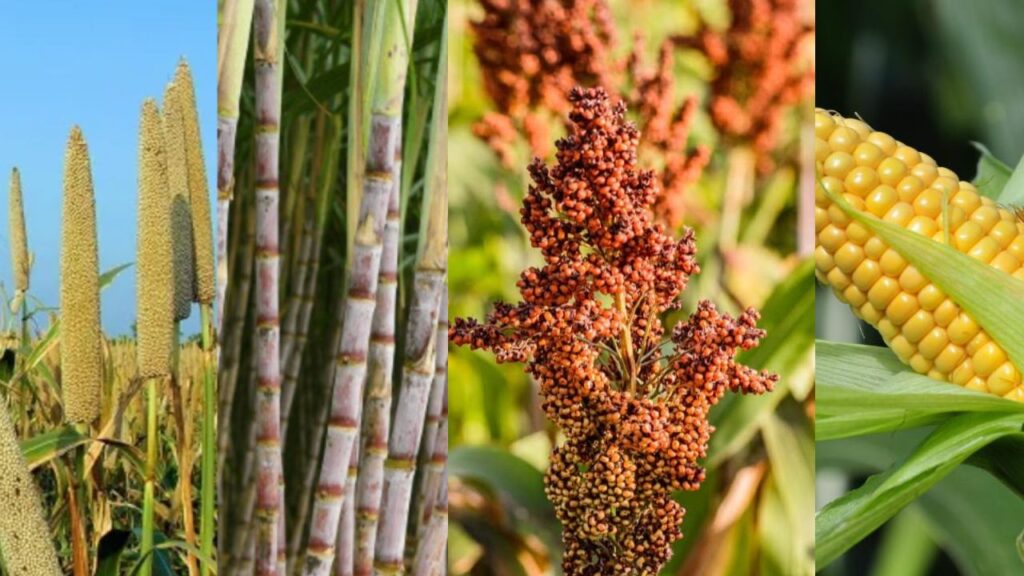
Some crops, known as C4 crops, absorb substantially more CO₂ than others due to their higher photosynthetic efficiency. Examples include sugarcane, corn, and many varieties of millets. These crops can remove up to 25% more CO₂ than less efficient species, offering a natural pathway to climate mitigation.
Scientific research also shows that certain agricultural practices can either increase or reduce GHG emissions. By adopting sustainable methods, without compromising yield, farmers can transform agriculture into a low-carbon system. India already has around 30 documented sustainable agricultural practices and systems, such as agroforestry, reforestation, crop rotation with intercropping, water harvesting, regenerative agriculture, zero tillage, integrated pest management, and integrated nutrient management. These practices are not limited to experimental plots; farmers are applying them on 10 to 30 million hectares, an area equivalent to the size of several mid-sized countries.
Therefore, while agriculture is often portrayed as a contributor to climate change, science tells a more balanced story. In reality, agriculture is equally, if not more, a part of the climate solution.
However, much depends on who drives this transformation. Farmers today adopt sustainable practices primarily to enhance productivity and ensure food security. They are rightly celebrated as food producers. But it is time to extend that recognition to farmers who practice sustainable agriculture. These individuals are not only feeding the world but also leading the fight against climate change—they are the true heroes of climate action.
Globally, other sectors such as energy have received substantial attention, investment, and incentives for transitioning to greener models. India, for example, has made remarkable progress in energy transition through renewable energy and electric vehicles, supported by financial subsidies and policy interventions. In contrast, farmers engaged in sustainable agriculture have not received similar recognition or support.
It is imperative that we correct this imbalance. Recognizing and rewarding sustainable farming is not just an act of fairness, it is an investment in our planet’s future.
Q: What position is India likely to take at COP 30?
A: India’s stand will emphasize that transforming food systems toward greater sustainability is essential. To achieve this, the world must formally recognize sustainable agriculture as a core part of the climate solution, not merely as a source of emissions.
Q: What steps should the government take to promote sustainable farming, and what policy interventions are needed to support it?
A: In my view, India must transform its existing agricultural practices into a robust, science-based database. This database should follow clear and standardized protocols that enable the development of carbon farming systems. Such systems would allow farmers to earn verified carbon credits, rewarding them for adopting climate-positive practices.
To make this possible, India needs to establish its own methodologies for measurement, verification, and action, rather than relying solely on international frameworks that may not fully reflect local realities. By creating credible systems to quantify carbon sequestration from indigenous farming practices, farmers can access a new stream of income through carbon credits, providing a powerful incentive for sustainability.
Furthermore, the government must treat the inputs and technologies required for these sustainable practices as essential services, not optional products. Farmers often need more than advice. They require access to mechanization, precision application technologies, and service-based support systems. Ensuring the availability and affordability of these services will be critical for scaling sustainable agriculture.
The government also has a vital role in recognizing farmers as the true heroes of climate action. Once that recognition is institutionalized, policies should be designed to reward and incentivize farmers who adopt sustainable and climate-resilient methods.
Finally, consumer awareness must evolve alongside policy. People should be able to distinguish between conventional and sustainable farming, and food produced through sustainable practices should carry clear labelling and certification. Over time, such labelling can shape consumer preferences, encouraging demand for sustainably produced food, and thereby reinforcing the entire cycle of climate-conscious agriculture.
Q: How can disruptive technologies like AI and blockchain play a pivotal role in making agriculture more sustainable?
A: I believe these technologies are transforming agriculture in two distinct and powerful ways.
First, they are empowering small farmers, who form the backbone of our agricultural system. In the past, smallholders lacked access to mechanization because owning advanced equipment was unaffordable. Today, however, digital platforms enable farmers to access mechanized services through shared systems, allowing them to rent high-end machinery as and when needed. This service-based model, powered by digitalization, ensures that even small farmers can use cutting-edge tools without heavy capital investment. As a result, farmers gain autonomy, efficiency, and productivity. Moreover, when the cost of such services remains reasonable, adoption rises rapidly, demonstrating how digital solutions can drive scalable change in rural economies.
Second, digitalization serves as a bridge between multiple technologies, integrating them into cohesive, localized solutions. It connects farm-level innovations, such as precision tools, soil sensors, and weather forecasting, with broader systems like market access and value-chain linkages. This integration allows the creation of customized solutions tailored to specific villages or even individual farms, ensuring that technology adoption translates directly into tangible outcomes for farmers.
In essence, digitalization empowers small farmers both by expanding access to mechanization and by integrating technologies into holistic, market-connected solutions. Together, these shifts mark a fundamental transformation, turning fragmented tools into an ecosystem of opportunity.








1 Comment
Interesting. Emerging technologies like AI, digital etc have a lot of potential. We need to piece them together to actionable strategies
Comments are closed.