

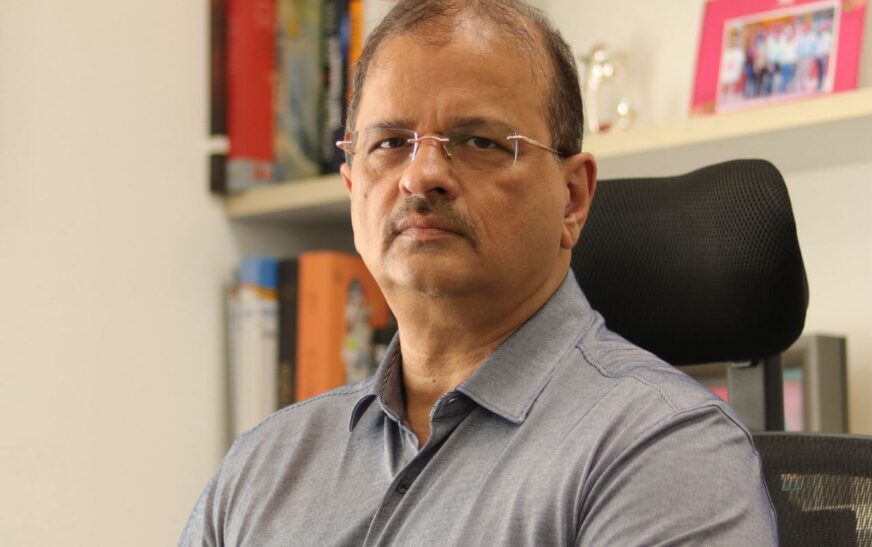
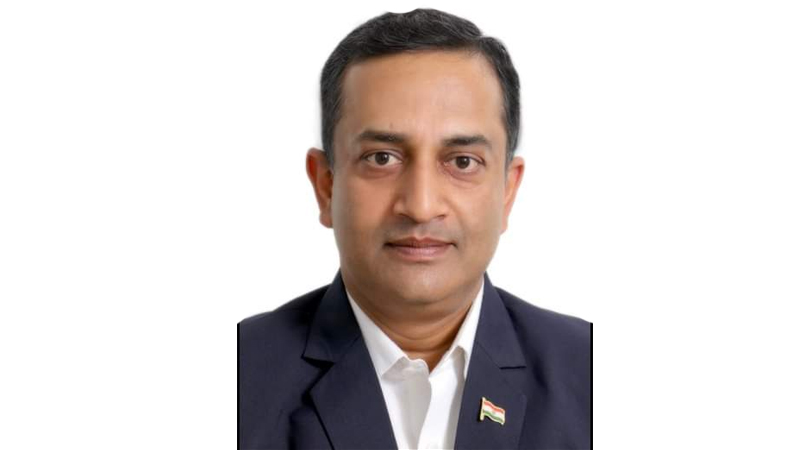
After more than three decades spanning fabrics, manufacturing, sourcing, and retail, one truth stands out in the Indian apparel industry: sustainable growth emerges only when the entire value chain advances in alignment. In a conversation with The Interview World, Sandeep Kapoor, Co-Founder of SHR Lifestyles Pvt. Ltd., assesses Budget 2026 through this systemic lens. Rather than relying on short-term stimulus, the budget engages with the industry as it actually functions on the ground. Accordingly, the discussion spans fibre security, MSME-driven manufacturing, skilling, cluster modernisation, logistics, access to finance, and the expansion of organised retail beyond metropolitan centres. Together, these elements underscore a central thesis: integrated capacity building, not demand-led consumption boosts, will shape the next phase of India’s textile and apparel growth trajectory. Here are the key takeaways from his compelling conversation.
Q: What core principle about sustainable growth in the apparel and textile industry does Budget 2026 acknowledge?
A: Budget 2026 acknowledges that sustainable growth rests on stable, disciplined supply systems grounded in local realities. Accordingly, it treats the apparel industry as an interconnected ecosystem, not a series of isolated boardroom decisions. By doing so, the budget aligns policy intent with how the industry actually operates on the ground.
Q: In what ways does Budget 2026 reinforce end-to-end value chain stability in textiles, from fibre and manufacturing to retail, rather than focusing on isolated interventions?
A: Budget 2026 articulates an integrated textile programme that confronts the industry’s core structural challenges head-on, ranging from fibre availability and MSME enablement to cluster development, skilling, logistics, and employment. Within this framework, the National Fibre Scheme secures reliable fibre supply, thereby reducing volatility, improving quality consistency, and stabilising delivery timelines. As a result, fibre-level self-reliance emerges not merely as a manufacturing imperative but as a retail necessity.
Q: Why are cluster modernisation and MSME support essential to achieving scalable, predictable growth in the textile ecosystem rather than fragmented, capacity-led expansion?
A: Across India, small and mid-sized manufacturing units bring skill and entrepreneurial intent but remain constrained by limited access to modern machinery and testing infrastructure. Targeted capital support and shared facilities therefore enable these units to scale while preserving operational flexibility. In turn, brands benefit from consolidated sourcing, improved reliability, sharper planning, and tighter cost control.
Q: How does sustained skilling translate into long-term competitiveness for the textile and apparel industry by improving productivity, quality, and supply reliability?
A: Apparel remains, at its core, a people-driven industry. While machinery plays an important role, trained supervisors, pattern masters, and production planners ultimately define efficiency and product authenticity. Consequently, initiatives such as Samarth 2.0 can prove transformative, provided the industry stays actively engaged, because upskilling existing teams delivers higher productivity, better working conditions, and stronger retention than continual workforce replacement.
Q: How does Budget 2026 bridge traditional textile sectors with scalable, formal growth by aligning local capabilities, modern infrastructure, and market access?
A: Budget 2026’s focus on handloom, handicrafts, and khadi recognises that these sectors face challenges due to weak market integration, not a lack of talent. By connecting artisans to organised systems with clear quality standards and consistent market access, it transforms them from seasonal, demand-dependent participants into scalable, reliable value chains.
Q: Why do Tier 2 and Tier 3 markets form the backbone of a sustainable retail expansion strategy rather than serving as secondary growth pockets?
A: Consumption growth has shifted beyond metropolitan centres, with Tier 2 and Tier 3 cities now driving transaction volumes across categories. Serving these emerging markets demands efficient logistics, faster replenishment, and tighter cost control. Strategic investments in infrastructure, freight corridors, and city economic regions directly enable this transformation.
Q: How do the Budget’s financial, sustainability, and premiumisation measures collectively build long-term resilience in the textile and apparel industry rather than short-term margin relief?
A: Equity support, liquidity through TReDS, and professional guidance tackle the cash-flow constraints that often stall growth despite strong demand. Meanwhile, sustainability initiatives such as Tex-Eco prioritise operational efficiency, waste reduction, and cost control over superficial compliance. Simultaneously, rising demand for mid-premium and premium apparel allows brands to pursue customer-driven, value-led growth rather than relying on volume alone.
Q: What does Budget 2026 signal about the textile and apparel industry’s role in India’s broader economic strategy, particularly in terms of supply-chain stability, employment, and global competitiveness?
A: By integrating manufacturing, skilling, logistics, finance, retail, employment, GDP growth, and exports into a single framework, Budget 2026 shifts the focus from short-term consumption to long-term capacity building. For industry leaders, it provides strategic direction rather than quick fixes, demanding commitment to domestic sourcing, factory modernisation, and aligned workforce training. After decades across fabrics, manufacturing, sourcing, and retail, one conclusion stands out: India does not need to create demand; it needs robust systems to support it. This Budget takes a decisive step toward that goal.





1 Comment
Hi there! This post couldn’t be written any better! Reading through this post reminds me of my previous room mate! He always kept talking about this. I will forward this article to him. Pretty sure he will have a good read. Thank you for sharing!
Comments are closed.