

AllSecureX is an AI-driven cybersecurity platform at the forefront of quantum-safe security for the post-quantum era. Its flagship offering is a hyper-automated Post-Quantum Cryptography (PQC) platform that identifies cryptographic assets vulnerable to quantum attacks, quantifies their associated risks, and enables seamless migration to quantum-resistant algorithms. The platform delivers production-ready APIs, supports crypto-agility, and incorporates hybrid encryption models to maintain backward compatibility while transitioning to NIST-approved standards. With capabilities such as real-time monitoring, key lifecycle management, and quantum risk modelling, AllSecureX empowers enterprises to future-proof their security architecture against emerging quantum computing threats.
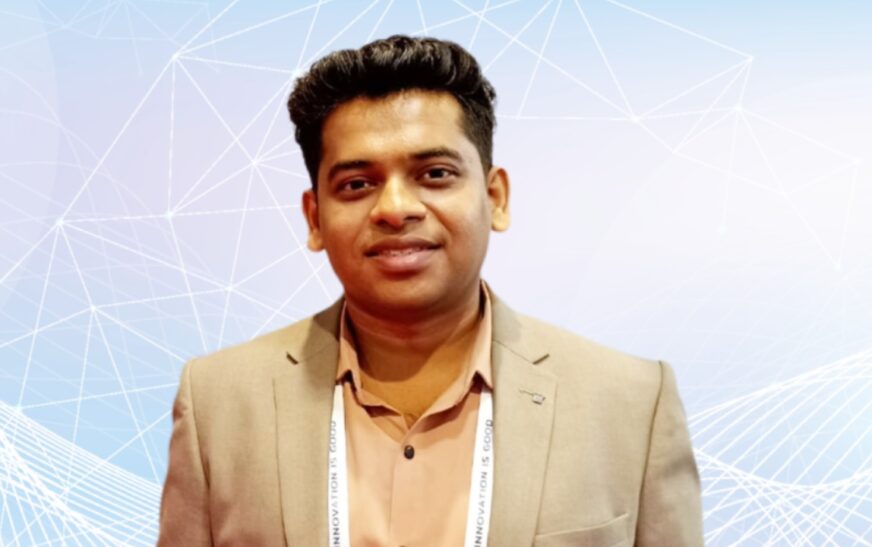
In an exclusive discussion with The Interview World at the 33rd Convergence India Expo, Himanshu Vohra, Founder and CEO of AllSecureX, shared insights into the company’s quantum security solutions. He explained how these solutions ensure resilience against quantum-era cyber risks, detailed the client sectors actively leveraging them, outlined the company’s market focus, and highlighted the innovations and enhancements planned for the platform. Here are the key takeaways from his insightful conversation.
Q: Can you elaborate on AllSecureX’s quantum security offerings and how they ensure resilience against quantum-era cyber risks?
A: We develop quantum security solutions for the defence sector, with a strong focus on satellite systems. Today, we comply with more than ten major regulatory and technical standards. These include Securities and Exchange Board of India (SEBI) requirements, as well as National Security Agency’s CNSA 2.0 framework, which defines global timelines for adopting post-quantum cryptography to safeguard national security systems.
In addition, we operate at Technology Readiness Level 7 (TRL 7), which means our solutions are already deployed in live environments with active customers. Organizations are using our platform in production today.
Crucially, we have eliminated the traditional complexity of post-quantum migration. Instead of prolonged consulting engagements and capital-intensive transitions, often costing ₹5–10 crore, we enable seamless migration through a single API handshake. This approach compresses timelines, reduces cost, and removes operational friction.
At the core of our platform, we generate cryptographic keys using quantum entropy derived from nuclear and cosmic subatomic phenomena. In other words, we do not rely on software-based pseudo-random generators. We anchor key generation in the principles of quantum physics, significantly strengthening cryptographic resilience against future threats.
As a result, we do not position our solutions as short-term safeguards. We engineer them for long-horizon security, designed to remain robust for 50 to 100 years, including in a post-quantum threat landscape.
Equally important, our architecture is entirely hardware-independent. Users require only internet connectivity. With a single API integration, they can secure authentication, microservices, and application-to-application communication at scale.
We are also aligned with India’s National Quantum Mission, operating within a high-impact innovation corridor. The Department of Science and Technology has set clear milestone targets for the next 10 months, and we are positioned within a critical white space to deliver against them.
Finally, we have achieved a global first: we pioneered quantum risk quantification as a practical, deployable capability.
Q: Which client sectors are leveraging your quantum solutions?
A: At present, organizations operating in critical infrastructure, such as the power sector, along with FinTech firms and large enterprises with compliance-driven operating models, are actively adopting our solutions. These organizations are inherently compliance-dependent and must meet stringent regulatory mandates.
More importantly, they face a defined timeline: within the next 10 months, they must achieve readiness for Post-Quantum Cryptography (PQC). Consequently, they must secure their digital assets in accordance with emerging guidelines and standards.
Therefore, for these organizations, PQC migration is not optional, it is an immediate priority. As a result, they are leveraging our platform as a first step to ensure rapid, compliant, and future-ready security transformation.
Q: Is your current market focus primarily domestic, or are you actively pursuing expansion into international markets?
A: Absolutely. As I mentioned, we adhere to more than ten rigorous compliance standards, not only in India but also internationally, including the National Security Agency’s CNSA 2.0 framework. Our platform supports hybrid encryption models and is fully ready for global deployment.
Leading organizations, including some of the world’s largest security companies, are already using our solutions. While I cannot disclose specific names, these are major players actively leveraging our technology today. This demonstrates both the trust in our platform and its readiness for international-scale adoption.
Q: What innovations and enhancements are you planning to introduce to evolve your existing platform in the future?
A: Currently, we have a robust portfolio of in-house technologies, supported by 14 active patents. Among these, five are particularly groundbreaking, including our proprietary quantum risk quantification framework. This innovation allows individuals, even those without a deep background in quantum mechanics, to easily understand and quantify risk from both financial and business impact perspectives.
Traditionally, answering the question “How secure am I?” is abstract and difficult. Our approach translates security into clear, actionable metrics: for example, a score of 9 out of 10 or a grade of A, B, C, or D. This makes it straightforward for board members and CISOs to assess risk and allocate security budgets effectively.
Beyond risk quantification, we offer tools aligned with recognized frameworks, including business impact analysis and the Pentagon cybersecurity framework. In total, our 14 technologies are designed to simplify the adoption of quantum-safe security, enabling organizations to manage risk, plan budgets, and secure their digital assets with confidence.