
Island Computing Services operates as a next-generation enterprise technology provider that delivers fully managed AI for SaaS environments through its integrated enterprise browser platform. It embeds security, data governance, and AI capabilities directly into the browsing layer; consequently, organizations deploy and manage AI-driven workflows with complete visibility and control. Moreover, the company advances agentic interfaces, autonomous AI agents that reason, plan, and execute tasks across applications, thereby transforming the browser into an intelligent workspace. As a result, enterprises operationalize AI safely at scale, automate complex processes, and unlock productivity while maintaining compliance and minimizing risk.
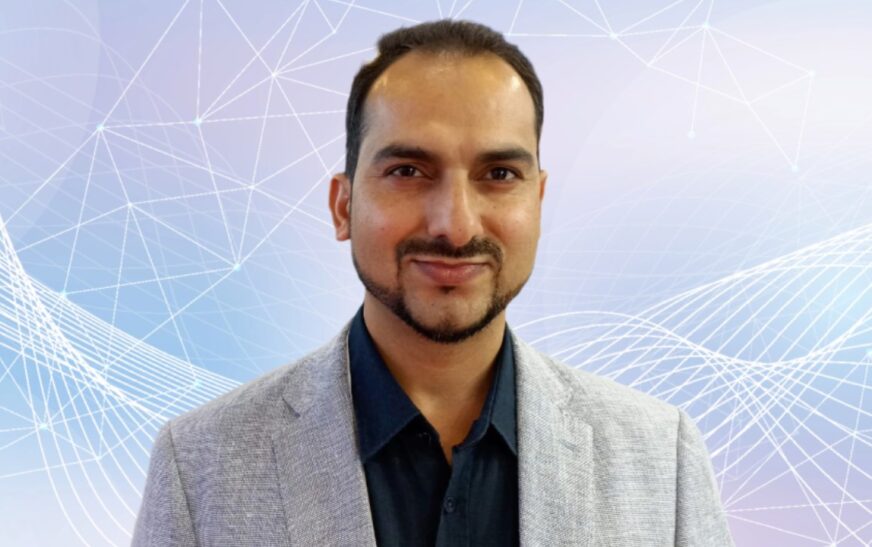
In an exclusive interaction with The Interview World at the 33rd Convergence India Expo, Vishal Sirohi, Co-founder and CEO of Island Computing Services Pvt. Ltd., elaborates on managed AI services for SaaS and agentic interfaces. He also details the company’s end-to-end security architecture, analyses the evolving client landscape, and articulates a forward-looking vision for market expansion and innovation over the next five years. The following are the key takeaways from this incisive conversation.
Q: What solutions does Island Computing Services offer in fully managed AI for SaaS and agentic interfaces, and how are they differentiated from competitors in this space?
A: We operate as India’s first fully managed AI infrastructure company; in other words, we define a new category. Today, the market comprises two distinct segments. On one hand, Indian providers function primarily as data center operators, service vendors, or thin layers built on existing hyperscale clouds while positioning themselves as cloud platforms. On the other hand, foreign providers dominate with established offerings. In contrast, we deliver a true end-to-end cloud platform, from the foundational layer to the application stack, engineered specifically for modern workloads.
We design our platform for the emerging agentic and AI-driven ecosystem. Accordingly, we address the core demands of SaaS and AI companies, including multi-tenancy, strict isolation, architectural flexibility for agentic workloads, and highly customized compute for inference. Therefore, we provide a system that is efficient, high-performing, and operationally simple. We also introduce stronger abstractions that significantly reduce setup complexity. As a result, users can deploy and activate environments within minutes, often in as little as three, while retaining the ability to scale seamlessly to any level. At the same time, the platform supports deep configurability to meet evolving requirements. Crucially, we provision virtually isolated environments that are secure by design from day zero.
Q: Given AI and ML risks, what security measures have you implemented to ensure end-to-end protection of systems, data, and operations across the client organization?
A: Agentic and AI workloads introduce a new class of threats and, more importantly, new attack vectors; however, the industry has not yet given them adequate attention. At present, large language models, in isolation, pose a limited direct risk. In contrast, autonomous agents create a far greater challenge because they act on behalf of humans and execute tasks independently. Consequently, actions can occur without clear, traceable accountability.
In response, we are redefining conventional identity and access management. Specifically, we position agents as formal participants in the chain of authority. Consider a parallel: when an individual hires a contractor and grants inappropriate permissions or credentials, responsibility still resides with the grantor. Similarly, agents must operate within explicitly governed boundaries.
Accordingly, we have engineered a model in which the initiating user delegates only a controlled subset of permissions and credentials to the agent within a defined session. We deliberately constrain this delegation to be temporary and short-lived. Furthermore, we enforce strict execution boundaries so that the agent performs only those actions explicitly authorized for that session. As a result, we simplify access control while fundamentally strengthening it. At the same time, we ensure that all agent-driven activities remain compliant, auditable, and secure.
Q: Can you outline your client landscape and specify which sectors most actively leverage your solutions?
A: We serve a diverse customer base; however, our core segments are clearly defined. Primarily, we work with IoT and SaaS companies. Within SaaS, our clients include video streaming platforms, gaming companies, and providers of space and resource management solutions. In addition, we increasingly partner with organizations transitioning to agent-based systems. These companies actively deploy autonomous agents to solve complex customer problems and streamline operations.
Consequently, while our portfolio spans multiple industries, it consistently concentrates on high-growth domains such as IoT, AI, and agentic technologies. This focus enables us to address advanced workload requirements with precision and scalability.
Q: Where do you envision Island Computing Services in five years regarding market expansion, growth trajectory, and key innovations shaping your competitive positioning?
A: We aim to capture 10% of India’s cloud market within the next five years. Admittedly, this is an ambitious target; however, this is precisely the moment to build a platform, tackle large-scale problems, and scale actively. We combine strong AI leverage with a deeply capable founding team. At the same time, India presents a uniquely favourable landscape: its cloud market is among the fastest growing globally and represents an approximately $80 billion opportunity.
Moreover, India is the world’s fastest-growing major economy, and the market remains open to disruption. In this context, we differentiate ourselves by not only challenging conventional cloud models but also introducing stronger security architectures, simpler compute frameworks, and a platform that is easy to deploy and operate. Crucially, we embed security by default into the entire stack. Therefore, we intend to scale this offering rapidly and distribute it across enterprises nationwide.
Equally important, the need for sovereign cloud capabilities is both urgent and overdue. We recognize this responsibility and position ourselves accordingly. As a result, we commit to serving customers with a secure, compliant, and locally aligned infrastructure model. Given our technological leverage, market timing, and execution focus, we are confident in achieving this goal over the next five years.