

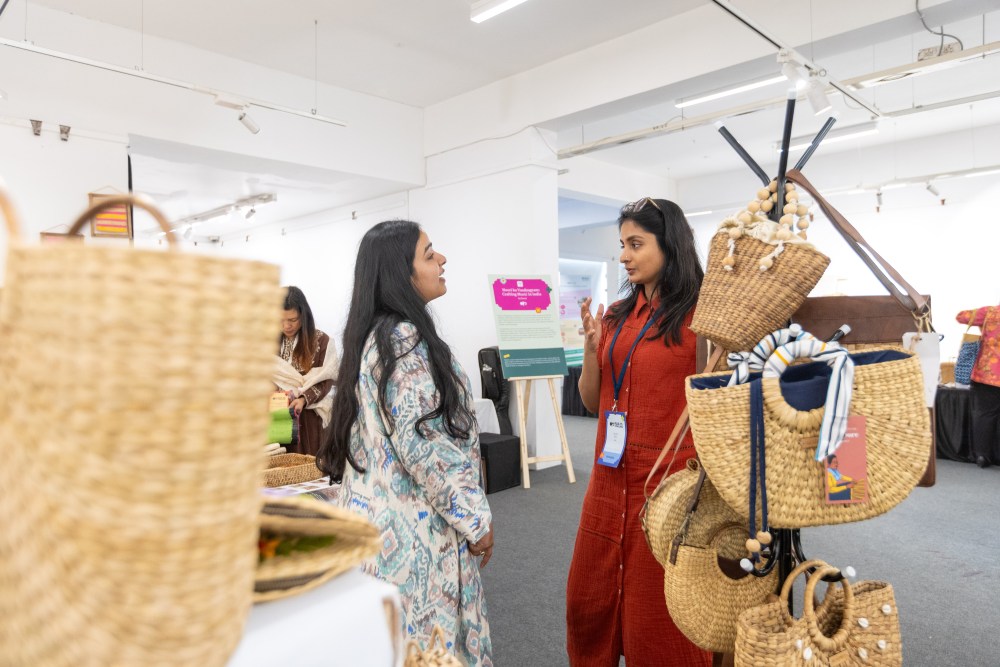
Ardpure is an Indian sustainable lifestyle brand that bridges traditional craftsmanship and contemporary living. Founded by Sunakshi Agarwal, the brand collaborates with skilled artisans, particularly from Northeast India, to create thoughtfully designed products using natural and renewable materials such as water hyacinth, kauna grass, rattan and bamboo. Its diverse portfolio spans home décor, handbags, storage solutions, lifestyle accessories and premium gifting products. By combining indigenous weaving techniques with contemporary aesthetics, Ardpure champions ethical production, fair trade and responsible sourcing. More importantly, it transforms natural resources into functional, aesthetically appealing products while empowering rural artisans and preserving India’s rich artisanal heritage.
In an exclusive conversation with The Interview World, Sunakshi Agarwal, Founder of Ardpure, discusses the company’s journey in building an eco-conscious lifestyle brand, its approach to balancing traditional craftsmanship with contemporary design, and the pivotal role of women artisans in its growth. She also outlines her vision for scaling the enterprise over the next three to five years.
Q: Ardpure operates in the sustainable products segment. What are the key indicators of its success so far in establishing itself as a distinctive eco-conscious lifestyle brand?
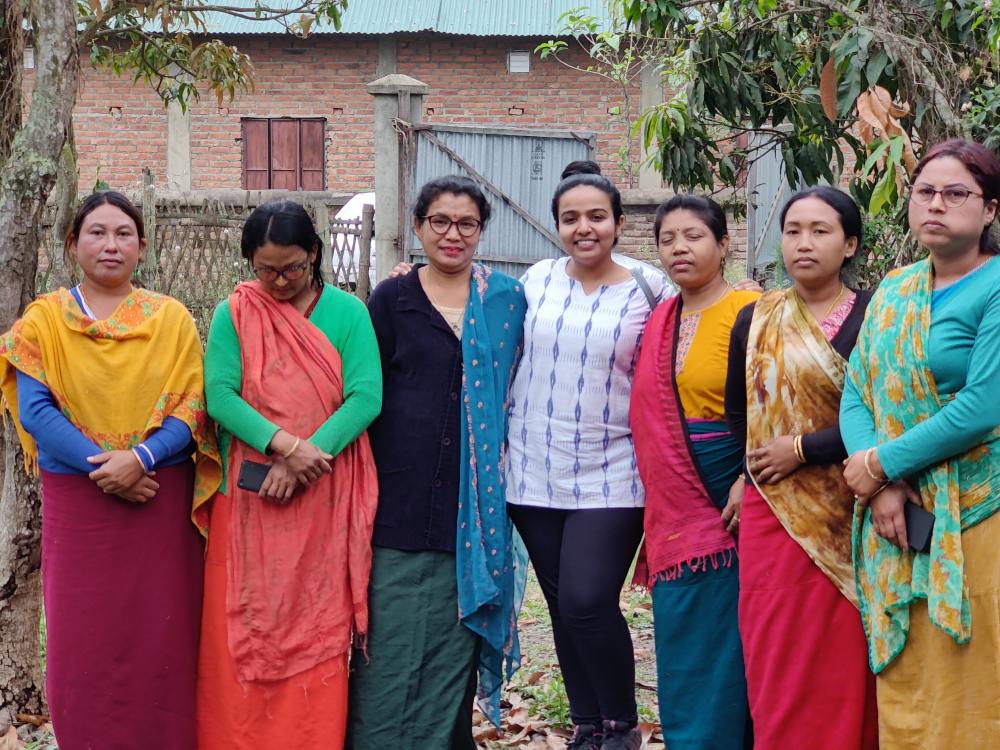
A: I founded Ardpure in 2020 with a clear conviction: the natural materials and traditional craftsmanship of Northeast India deserve a prominent place in contemporary lifestyle. What began with just two weavers has evolved into a growing enterprise that works with more than 220 rural artisans and craftsmen, over 90% of whom are women.
For me, our most significant achievement is the livelihoods we help create. By engaging artisans and production supervisors across rural communities, we are transforming traditional skills into sustainable economic opportunities while preserving indigenous craftsmanship. Equally important, we work with natural materials such as invasive water hyacinth, kauna grass, cane and rattan to develop functional, design-led products.
Our commercial performance has also been encouraging. Ardpure recorded revenue of ₹51.61 lakh in FY 2024–25. In FY 2025–26, revenue reached approximately ₹69 lakh through February 2026, demonstrating growing customer acceptance and the business’s potential to scale.
Meanwhile, our portfolio has expanded considerably. We have moved beyond basic woven baskets to offer premium home décor, lifestyle accessories, organisers, handcrafted gifts and customised corporate gifting solutions. We are also exploring the hospitality sector, where natural wicker products can meet both functional and aesthetic requirements.
Our geographical footprint has grown alongside our product portfolio. Beyond India, we now serve customers in Canada, Australia, Mauritius, the United Kingdom and the United States. Our clientele includes individual consumers, corporate gifting customers and institutional buyers.
However, I measure success by more than revenue and market expansion. Ardpure demonstrates how traditional craftsmanship can achieve commercial relevance through thoughtful design, consistent execution and a compelling brand proposition. Our business creates three interconnected forms of value: economic opportunities for artisans, environmental value through responsible material choices, and distinctive products for contemporary consumers.
Q: How do you balance traditional heritage, contemporary design and commercial consistency without compromising the handcrafted character of your products?
A: At Ardpure, we see heritage and contemporary design as complementary forces. Our artisans bring generations of expertise in weaving and working with natural lifestyle materials. We build on that knowledge to create products that respond to the evolving needs of modern homes, premium gifting and hospitality spaces.
Our design philosophy rests on three principles: functionality, thoughtfulness and timelessness. We begin by understanding the intended use of each product and then work closely with artisans to refine its form, proportions, weave, finish and detailing. Whether we develop a storage basket, a premium gift box or a customised décor piece, our objective remains the same: to create lifestyle products that are practical, aesthetically distinctive and durable.
At the same time, we recognise that handcrafted products should never be expected to replicate machine-made uniformity. Natural variations in colour, texture and weave give each piece its individual character. Therefore, we standardise the parameters that matter commercially, including dimensions, specifications, finishing standards, packaging and quality checks, while preserving the uniqueness of the craft.
This approach gives Ardpure a distinctive market position. Customers do not simply purchase a basket or a gifting box; they invest in a product that brings together natural materials, contemporary aesthetics and an authentic artisan story. This proposition is particularly compelling in premium gifting, where presentation, customisation and product provenance significantly influence purchasing decisions.
We also continue to develop adaptable collections for corporate gifting and hospitality customers. Customisation enables us to address specific requirements, while a consistent design language reinforces our brand identity.
Our commercial performance further validates this approach. Growing revenue from ₹51.61 lakh in FY 2024–25 to approximately ₹69 lakh through February 2026 reinforces our belief that traditional craftsmanship can compete effectively in contemporary markets.
Going forward, we will prioritise stronger production planning, accurate costing, rigorous quality control and effective customer relationship management. These capabilities will help us fulfil larger and repeat orders without compromising product quality or artisan craftsmanship.
Ultimately, our competitive advantage lies in combining artisan expertise, purposeful design and operational discipline. This enables us to preserve the essence of handmade products while building a commercially viable and scalable enterprise.
Q: Which women artisans, mentors or allies have played a defining role in Ardpure’s journey? What does sisterhood mean in the context of building your enterprise?
A: Ardpure’s journey owes much to the women artisans who trusted us in our early days, the production supervisors who connect rural craft communities with commercial requirements, and the customers who recognised the value of handmade products.
My first meaningful encounter with this ecosystem took place in 2019, when I met two artisans while exploring sustainable packaging solutions. That interaction fundamentally changed my perspective on traditional craftsmanship. I began to recognise an opportunity beyond product development: building a sustainable market that could generate more consistent economic opportunities for artisans. Ardpure emerged from this conviction in 2020, during the pandemic, with those initial relationships forming the foundation of the enterprise.
Since then, our artisan network has grown to more than 220 people, with women accounting for over 90% of the workforce. This growth reflects the dedication of women who continue to contribute their skills, adapt to evolving designs and help us meet changing customer expectations. Our village-based production supervisors have also been instrumental in coordinating manufacturing, communicating product specifications and maintaining quality across geographically dispersed artisan communities.
For me, sisterhood goes beyond encouragement and solidarity. It means creating tangible economic opportunities for women, recognising their skills, respecting their aspirations and ensuring that their contributions receive appropriate value. Above all, it means treating artisans as equal partners in value creation rather than merely as sources of labour.
A significant turning point came when we expanded our portfolio beyond conventional baskets into contemporary home décor, lifestyle and gifting products. This diversification opened new applications for traditional weaving techniques and connected us with different customer segments, including corporate buyers and international customers. It also enabled artisans to explore more varied designs and develop new capabilities.
Our journey from two initial artisan relationships to a network of more than 220 artisans has reinforced one fundamental belief: social impact and commercial growth can strengthen each other. As demand increases, we must translate that growth into better production planning, stronger artisan partnerships and more dependable livelihood opportunities.
My biggest learning is that an enterprise becomes truly successful when its growth benefits everyone who contributes to it. Ardpure’s progress is not an individual achievement; it is the outcome of collective skill, mutual trust and the perseverance of the people who have built this enterprise with me.
Q: What is your vision for Ardpure over the next three to five years?
A: Over the next three to five years, I envision Ardpure emerging as a leading Indian brand in contemporary natural wicker products. We want to demonstrate that traditional craftsmanship from Northeast India can become a preferred choice for modern homes, hospitality spaces and premium gifting.
Our ambition extends beyond building a handcrafted products business. We aim to establish a recognised, design-led brand supported by a robust distribution network, dependable production systems and measurable social and environmental impact.
Our growth strategy rests on four key priorities.
First, expanding our customer segments. We will strengthen our direct-to-consumer business while deepening our presence in corporate gifting, luxury gifting and hospitality. Hotels, resorts, restaurants and commercial establishments offer significant opportunities for customised baskets, planters, organisers, trays, furniture and décor products made from natural materials.
Second, strengthening product development and design capabilities. We will introduce collections that combine traditional weaving techniques with contemporary aesthetics, expand our hospitality-focused and premium lifestyle offerings, and establish a coherent product architecture. This will enable us to accommodate customised requirements while supporting scalable production.
Third, expanding our geographical footprint. We intend to consolidate our presence in key Indian markets by improving access to corporate and institutional buyers. Simultaneously, we will pursue international opportunities in markets where sustainable, handcrafted products enjoy strong demand. Strategic partnerships across retail, hospitality and distribution will play a critical role in accelerating this expansion.
Fourth, building the infrastructure required for responsible scaling. Our priorities include strengthening our digital storefront, implementing robust customer relationship management and inventory systems, improving production planning and quality control, and developing warehousing and fulfilment capabilities closer to major customer markets. We also plan to expand our artisan network from more than 220 to at least 300, creating additional livelihood opportunities as the business grows.
Realising this vision will require growth capital, working capital, strategic mentorship and stronger market access. Working capital is particularly critical because large corporate and institutional orders often require upfront investments in raw materials, production and logistics, well before customers release payments. We also need support in establishing scalable operating systems, developing leadership capabilities, strengthening our brand and entering new markets.
Ultimately, I want Ardpure to demonstrate that an enterprise rooted in local materials and traditional skills can create lasting value at scale. Our ambition is not to pursue growth at any cost. Instead, we want to build a commercially resilient enterprise where every stage of expansion delivers greater value to customers, creates more dependable opportunities for artisans and brings wider recognition to the extraordinary craftsmanship of Northeast India.